resource / Guide
How Dermagard UV Film Can Help People with Severe UV Allergies and Reactions
Window film
Guide
12 min read
2026-11-13
Dermagard UV film works by filtering out a large share of the UVA and UVB radiation that passes through ordinary glass, cutting the indoor UV exposure that can trigger flare-ups for people with severe UV allergies and photosensitive skin conditions. For someone managing polymorphic light eruption, solar urticaria, or lupus-related photosensitivity, that reduction in UV exposure through a car, home, or office window can mean fewer reactions and more time spent comfortably near natural light.
Here's the part most people don't expect: sitting behind a closed window does not make you safe from the sun. Standard glass blocks most UVB but lets a meaningful amount of UVA through, and for someone with a severe UV allergy, that can be enough to trigger symptoms within minutes of sitting near a bright window.
Many people with diagnosed photosensitivity already understand the basics — sunscreen, protective clothing, avoiding peak hours outdoors. What's less widely understood is that the glass in their home, car, or office is doing far less work than they assume. This guide walks through how Dermagard UV film for severe UV allergies actually works, who tends to benefit most, what to check before specifying it, and how it fits alongside other window film options if your brief includes privacy, glare, or decorative finish as well.
If you'd like to talk through your specific windows and symptoms while you read, you can book a strategy call with our specification team at any point — there's no obligation to commit before that conversation.
Key takeaways
Standard window glass blocks most UVB but allows a significant amount of UVA through, which is often enough to trigger reactions in people with severe photosensitivity.
Dermagard UV film is a laminate applied to existing glass, designed to filter a large share of UVA and UVB before it reaches the skin.
It is most commonly used by people managing conditions such as polymorphic light eruption, solar urticaria, and lupus-related photosensitivity.
UV film is a practical add-on to existing glazing, not a replacement for medical advice, sunscreen, or a dermatologist's management plan.
UV protection can be specified alongside privacy, glare, or decorative finishes — the right combination depends on the full brief for the space.
What makes severe UV allergies different from normal sun sensitivity
A severe UV allergy is a diagnosed, often chronic reaction to ultraviolet light exposure, not simply a case of "burning easily." Conditions like polymorphic light eruption (PLE), solar urticaria, and photosensitivity linked to lupus can produce rashes, hives, burning, or systemic symptoms after only brief exposure, sometimes through glass that an unaffected person would consider perfectly safe.
This is the detail that catches people out: glass is not a uniform UV barrier. Ordinary float glass blocks most UVB wavelengths effectively, but UVA passes through at a much higher rate. For most people, that difference is irrelevant. For someone with a diagnosed UV allergy, it is often the exact trigger that explains why symptoms appear near a sunny window, in a car, or at a desk beside a large pane of glass, even on an overcast day.
A smaller group of patients live with even more extreme sensitivity — conditions such as xeroderma pigmentosum, where UV exposure carries serious long-term risk, not just discomfort. For these patients, reducing indoor UV exposure through glazing is not a comfort measure; it's a core part of daily management, usually alongside strict clothing and timing rules set by a specialist.
| Condition | Typical UV trigger | Why indoor glass matters |
|---|---|---|
| Polymorphic light eruption (PLE) | Sudden UVA exposure, often in spring/summer | Standard glass lets enough UVA through to provoke a rash near windows |
| Solar urticaria | Minutes of direct or indirect UV light | Reactions can start indoors near bright, unfiltered glazing |
| Lupus-related photosensitivity | UVA and UVB exposure | Can worsen systemic symptoms, not just skin reactions |
| Xeroderma pigmentosum | Any UV exposure, cumulative risk | Requires consistent, specialist-led UV avoidance, including indoors |
How Dermagard UV film reduces UV-triggered reactions
Dermagard UV film reduces UV-triggered reactions by acting as a filtering laminate applied directly to existing glass, sitting between the sun and the skin without needing the glass itself replaced. It is designed specifically with UV-sensitive patients in mind, rather than being a general-purpose solar control product with UV filtering as a side benefit.
In practice, the film is applied to the inside surface of a window — a car's side and rear glass, a home's living room or bedroom window, or an office pane — much like any other adhesive window film. Once fitted, it stays in place as a permanent filter, working every time light passes through that glass rather than requiring the person to remember sunscreen or blinds.
A practical caveat worth stating clearly: UV-blocking film is not a medical device, and the level of protection depends on the specific product, its condition, and correct installation. Anyone managing a diagnosed UV allergy should treat window film as one part of a wider plan agreed with their GP or dermatologist, not a replacement for existing advice on sunscreen, clothing, or timing of outdoor activity.
Why this matters more indoors than people expect
Most advice around UV allergies focuses on the outdoors — hats, sunscreen, shade. But patients with PLE, solar urticaria, or lupus photosensitivity frequently report that some of their worst flare-ups happen indoors: at a desk by a window, driving with the sun on one side of the car, or sitting in a conservatory. Addressing that gap is exactly where UV-filtering film earns its place in a management plan.
Who is most affected, and what changes once UV film is fitted
The people who benefit most from UV-blocking window film are those whose daily routines put them repeatedly near untreated glass — home offices, driving commutes, south-facing living rooms, or workplaces with large glazed facades.
Priya, a 29-year-old graphic designer, was diagnosed with polymorphic light eruption after several summers of unexplained rashes. She assumed her symptoms were purely an outdoor problem until she noticed flare-ups appearing most afternoons at her desk, which sat beside a large, south-facing window. After her dermatologist flagged UVA transmission through standard glass as a likely contributor, she had UV-filtering film fitted to that one window. Her afternoon flare-ups dropped noticeably within weeks, and she was able to keep her desk in its original spot instead of relocating away from the natural light she relied on for her work.
Tom, a 52-year-old site manager, lives with lupus and the photosensitivity that often comes with it. His worst symptoms weren't tied to weekend gardening, as he'd assumed, but to long shifts in a site office with a wall of unfiltered glazing. Once UV film was specified for those windows, he noticed his skin symptoms were far less frequent during work weeks, even though his outdoor exposure hadn't changed. For Tom, the fix wasn't about avoiding windows altogether — it was about treating the glass that was quietly working against him every day.
Both examples point to the same practical lesson: severe UV allergy management often improves fastest by identifying the specific, repeated indoor exposure point, rather than assuming the problem is purely about time spent outside.
What to check before specifying UV film for a medical need
Specifying UV-blocking film for a severe allergy starts with confirming the diagnosis and getting clear guidance from a GP or dermatologist on what level of protection is actually needed — window film should support that plan, not replace it.
A few practical points are worth checking before committing to any UV film product:
Confirm the diagnosis and management plan first. UV film is a useful addition to a medically guided plan, not a substitute for one.
Understand that UV protection and visible light reduction are different things. A film can filter UV effectively while still allowing a comfortable amount of daylight through — or vice versa — so it's worth being specific about which outcome matters most.
Check the existing glass type. Laminated, toughened, or double-glazed units can behave differently once film is added, which affects what's realistically achievable.
Ask about product-specific UV performance. Not all window films are built for the same purpose, and UV filtering levels vary by product, so this should be confirmed rather than assumed.
Remember outdoor exposure still needs its own plan. Sunscreen, clothing, and timing advice outdoors remain just as relevant after film is fitted indoors.
A note on scope: Lustalux specifies and fits window film to the brief it's given; it does not provide medical advice or diagnose photosensitive conditions. Where a severe UV allergy is involved, we recommend confirming the right protection level with a GP or dermatologist before finalising a specification.
Beyond UV protection: privacy, safety and decorative finishes worth considering
UV protection rarely sits in isolation on a real specification brief. Most homes and workplaces dealing with a UV-sensitive occupant also want to manage glare, privacy, or appearance at the same time, and it's worth thinking about all of it together rather than treating UV film as a standalone fix.
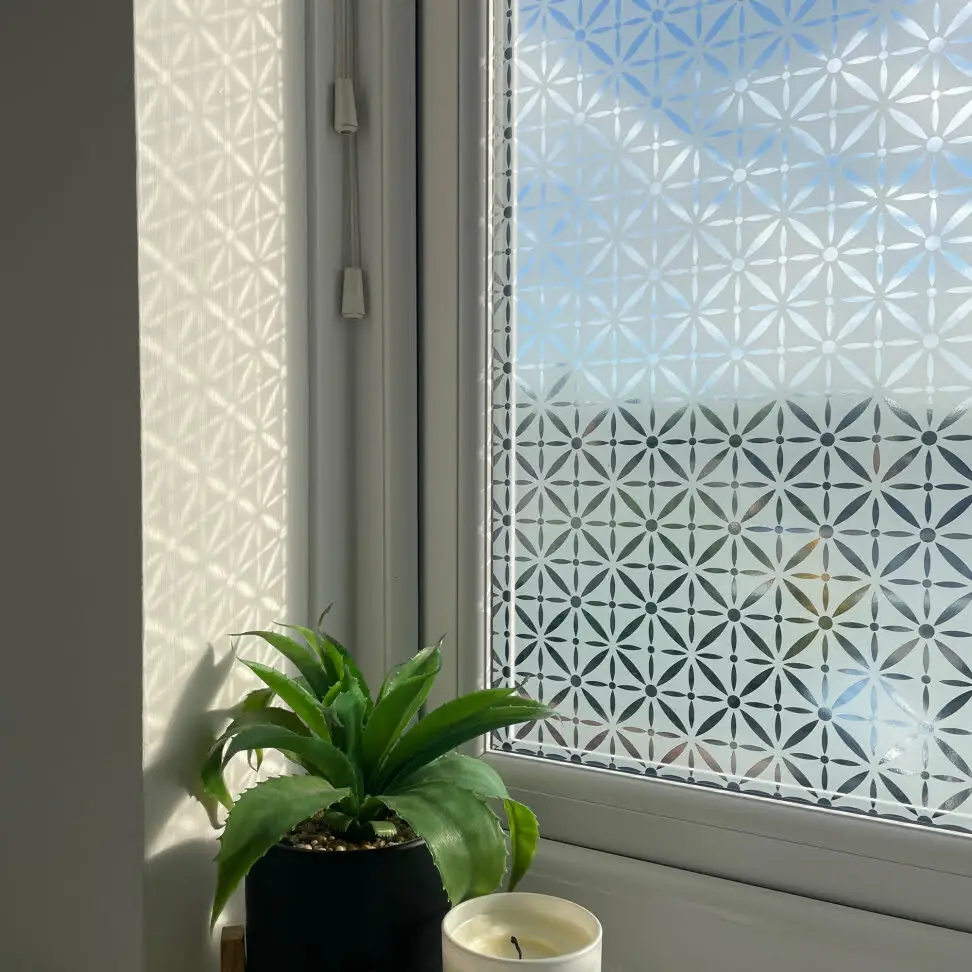
If brightness control or privacy is part of the goal — for example, a bedroom window that needs to stay usable without harsh glare, or a home office that faces a busy street — coloured window film can add privacy and manage light levels while also changing the look of the glass. For spaces that need a softer, more decorative finish rather than a plain filtered pane, decorative window film offers texture and pattern options that still let daylight through.
Some households also want a distinctive look on a front door or feature window alongside the practical UV consideration; contemporary patterned window film covers that end of the brief without requiring the glass itself to be replaced. And where impact protection matters too — a ground-floor window, a busy commercial entrance, or a site with safety requirements — safety and security window film can be specified to help hold glazing together on impact.
None of these finishes are a substitute for a dedicated UV-filtering product where a diagnosed allergy is the primary concern — that's a specific, medically relevant performance requirement. But in most real households and workplaces, the brief is rarely "just UV." It usually includes privacy, glare, appearance, or safety as well, and those elements can be specified alongside UV protection rather than as an afterthought.
How to specify UV-protective window film for your home or workplace
Specifying UV film for a severe allergy follows the same basic sequence as any window film brief: understand the problem, specify the right product, sample where appropriate, then install.
Identify the trigger windows. Note which rooms, desks, or vehicle windows are linked to the most frequent or severe reactions, and at what time of day.
Confirm the medical requirement. Check with a GP or dermatologist what level of UV filtering is actually recommended for the condition involved.
Specify the product. Decide whether dedicated UV-filtering film is the priority, or whether it needs to be combined with privacy, glare control, or a decorative finish.
Sample and approve. Where appearance or light levels matter, it's worth checking a sample against the room's actual lighting before committing to a full installation.
Install. A tidy, correctly fitted installation matters for performance — poorly applied film can bubble, peel, or leave gaps that undermine the protection it's meant to provide.
Hannah, a facilities manager at a mid-sized office, was asked to find a solution after a staff member disclosed a solar urticaria diagnosis and raised concerns about an open-plan floor with floor-to-ceiling glazing. Rather than relocating the entire desking layout, Hannah worked through a proper survey of which panes caught the most direct light, specified UV-filtering film for those sections, and paired it with privacy film on a nearby meeting room that also needed to control sightlines from the street. The result was a workable floor plan that kept the affected employee at their existing desk, without a costly reshuffle of the whole office.
If severe UV allergies or photosensitivity are affecting how you or your team can use certain windows, book a strategy call with our specification team and bring the details of which rooms, times of day and symptoms are involved. We'll talk through honestly whether a dedicated UV-filtering product, a complementary finish, or both make sense for your particular brief.
Frequently asked questions
Does Dermagard UV film block 100% of UV rays? No single film can honestly claim to block all UV radiation, and any product promising total protection should be treated with caution. UV filtering performance depends on the specific product, the glass it's applied to, and correct installation, so it's worth confirming the realistic protection level rather than assuming total elimination of exposure.
Can UV film be fitted without replacing the existing glass? Yes, that's the main appeal of film-based UV protection. It's applied directly to existing windows, so homes, cars, and offices don't need glazing replaced to add a layer of UV filtering.
Is window film a substitute for medical treatment or sun-avoidance advice? No. UV film is a practical addition to an existing management plan, not a replacement for a GP or dermatologist's guidance on sunscreen, clothing, and outdoor exposure.
Will UV-blocking film make a room noticeably darker? It depends on the specific product chosen. UV filtering and visible light reduction are separate properties, so it's possible to specify a film that filters UV effectively while still allowing a comfortable amount of daylight through — this is worth discussing before ordering.
How long does UV window film typically last once fitted? Lifespan depends on the product, the glass surface, and conditions such as sun exposure and handling, so it's best treated as a project-specific question rather than a fixed figure.
Final thoughts
Severe UV allergies rarely respect the boundary of a closed window, which is exactly why Dermagard UV film for severe UV allergies has become a practical tool for patients managing conditions like polymorphic light eruption, solar urticaria, and lupus-related photosensitivity. Standard glass filters some UV but lets enough UVA through to trigger real symptoms indoors, and a correctly specified UV-filtering laminate addresses that specific gap without requiring glazing to be replaced.
The sensible next step is practical, not dramatic: confirm your diagnosis and recommended protection level with your GP or dermatologist, identify the specific windows linked to your flare-ups, and think about whether privacy, glare, or decorative finish need to be part of the same brief. If you'd like help working through that specification for your own home or workplace, book a strategy call and bring the details of your affected rooms and symptoms — we'll talk you through what's realistic before anything is ordered.
Products mentioned in this article




Ready to start your project?
Discuss your requirements with a specialist and get a tailored quote for your space