Understanding the Different Types of Solar Window Film
When rooms become too hot, too bright, or prone to UV damage, solar window film can make a noticeable difference. We regularly install solar control films in homes, offices, conservatories, and schools where sunlight is becoming a nuisance – not just from a comfort perspective, but also in terms of energy use and interior protection.
But not all solar films are the same. Over the years, we’ve worked with a wide range of products, and understanding the different types of solar window film is key to getting the right results. The best choice depends on the room, the direction it faces, how much heat or glare it receives, and whether privacy is also a concern.
Here’s a practical breakdown of the various types of solar film available and what each one is designed to do – based on real experience and what we know works in both domestic and commercial spaces.
What Is Solar Window Film?
Solar window film is a self-adhesive or static cling material applied directly to the glass. Its main purpose is to manage sunlight: reducing heat, glare, and UV radiation. The film works by reflecting or absorbing solar energy before it enters the room, helping to regulate indoor temperature, improve comfort, and protect furniture, flooring, and electronics from fading.
We’ve installed these films in everything from sun-drenched offices to home conservatories that overheat by midday. They’re a cost-effective, low-maintenance alternative to blinds, air conditioning, or specialist glazing – and depending on the type you choose, they can also improve privacy and energy efficiency.
Reflective Solar Film
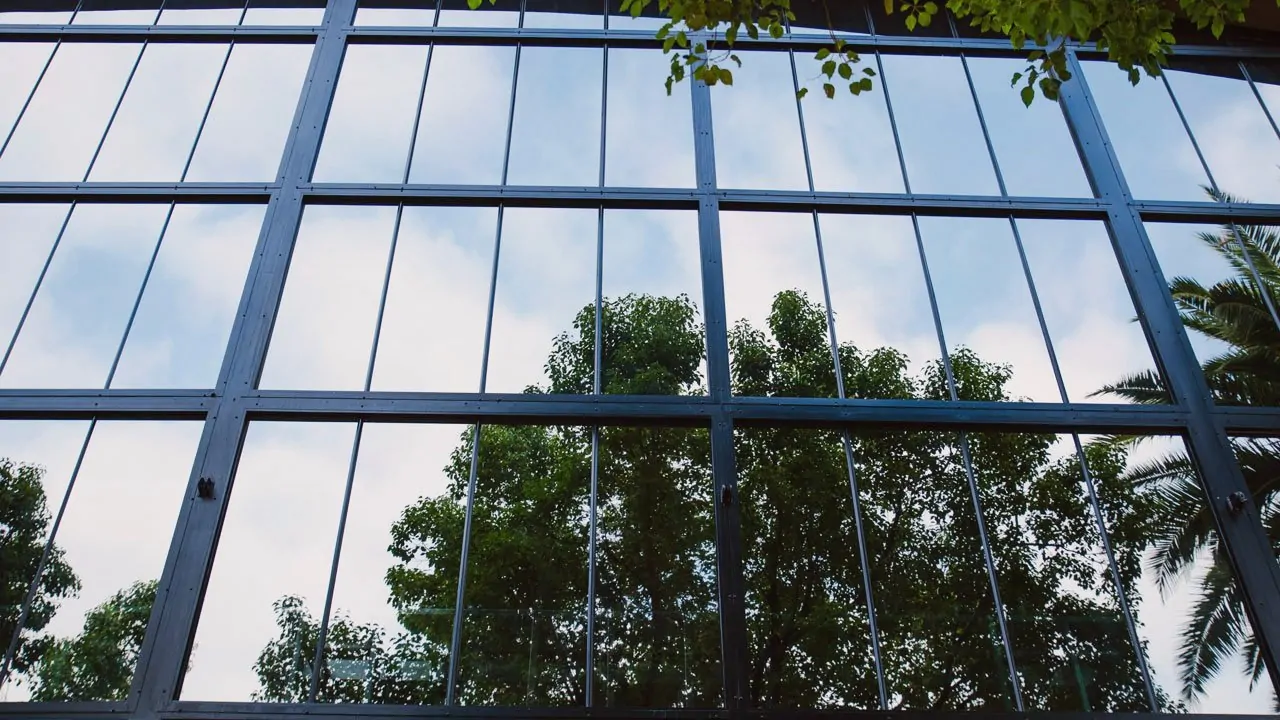
Reflective film is one of the most commonly used types of solar control window film. It has a mirrored appearance on the outside, which not only helps to reflect solar heat and glare but also provides daytime privacy.
From our experience, reflective films are particularly effective in rooms that receive strong direct sunlight, such as south- or west-facing spaces. We’ve used them in office buildings, shopfronts, and living rooms where high-glare conditions make working or relaxing difficult.
The downside? Reflective films don’t offer privacy at night – the mirrored effect reverses when it’s darker outside and lights are on indoors. But for daytime use, they’re highly effective and offer a clean, modern finish.

Dual Reflective Solar Film
Dual reflective film is a more advanced version of standard reflective film. It offers high reflectivity on the outside to reject heat and glare, but a lower reflectivity on the inside, maintaining a more natural view out.
This type of film is ideal for residential settings, particularly when we’re working on living rooms or home offices. It balances solar performance with visual comfort and is especially helpful in homes where people still want to see clearly through their windows without the dark, tinted effect.
Dual reflective films are often the go-to solution when customers want to reduce overheating without making interiors feel closed off.
Neutral and Non-Reflective Solar Film
Neutral solar film offers a more subtle look compared to mirrored or tinted options. It reduces heat and glare but without altering the appearance of the window too dramatically. These films have a soft grey or bronze tone and are designed to blend in with existing glazing.
We usually recommend neutral films for properties where maintaining an original or uniform look is important – for example, listed buildings or architect-designed homes. They’re also useful for rooms where light control is important, but the customer doesn’t want the high reflectivity of mirrored films.
Tinted or Coloured Solar Film
Tinted window films come in a range of shades and colours, and while they’re often chosen for aesthetic reasons, they still offer strong solar performance. These films reduce brightness and can also provide some level of UV and heat rejection.
We find these are often used in conservatories, sunrooms, or retail environments where the visual impact matters. Bronze, grey, blue, or green tones can enhance the look of the glass while helping control interior temperatures. Some also offer low-level privacy from the outside, depending on the shade and lighting conditions.

UV Protection Films
While all solar films block UV rays to some extent, certain films are designed specifically to maximise UV reduction. These are particularly useful in homes with wooden floors, leather furniture, artwork, or fabrics that are sensitive to sun damage.
UV protection films are almost always clear or very lightly tinted, so they don’t change the appearance of your windows. We’ve installed these in museums, galleries, and high-end retail spaces where protecting interior finishes is more important than reducing heat or glare.
Low-E (Low Emissivity) Films
Low-E films are engineered to reflect heat back into the room during winter while still offering solar rejection in summer. They provide year-round thermal insulation, making them ideal for homeowners who want energy savings on both heating and cooling.
This type of solar control film is especially useful in older buildings or poorly insulated homes. While more specialist than other options, the long-term efficiency benefits can be significant – especially when combined with double glazing.
Do Solar Films Offer Privacy?
Some solar films, like mirror or tinted ones, do offer a degree of daytime privacy – but it depends on lighting conditions. Reflective films, for example, provide privacy when it’s brighter outside than in, but not at night.
If privacy is your main concern, we usually recommend combining solar performance with a more opaque solution, such as privacy window film or frosted film, depending on the setting. It’s possible to layer multiple films or choose a product that balances privacy and solar control in one.
Choosing the Right Solar Film
The right solar film depends on:
- Room orientation – South- and west-facing windows get more direct sun.
- Glazing type – Double glazing, laminated glass, or low-E glass need suitable films to avoid thermal stress.
- Desired outcome – Do you want to reduce heat, glare, UV, or gain privacy?
- Aesthetic preference – Do you prefer a mirrored, tinted, or neutral finish?
We always carry out a full assessment before recommending a product. Whether it’s a conservatory that overheats in summer, an office space with glare issues, or a shopfront needing sun protection without blocking visibility, there’s a solar film that fits.
FAQs
Will solar film make my home too dark?
Not necessarily. While some reflective or tinted films do reduce visible light, others are designed to maintain brightness while cutting heat and UV. We can recommend lighter films that still offer excellent solar control without darkening the room.
Can solar film be used with double glazing?
Yes – but it’s crucial to use the correct type of film. Some films can cause thermal stress on double- or triple-glazed units. We always assess the glass type before installation to ensure compatibility.
Is solar window film permanent?
Most films are designed to last 10–15 years, depending on exposure and maintenance. They can be removed professionally if needed, but they’re not typically intended as temporary solutions.
Does solar film reduce energy bills?
Yes. By cutting down on heat gain in summer and improving insulation (in the case of low-E films), solar film can reduce the need for air conditioning or heating, leading to better energy efficiency.