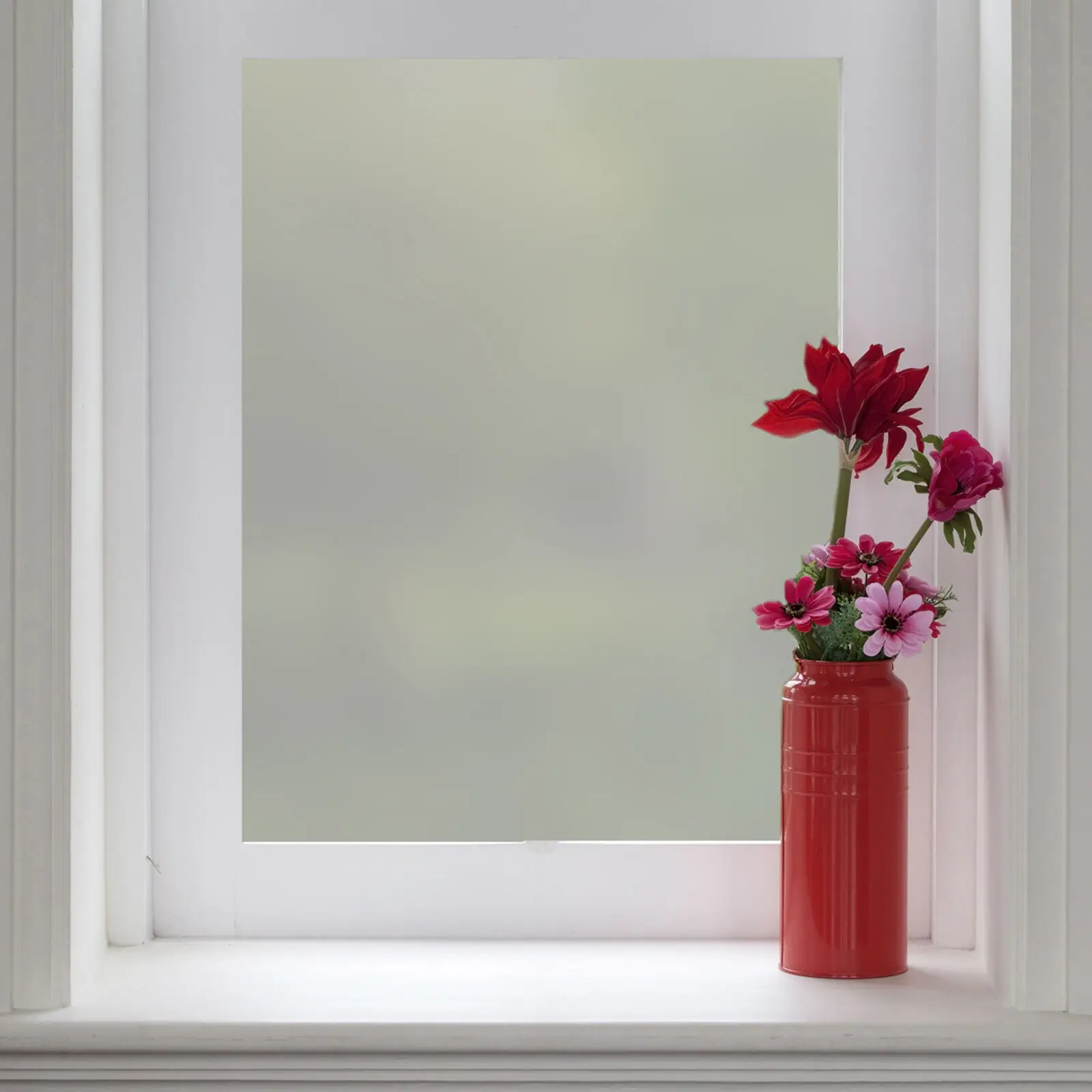
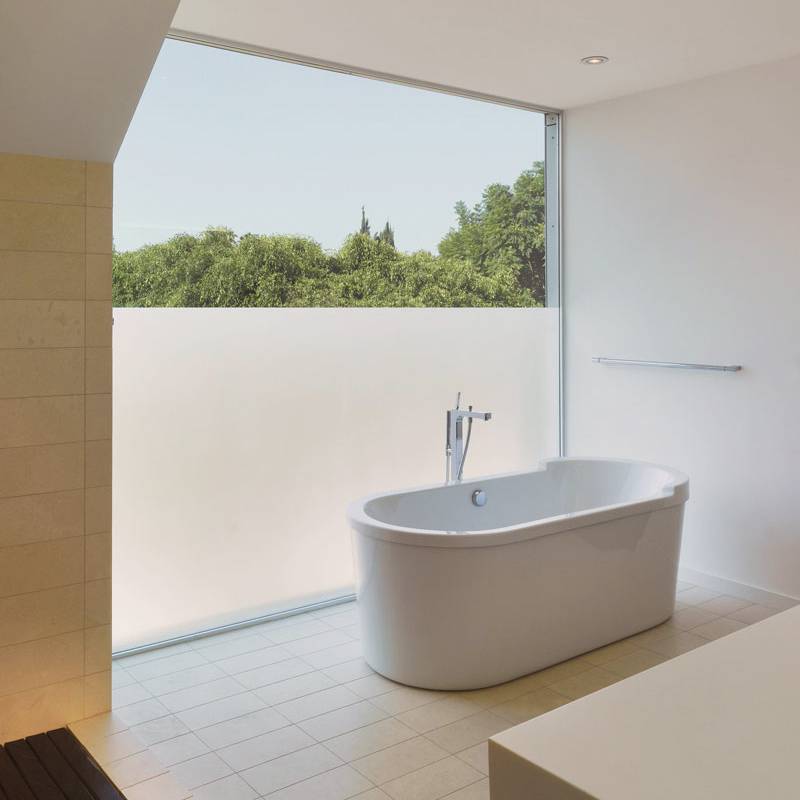
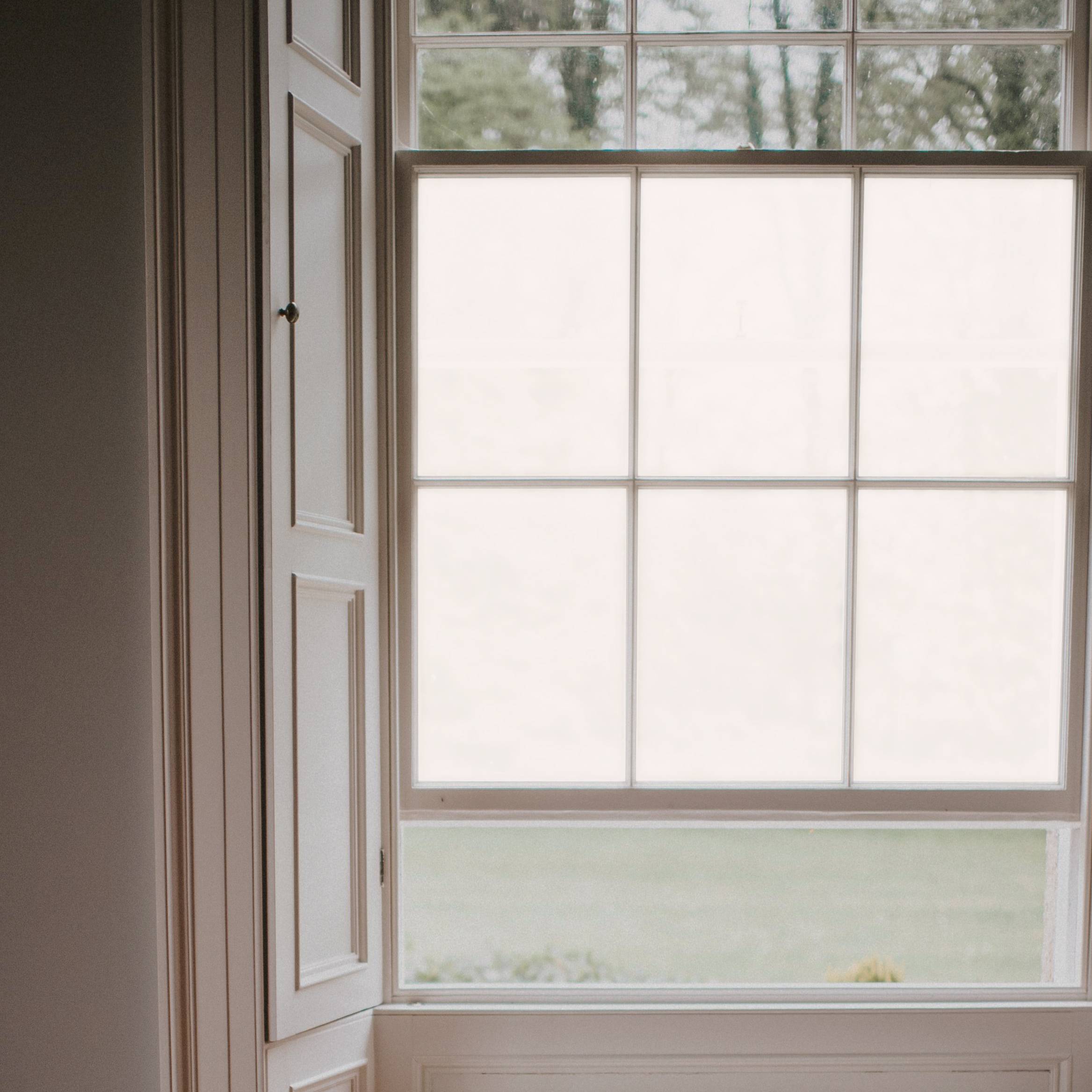
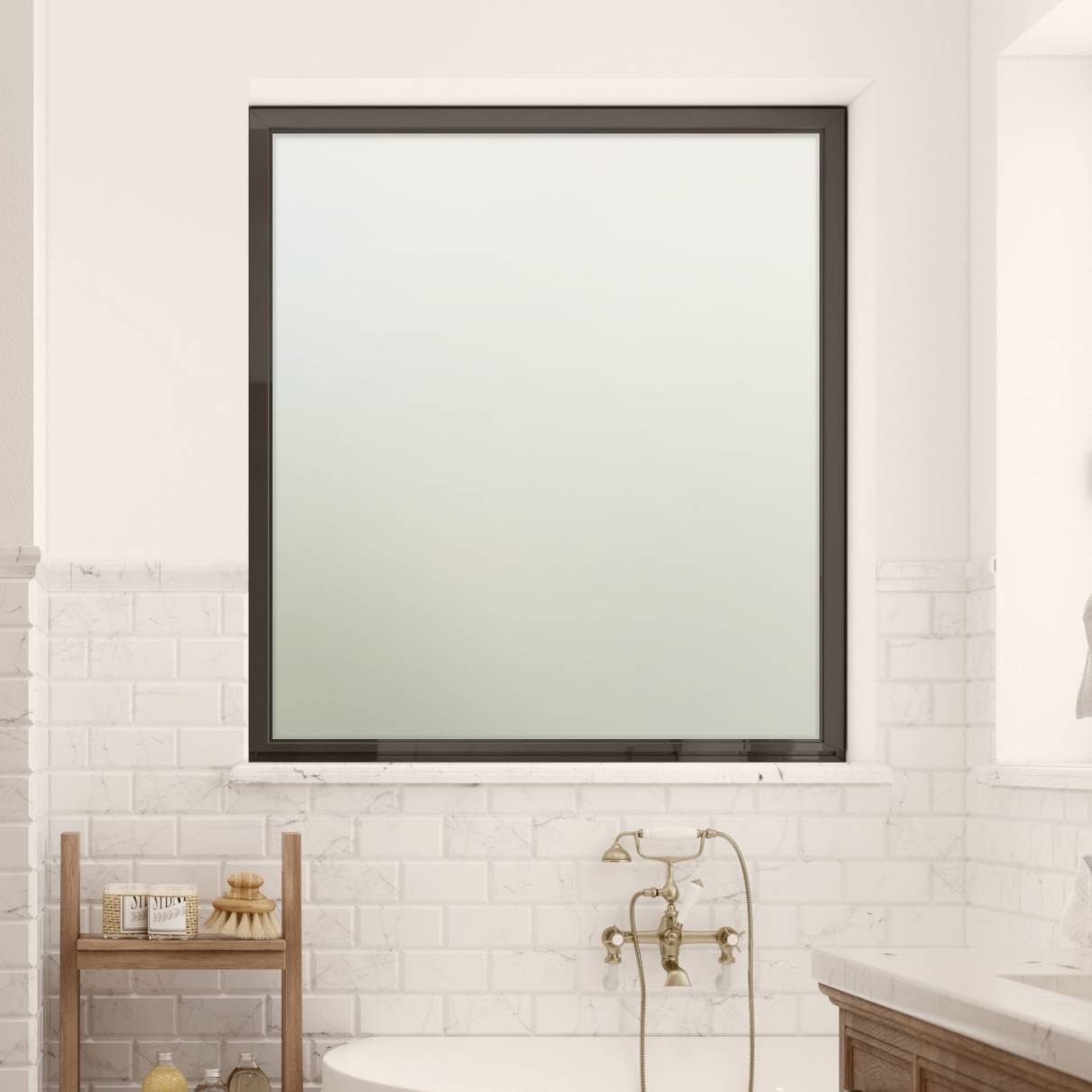
White Frosted Window Film lets in 69% of natural light and has a denser colour and opacity to our Plain Frosted Window Film. This is the perfect window film for a bathroom and is ideal for a bathroom window privacy it is quick and simple to apply with the Lustalux toolkit available in the store.
The privacy provided will be 24 hour and it looks the same both inside and out. Some people say that this is the best Privacy Window Film for a toilet too. The film can be applied externally, but it is not designed to last as long and therefore does not come with a warranty.
Custom sizes are available with additional cutting fee. Please contact the Lustalux team if you require this frosted film cut to size.
This film is not suitable for patterned or rippled glass.
how this film type sits on common glazing. yes is suitable, check means confirm the glass first, no is not suitable, and — was not specified on the chart.
| glazing | this film |
|---|---|
| single pane | yes |
| single pane (laminated) | yes |
| single pane (toughened) | yes |
| double glazed | yes |
| double glazed (laminated) | yes |
| double glazed (toughened) | yes |
| textured glass | no |
| frosted or etched glass | check |
| wired glass (internal) | no |
| wired glass (external) | yes |
| polycarbonate or plastic | — |
First steps
Preparing the glass is a vital part of the process. in a spray bottle, mix clean water with a few droplets of washing ups liquid. spray the glass and thoroughly clean it, paying close attention to the edges. if there are any specks of dirt or paint, use a small scraper to remove them.
The film
Unless your film has been pre-cut to the exact glass size, measure your glass at the top and bottom to ensure accuracy. lay your film flat and cut it to your required size. if you prefer you can cut the film over size and trim on the glass.
the principles of handling film are the much the same no matter what kind of film you are using. once you are happy with the size of your piece of film, lay it on a clean surface and slowly remove the clear liner. get someone to help you if it makes it easier.
spray the adhesive surface of the film and the glass window surface with more of your soap mix then hang the film to the glass. the two wetted surfaces will not immediately stick and some adjustment is possible.
Squeegee
Once you are happy with the positioning of your film, liberally spray the surface of the film. this will act as a lubricant for your squeegee or felt edged tool.
starting in the centre at the top edge and using firm pressure, push the water out from behind the film towards the side edge, then repeat in the opposite direction. then from the centre of the top edge push the water down towards the bottom edge so you have a ’t’. your film should now be securely in place.
*if you are applying a solar or safety film, apply as much pressure as possible to remove the water. you may need a specialist squeegee for this process.*
starting at the top and working down to the bottom, push all the water out towards the edges. repeat on the other side.
run a credit card and a sharp craft knife down each edge and across the bottom to trim off any excess film. the thickness of the card will allow for a small gap for any excess liquid to be squeegee’d out. once the film has been trimmed, wet the surface and run the squeegee over again using the same technique as before.
Final checks
After the film has been applied, dry every edge and the surface with a paper towel. Be thorough and careful, especially in the corners. Make sure all the water, or as much as possible, has been removed from behind the film.
Check your installation from both sides of the glass. Often something will not reveal itself unless viewed from a different perspective, especially with reflective films.
If you notice small bubbles that start to appear after all the water seemed to have gone, this is perfectly natural and part of a ‘curing process’.
Finally, stand back and admire your work. We would love to see how you did, tag us in your post on social media at @lustaluxdirect.
First steps
Installation drying times
The solution used during the installation of your window film may require a dry-out time. cold or dull weather conditions can lengthen the dry-out time, while warm weather and direct sunlight exposure will shorten the dry-out time. small water beads and a slightly cloudy look may appear during the dry-out time.
Cleaning a window that has film applied
A simple solution of fresh clean washing up liquid and water will work fine and you can also use your usual glass cleaner spray. a soft cloth or synthetic sponge is recommended for washing the window film, followed by a clean soft cloth or soft rubber squeegee for drying. avoid scratching the film, do not use bristle brushes or abrasive scrubbing sponges.
Other considerations
A fine light line may be visible at the edge of the window film. this is necessary to aid in the removal of water from behind the film and also to achieve a straight trim to the frame. the darker the film is, the more prominent the light line can be. this is perfectly normal.
avoid sticking anything to the window film surface. sellotape or blu-tack can damage the film when removed.
window film cannot be repaired, only replaced.
summary
- allow drying time for solution to evaporate.
- use mild soap and soft cloths for cleaning.
- avoid abrasive tools or harsh chemicals.
- do not stick adhesives to the film surface.
no photos yet