resource / Guide
Coloured Reeded Window Film for TV and Film Production: Period Glamour on Set
Window film
Guide
12 min read
2026-11-03
Coloured reeded window film for film production is a fast, repeatable way to give a set the fluted, jewel-toned glass look of a period building. It achieves this without re-glazing a single pane. It's film applied to existing glass, specified against a brief, a colour reference and the set's actual lighting. It's then sampled and approved before it ever goes near a shoot.
Picture an art department with four days to turn a modern office block into a 1920s hotel lobby, including the glazing on three internal doors and a reception screen. Replacing that glass isn't on the table — not on the budget, and definitely not on the schedule. That's the exact gap coloured reeded film is built for.
We agree that period glamour lives or dies in the details, and glass is one of the hardest details to fake convincingly on a tight turnaround. This article promises a clear, practical route through specifying coloured reeded window film for film production: what it is, how colour gets matched to a brief, what the realistic production workflow looks like, and what to check before approving anything for camera. Expect honest qualifiers throughout, because not every finish behaves the same way under every light.
Key takeaways
Coloured reeded film replicates fluted, moulded glass using vinyl film applied to existing panes, not new glazing.
Colour is typically specified against a HEX code or campaign palette, then sampled under the set's actual lighting before production.
There's no standard 24 or 48-hour turnaround — timelines are planned per brief, working back from the shoot date.
Lustalux specifies and produces the material; cinematography and on-set lighting decisions stay with the production team.
Stock and bespoke colour routes both exist, so budget and lead time can shape which option fits a given brief.
What coloured reeded film actually is
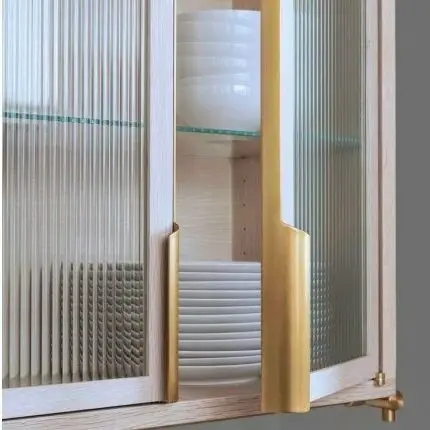
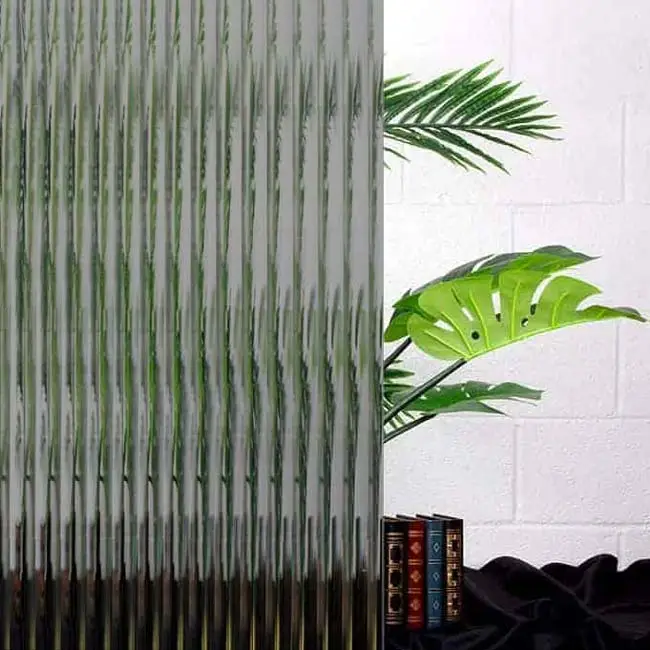
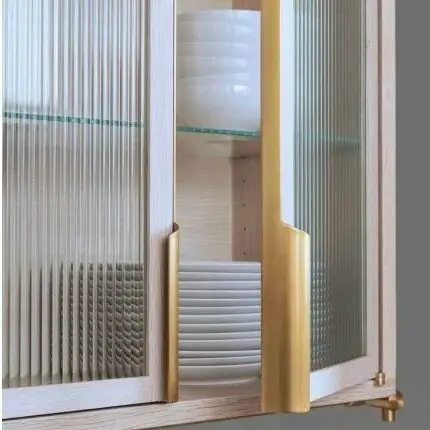
Reeded film, sometimes called fluted glass film, replicates the vertical ribbed texture of traditional moulded glass panes. It does this using a flexible vinyl applied directly to existing glazing. It's the look associated with Art Deco doors, 1930s shopfronts and grand hotel screens. It achieves that look without the weight, cost or lead time of sourcing actual moulded glass.
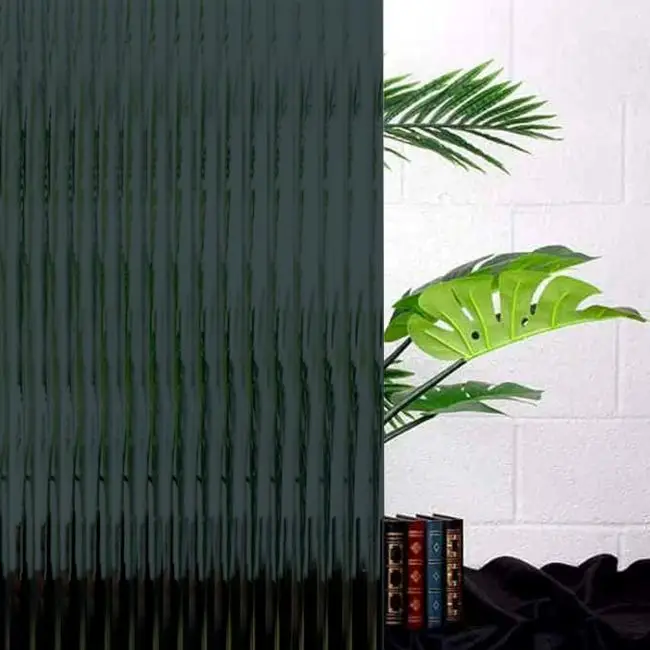
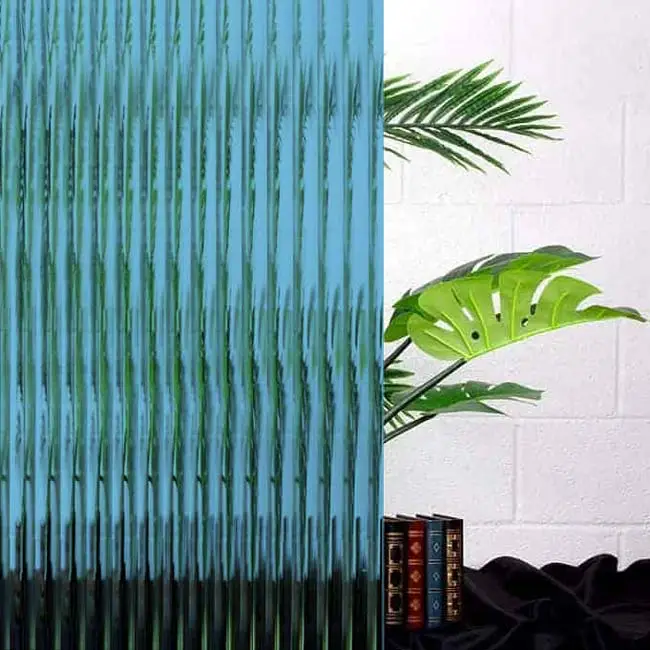
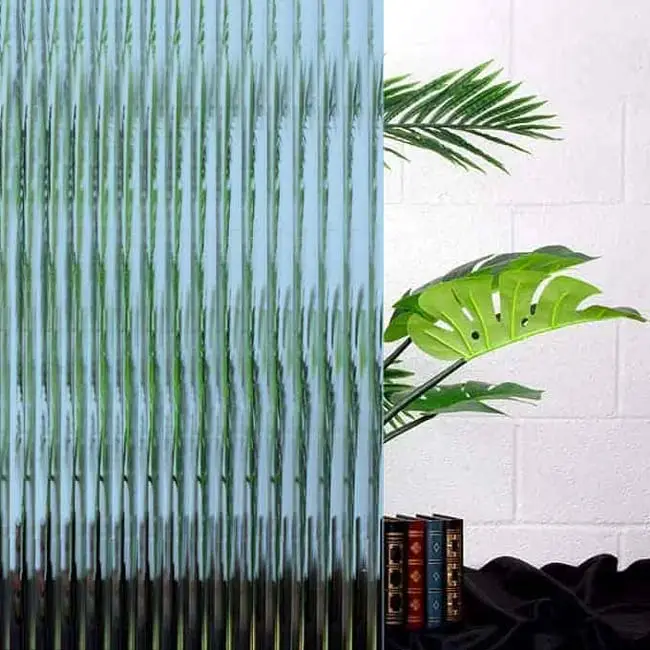
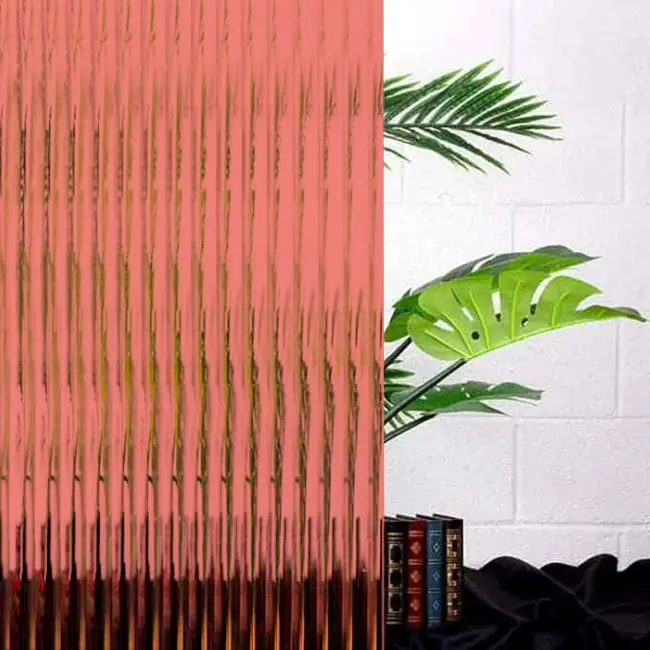
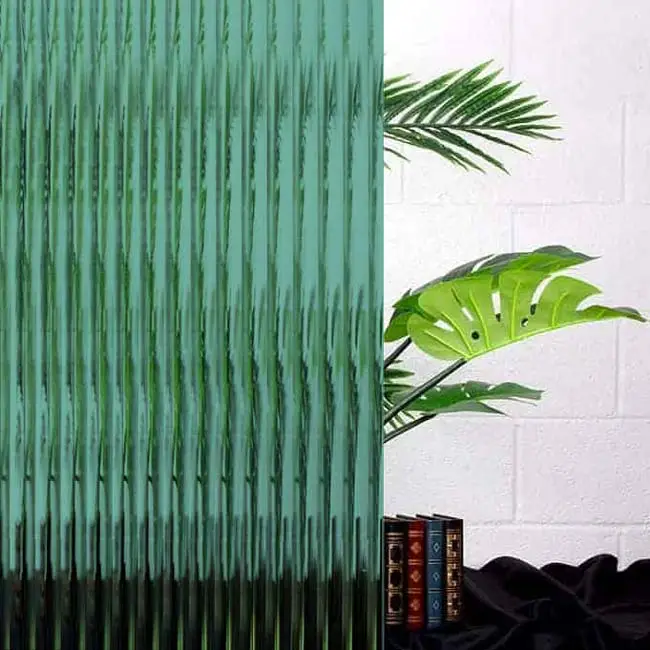
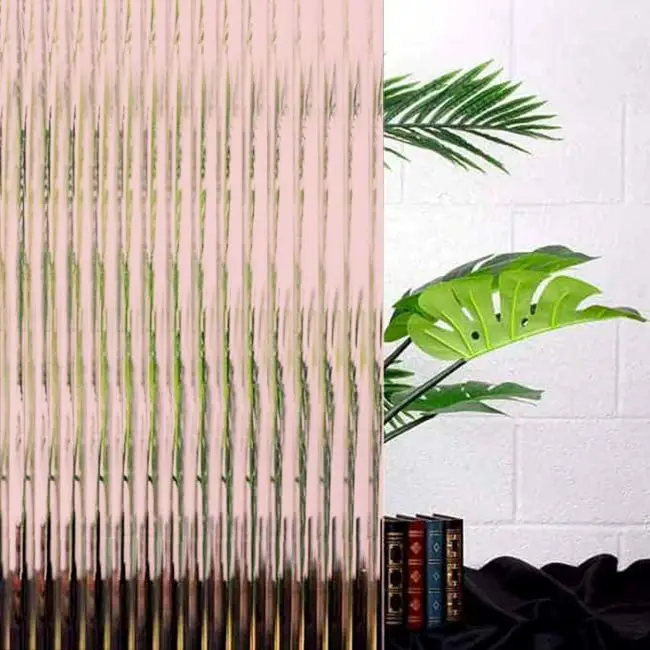
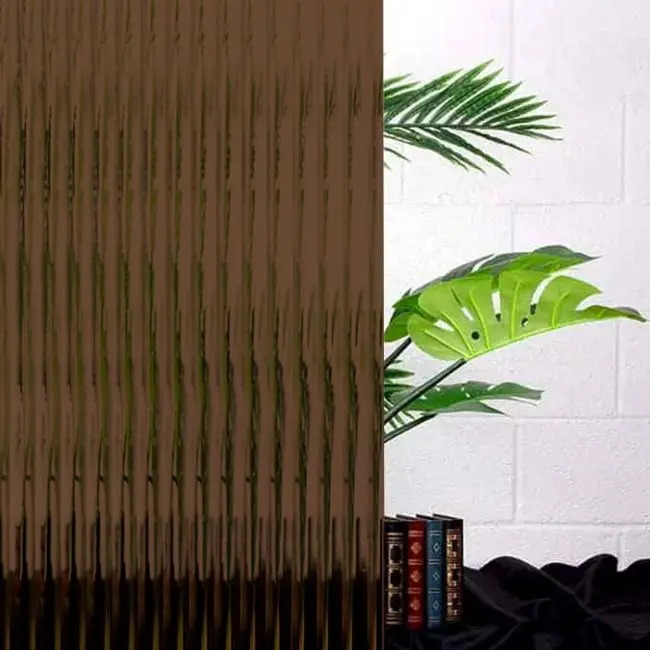
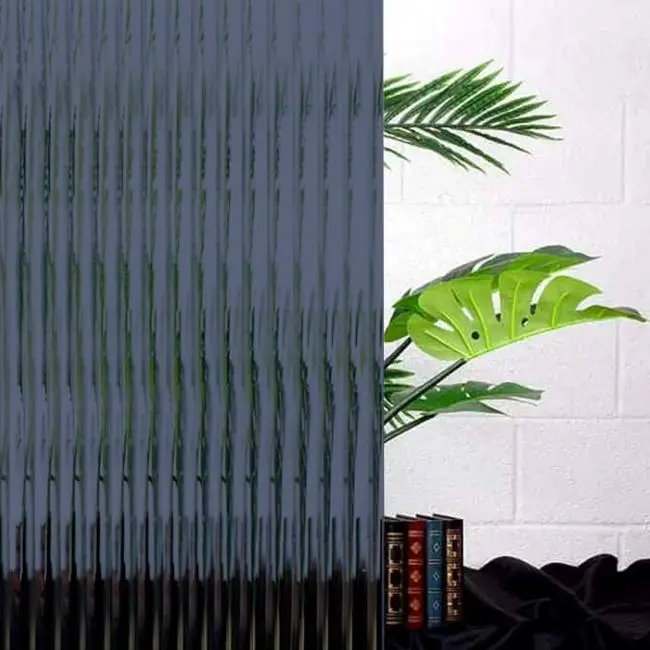
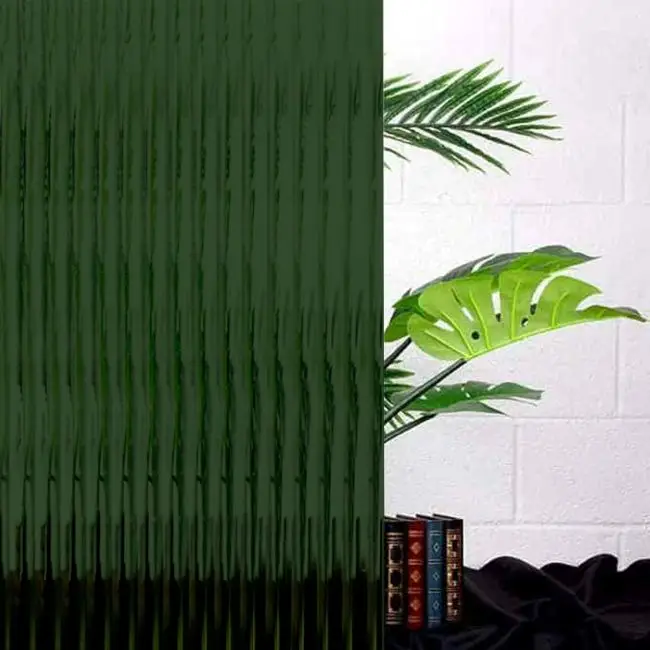
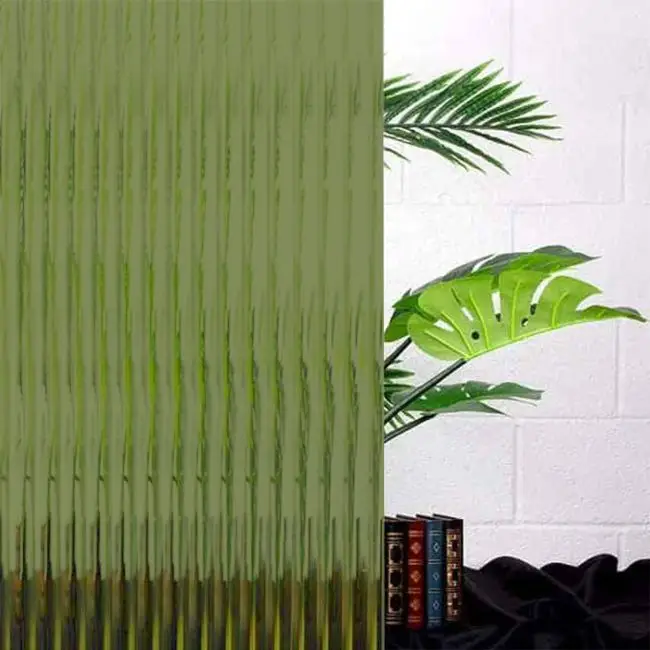
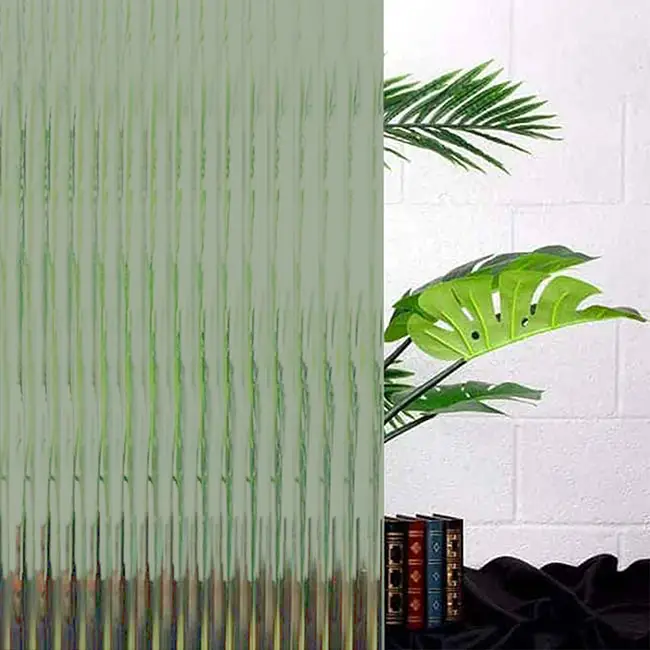
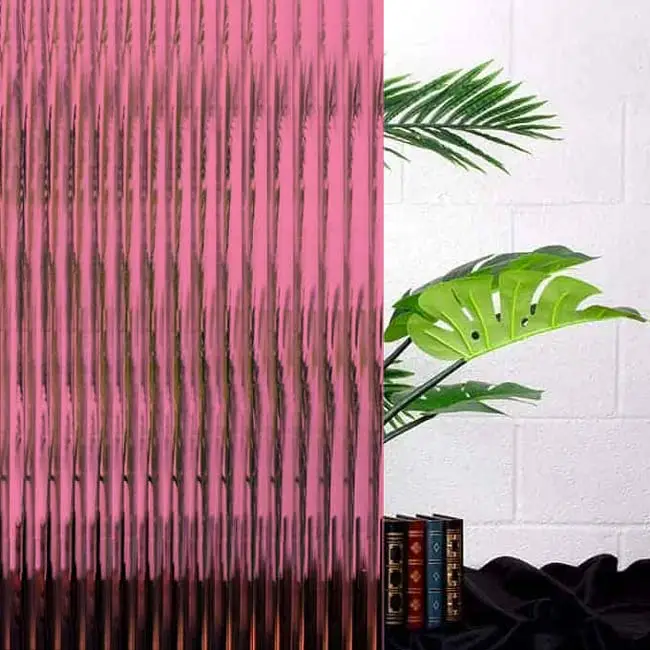
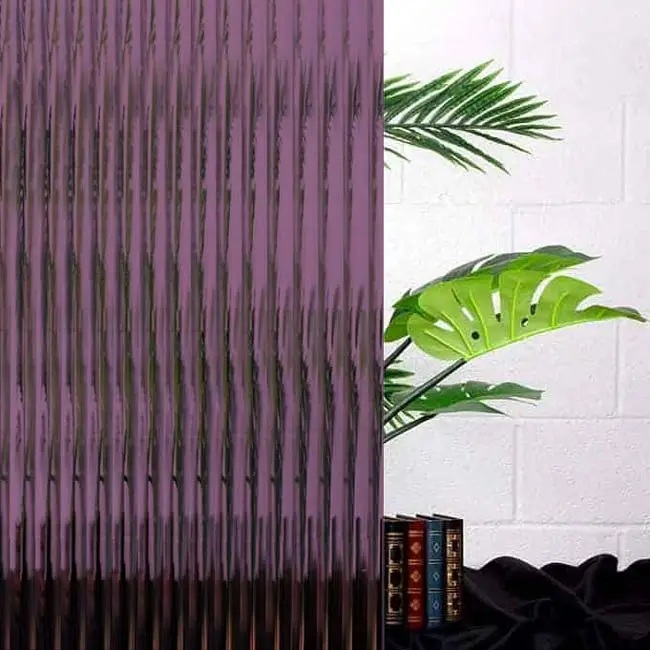
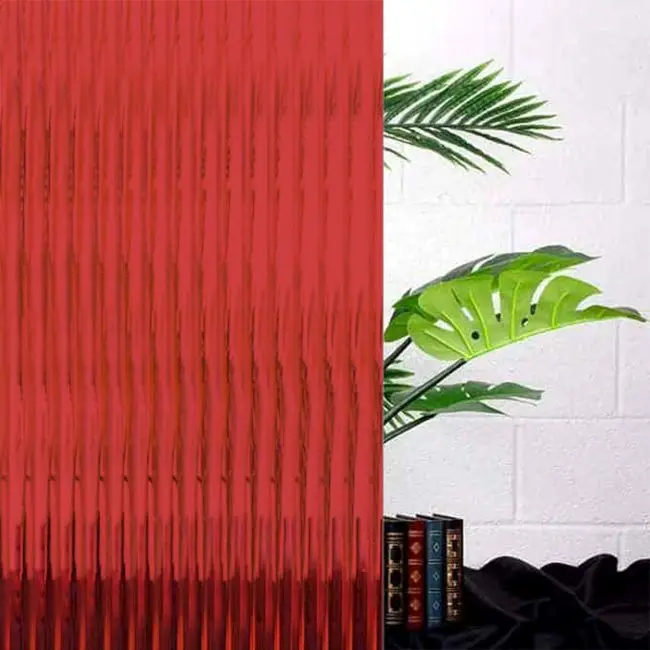
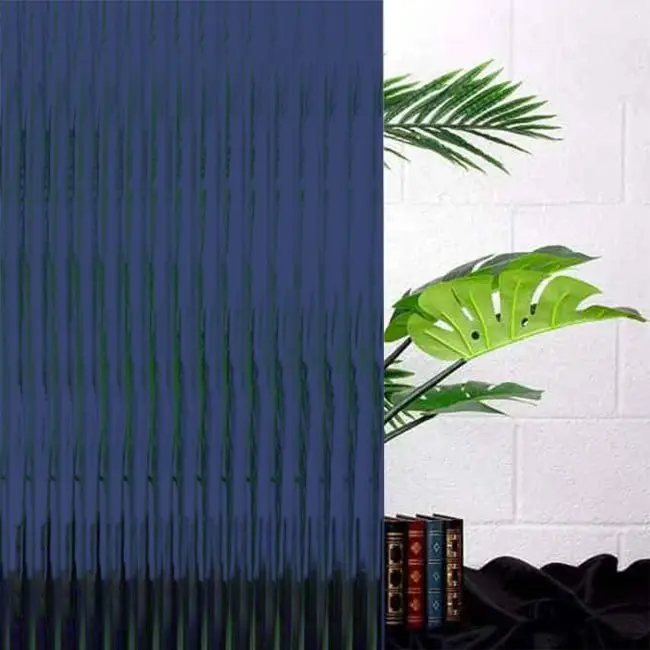
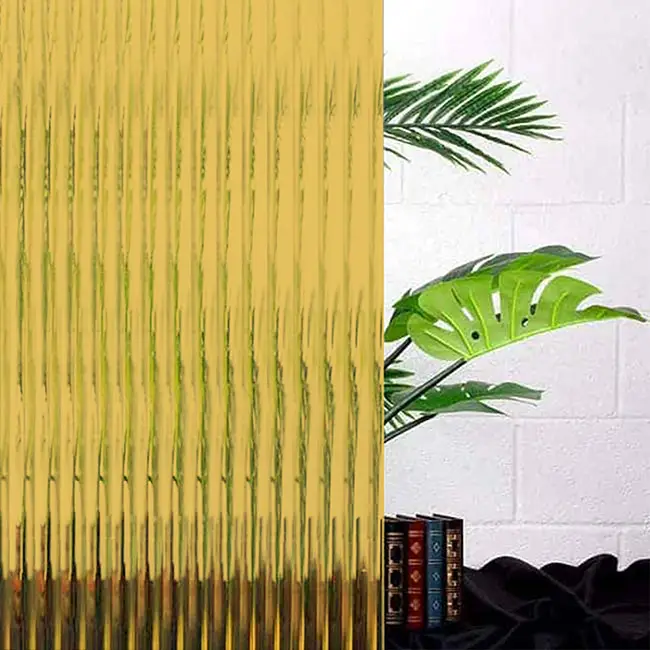
Coloured reeded film takes that same texture and adds colour, either from a stock palette or matched to a specific HEX code. The result reads as a tinted, textured pane rather than plain tinted glass. That's because the flutes genuinely bend and refract light the way moulded glass does. For a production needing period or stylised glazing fast, that combination of texture and colour is usually the whole brief in two words: fluted and coloured.
It's worth being precise about terminology here, because "tinted glass" implies something manufactured into the glass itself. Coloured reeded film is a surface treatment. The texture and colour sit on a film layer, not in the glass. That distinction matters for a production, because it means the finish can be removed or changed between scenes or seasons of a show without touching the underlying glazing. Browse the full reeded window film range to see how the base texture itself looks before colour is added.
Why art departments reach for it over real glazing
Sourcing genuine antique or reproduction fluted glass for a set is slow, fragile and expensive, and it rarely arrives in the exact colour a brief calls for. Film sidesteps all three problems at once. It applies to glass that's already on site, it ships in a specified colour, and it can be removed when the production wraps.
That last point connects to a wider principle worth bringing into any set brief — transforming the surface rather than replacing the structure. It avoids the waste and disruption of swapping out glazing for a look that's only needed for a few weeks of filming.
Specifying coloured reeded window film for film production against the brief
The starting point for any production enquiry isn't a colour swatch. It's the shot: what does the glass need to look like on screen, under what lighting, and by when. From there, the right shade, gradient or dichroic effect gets specified to match.
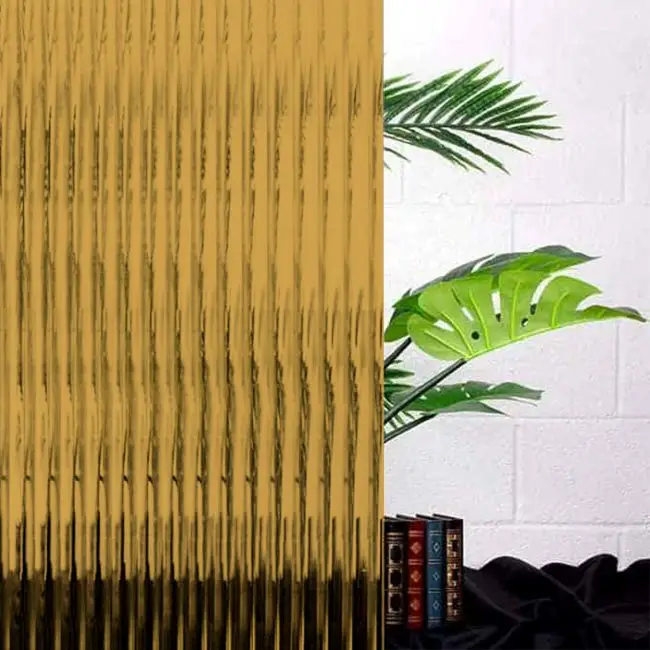
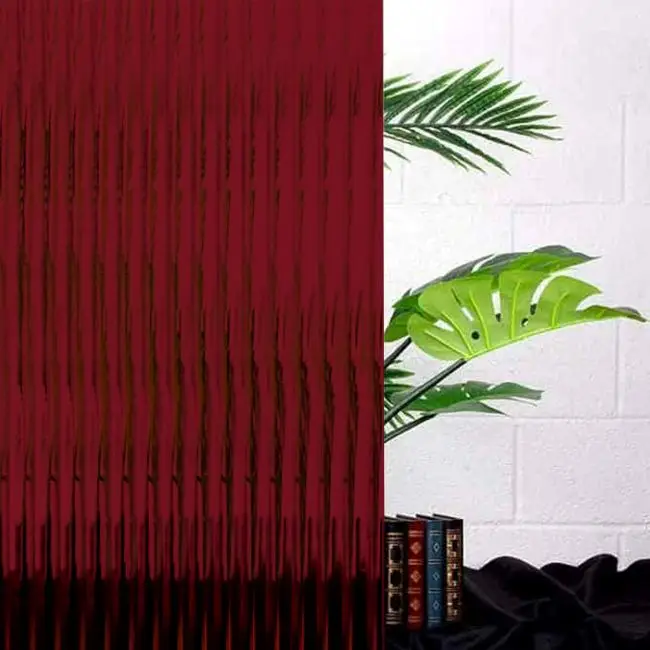
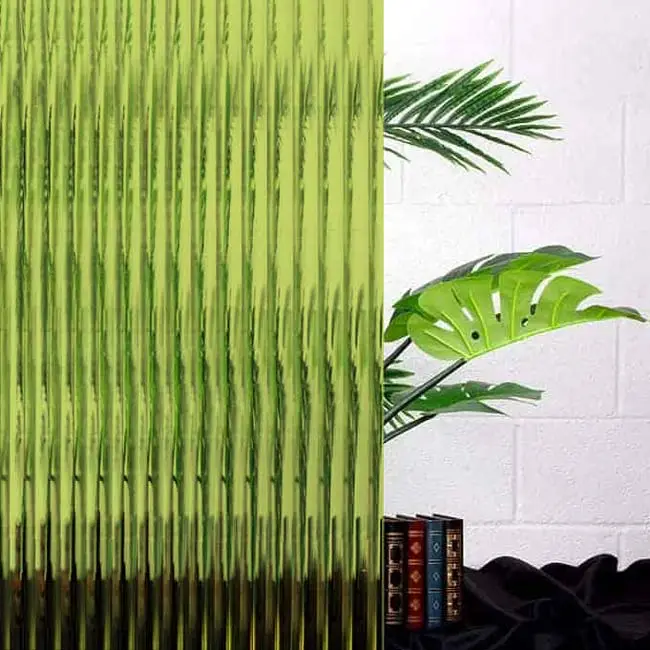
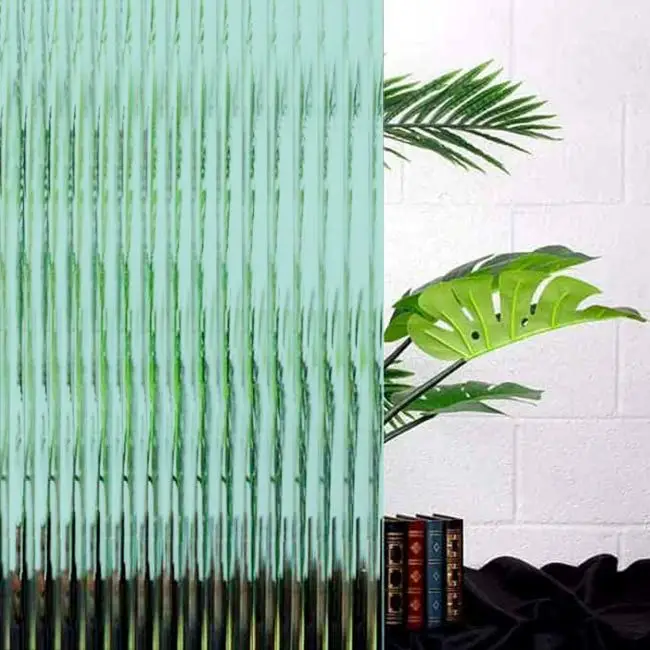
Most production colour requests fall into one of two routes. The first is a stock colour — shades like deep amber, teal or royal blue that are already proven and quick to source, shown in the coloured reeded film collection. The second is a bespoke HEX match, built against a specific brand palette, campaign reference or production design board.
HEX matching and why screen colour isn't set colour
A HEX code on a monitor and that same HEX code under studio or location lighting are not the same thing. Colour temperature, practical lighting and camera settings all shift how a hue reads once it's lit and filmed. This is why colour matching for production work is treated as a sampling exercise, not a one-step order.
In practice, that means requesting a physical sample. It also means reviewing that sample against the intended set lighting before committing to full production. It's a small extra step. It's also the difference between a pane that matches the mood board on a laptop and one that actually matches it under the gaffer's rig.
Stock colours versus bespoke gradients
Stock colours suit productions with a shorter lead time or a look that doesn't need to hit an exact brand reference — a generic "warm amber period glass" brief, for example. Bespoke work suits anything tied to a named palette, a campaign colour code, or a gradient effect across a single pane, the kind of specification used on brand-matched glazing work.
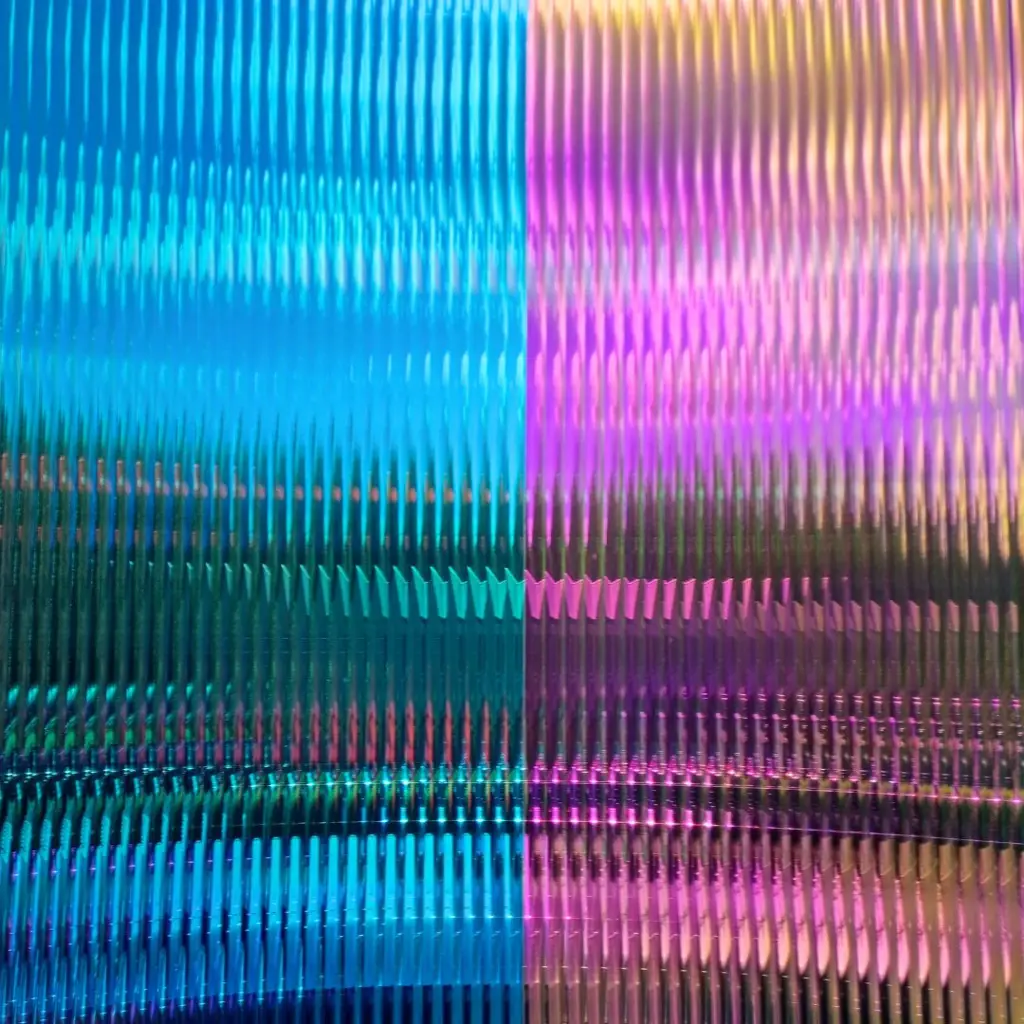
Dichroic finishes shift tone depending on viewing angle and the light hitting them. They sit at the more stylised end of this spectrum. They're worth considering for sets where a scene calls for glass that visibly changes character as the camera moves, rather than a flat, single hue throughout.
A mini case: turning an office atrium into a 1940s newsroom set
A location scout working on a period drama had found the perfect modern office atrium. It had generous glazing and good natural light, and the right proportions, but none of the actual glass character the script needed. The production designer, Priya, needed three large internal screens to read as 1940s fluted newsroom glass within six days. The production's colour reference was pulled from a faded archive photograph rather than a clean HEX code.
The approach started with the brief itself: what the screens needed to look like on camera, not which stock colour was closest. A warm, slightly smoked amber was proposed from the archive reference. It was sampled against the set's actual lighting rig before full production went ahead, because the archive photo's tone and the lit, on-set tone were never going to match exactly without that check.
Once the sample was approved, the film was produced and installed across the three screens ahead of the shoot date Priya had given at the enquiry stage. The production retained full control of lighting and camera work throughout; the specification brief covered the glass finish only. It's the kind of job that illustrates why sampling against real lighting earns its place in the process rather than being an optional extra.
Timeline and finish comparison for coloured reeded window film in film production
There's no blanket 24 or 48-hour promise on this kind of work, because production timelines vary too much for a fixed number to be an honest answer. What does stay consistent is the sequence: brief, specify, sample and approve, produce, then deliver or install.
On occasion that whole process has run to a genuinely tight window. The Swarovski Holiday 2024 campaign, featuring Ariana Grande, is one example. A custom coloured reeded film was produced for a TV advertising set on a 48-hour turnaround specific to that brief. That speed was built for that particular production's requirements, not offered as a standard across every job. Production scheduling pressures of this kind are a recognised feature of the industry more broadly, as covered by bodies such as the Production Guild, which represents UK production managers and coordinators.
What to bring to the first conversation
The most useful information at enquiry stage is the shoot date, the look the scene needs to achieve, and any existing colour or brand references. From there it's possible to say honestly whether coloured reeded film, a different finish from the wider window film range, or something else entirely is the right route for the brief, and what a realistic timeline looks like for that specific date.
If you've got a brief and a date in hand, it's worth getting that conversation started early rather than waiting until the week of the shoot. You can book a strategy call to talk through the look you're after and the date you're working to, and come away with an honest read on what's achievable.
Comparing finish options at a glance
Not every scene calling for "period glass" needs the same finish. Here's how the main options compare for production use.
| Finish | Visual effect | Typical production use | Lead time consideration |
|---|---|---|---|
| Clear reeded film | Fluted texture, no colour | Modern or industrial-era glazing, subtle texture shots | Stock sizing, generally quicker to source |
| Stock coloured reeded film | Fluted texture plus a set shade | Period drama, retro commercials, quick colour briefs | Faster than bespoke HEX matching |
| Bespoke HEX-matched reeded film | Fluted texture in an exact brand or campaign colour | Brand campaigns, named palette requirements | Needs sampling and approval time |
| Dichroic reeded film | Colour shifts with angle and light | Stylised, futuristic or "chameleon" effects | Specialist finish, confirm suitability for the brief |
| Plain coloured film (no texture) | Flat tinted glass, no fluting | Scenes needing colour without a period texture cue | Simpler spec, still benefits from sampling |
For a brief that calls for colour without the fluted texture — a contemporary set needing a tinted screen rather than a period look — the broader coloured window film range covers that flat-colour option separately from the reeded line.
A second mini case: matching a gradient to a brand's racing colours
Not every production brief is period-themed. A motorsport team's media team once needed a backdrop for a series of sponsor photoshoots. The request was a gradient glass panel running through their team's racing colours — a precise, branded effect rather than a vintage look. That project, built for Alpine F1's photoshoot and media rollout, shows the same specification logic applied to a completely different visual outcome. Start with the exact colour reference the brand provided, sample the gradient against the shoot's planned lighting, then produce once approved.
The lesson for a film or TV art department is the same regardless of era or genre. Whether the reference is a faded 1940s photograph or a current F1 team palette, the process doesn't change: brief first, sample against real lighting, then produce.
What a production team should check before approving any sample
A few practical questions are worth asking before signing off a colour sample for camera, regardless of how tight the schedule is.
Has the sample been viewed under the set's actual lighting rig, not just daylight or office light?
Does the colour reference come from a HEX code, a physical swatch, or a photograph that might not translate directly?
Is the finish needed for a single scene or across a recurring set that will need consistent colour over multiple shoot days?
Does the glazing need to revert to its original state after the production wraps, and if so, has removability been discussed for that specific glass and film combination?
Is the production date confirmed, so the specification and sampling stages have realistic room to happen properly rather than being compressed?
Working through that list early avoids the costliest outcome on any set: a reshoot because the glass read wrong on camera.
FAQs
Can coloured reeded film be matched to an exact HEX code for a campaign? Yes, in most cases. A HEX code or brand palette reference is the usual starting point for bespoke work. The final colour should always be confirmed against a physical sample viewed under the set's actual lighting before full production.
How far in advance should a production enquire about coloured reeded film? As early as the brief allows. There's no standard turnaround quoted across all jobs — timelines are planned backwards from the confirmed shoot date, through specification, sampling, production and delivery. More notice gives that sequence proper room to work.
Is coloured reeded film removable once a production wraps? Removability depends on the specific film and the glass it's applied to. It's worth raising this directly at the brief stage if the glazing needs to return to its original state afterwards, rather than assuming it's guaranteed.
Who handles the lighting and camera work once the film is installed? Lustalux specifies and produces the glass finish itself; cinematography, lighting design and all on-set creative decisions remain entirely with the production team.
What's the difference between stock and bespoke coloured reeded film for a shoot? Stock colours are pre-specified shades that are generally quicker to source, while bespoke work is HEX-matched to a particular brand or campaign reference and needs a sampling and approval stage before production starts.
Bringing period glamour to your next set with coloured reeded window film for film production
Coloured reeded window film for film production gives art departments a fast, flexible way to dress glazing in period or stylised colour without replacing a single pane. This holds true provided the brief, the colour reference and the set's real lighting all get specified and sampled properly first. That sampling step isn't bureaucracy — it's what stops a mood-board colour turning into an on-camera surprise.
The practical next step is simple: confirm your shoot date, pull together your colour or style reference, and get that conversation started before the schedule gets tight. From there, the right combination of stock or bespoke coloured reeded film, texture and finish can be specified around your actual brief, not a generic catalogue listing.
If you've got a production brief taking shape, book a strategy call and bring your shoot date, your reference material and the look you're trying to achieve. You'll come away with an honest, specified route to a set that reads exactly as it should on camera.
Products mentioned in this article
Ready to start your project?
Discuss your requirements with a specialist and get a tailored quote for your space