resource / Guide
How to make windows private but still let in light
Window film
Guide
11 min read
2026-05-13

The most effective privacy window film that lets light in is frosted film. It diffuses rather than blocks the light, giving privacy in both directions day and night without making the room feel dark. Reeded and patterned films work the same way. One-way reflective film also lets light through but only gives privacy during daylight hours.
Most people assume that adding privacy to a window means losing light. Pull the blinds and the room goes dark. Fit obscured glass and the glazier's bill runs to hundreds of pounds per pane. What many homeowners and facilities managers don't realise is that the right privacy window film that lets light in costs a fraction of either option and leaves the room feeling open and well-lit.
This guide explains exactly which film types preserve natural light, how much light each one transmits, and which solution works best for bathrooms, street-facing windows, offices, glass partitions, and healthcare environments.
Key Takeaways
- Frosted window film is the most practical solution for privacy with natural light. It works 24/7 and suits bathrooms, meeting rooms, office doors, and glass partitions.
- Reeded and fluted glass film is a design-led option that scatters light through a ribbed texture. It provides 24/7 privacy with an architectural finish.
- Patterned and decorative films use etched effects and printed designs to break up the view while still transmitting good levels of light.
- One-way reflective film lets light through and provides strong daytime privacy, but loses its effect after dark when interior lights are brighter than outside.
- Blackout and opaque films are not the right choice when natural light matters. They block the view effectively but also block the daylight.
Why not all privacy solutions let light through
There's an important distinction between films that block light and films that diffuse it.
Blackout and whiteout films seal the window entirely. They give complete privacy, but they also cut off natural light. A room treated with blackout film is private day and night, but it relies on artificial lighting.
That's appropriate for media rooms, server rooms, and some clinical spaces. It's not appropriate for a bathroom, a meeting room, or a street-facing office window where daylight matters.
Frosted, reeded, and patterned films work differently. They scatter or diffuse the light as it passes through the glass, blurring the view without blocking the daylight. The result is a room that feels bright and open while giving complete privacy to anyone looking in from outside.
The question isn't whether to choose privacy or light. The question is which film type gives the right balance of both for a specific window and space.
Film types that give privacy without blocking light
Frosted window film
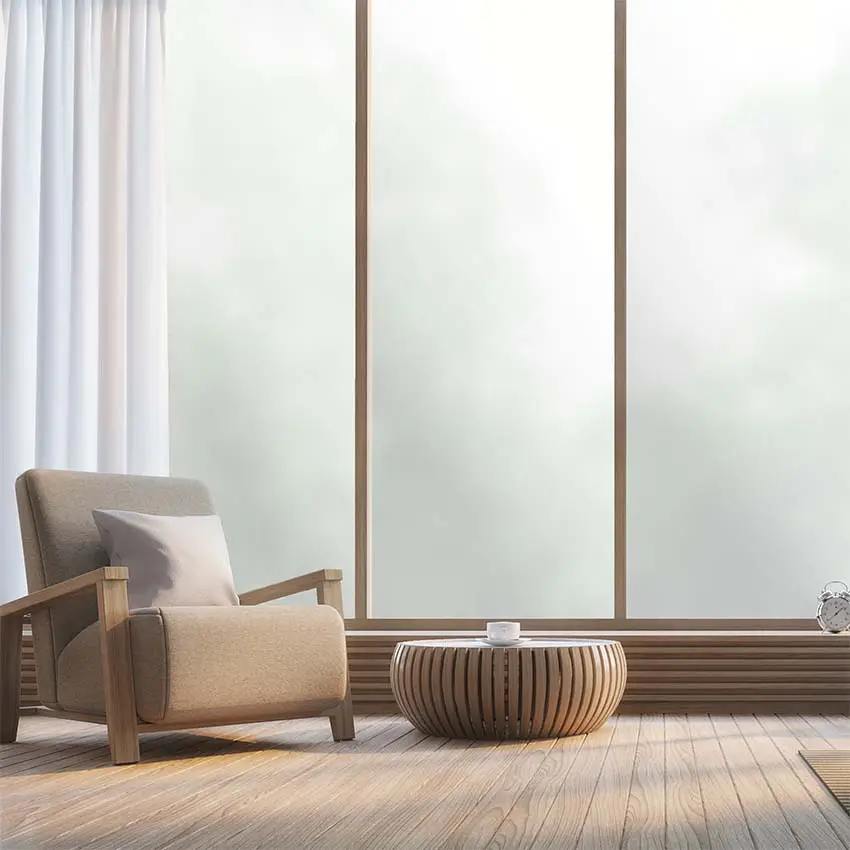
Frosted film is the most widely used answer to "how do I make windows private but still let in light." It creates a semi-translucent finish that diffuses light across the glass surface, obscuring the view in both directions while still transmitting a good level of natural daylight.
The amount of light frosted film transmits depends on the grade. Lighter frosted grades transmit 65-80% of visible light. A bathroom window treated with a light-grade frosted film still feels bright and airy, just without the clear view through the glass.
Denser grades transmit 40-60% of light and give stronger obscuration. These suit street-level windows, ground-floor offices, and spaces where anyone passing close to the glass needs to be prevented from seeing in clearly.
Frosted film works day and night. It doesn't rely on light levels to do its job, which means the privacy it gives at 8am is exactly the same as the privacy it gives at 10pm when the lights are on inside.
The plain frosted window film range covers standard privacy applications. For bathrooms specifically, a white-grade frosted finish gives a cleaner, slightly warmer result than a neutral grey frost.
Reeded and fluted glass film
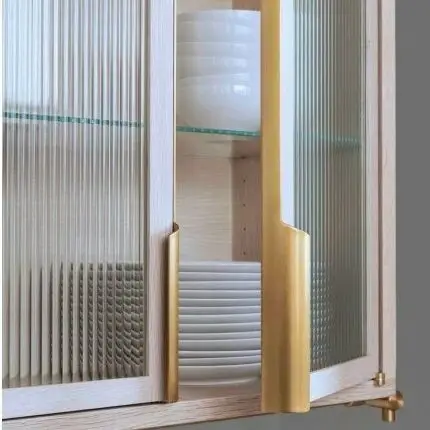
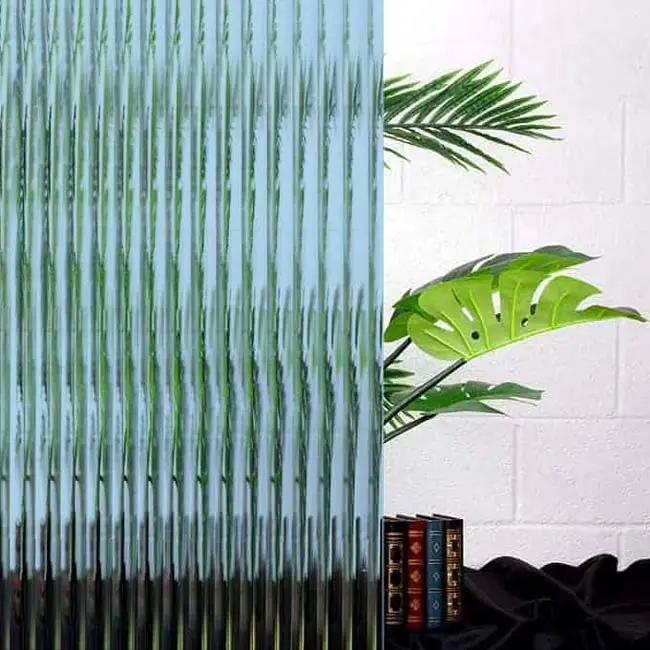
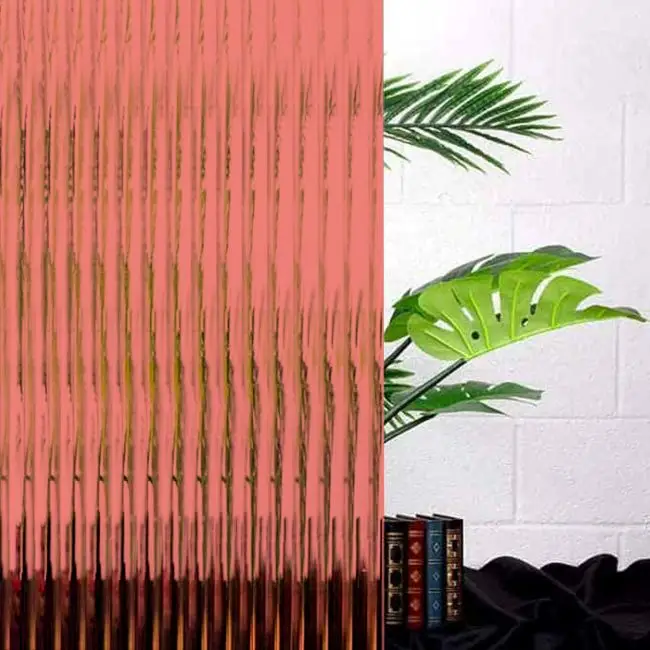
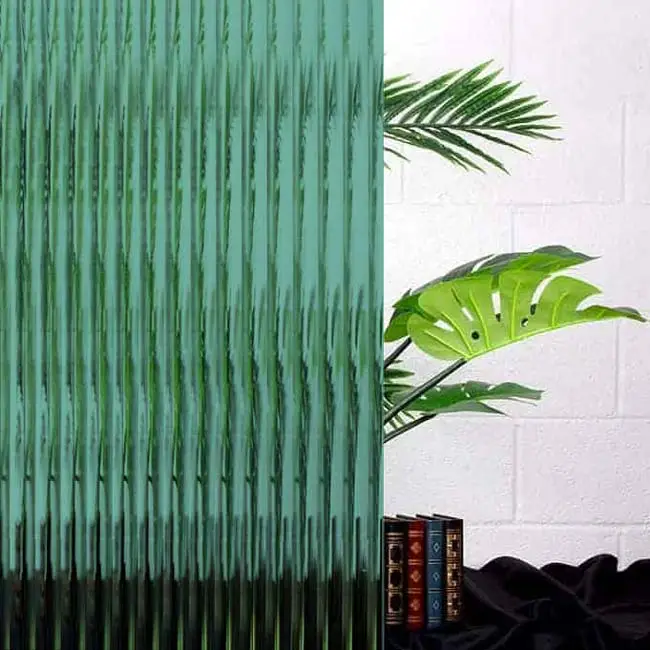
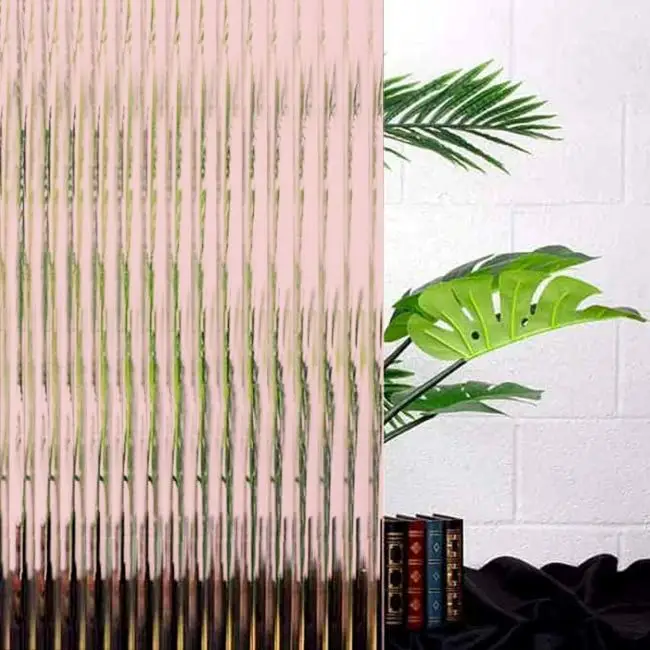
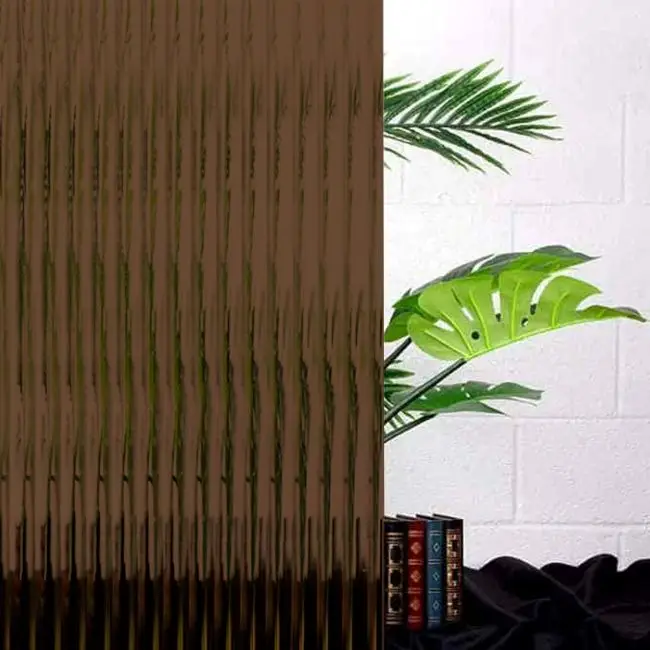
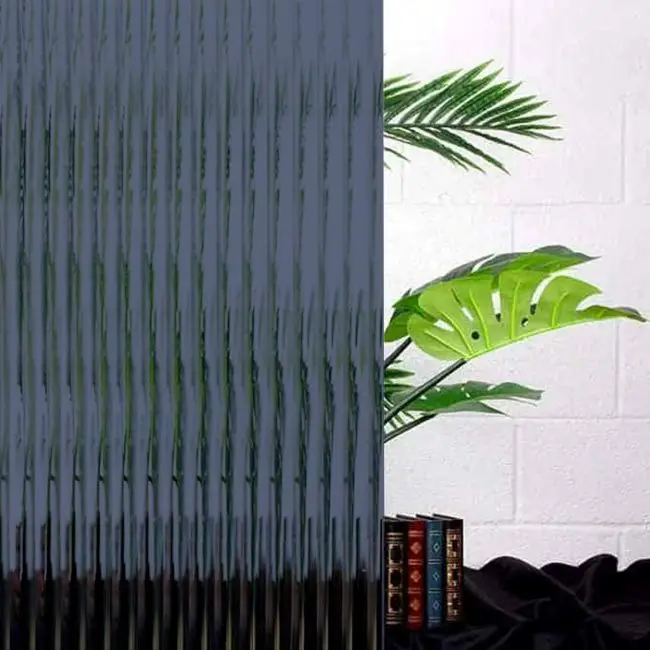
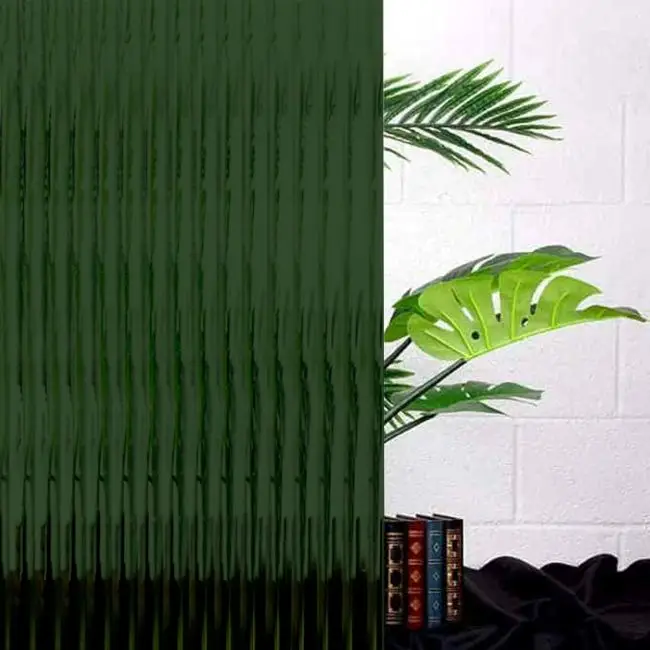
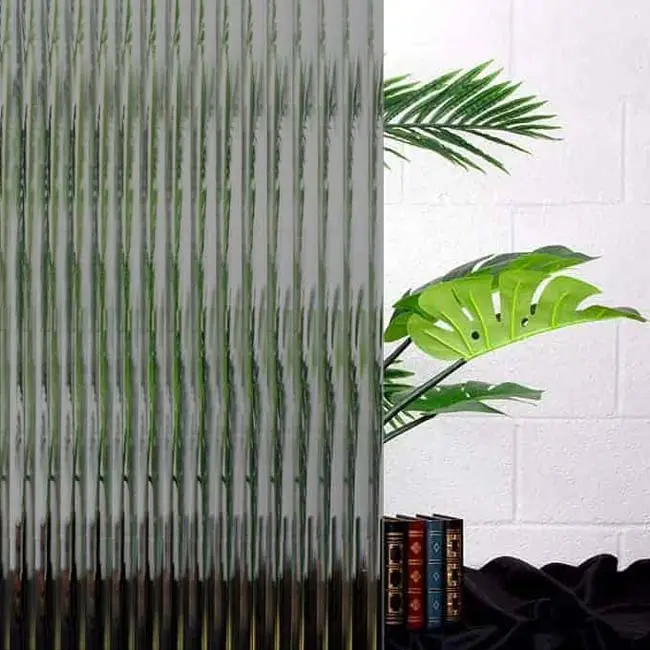
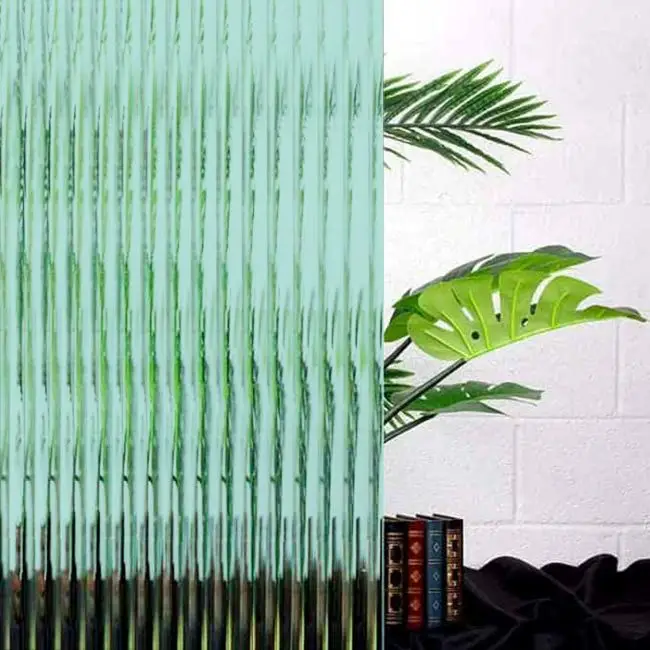
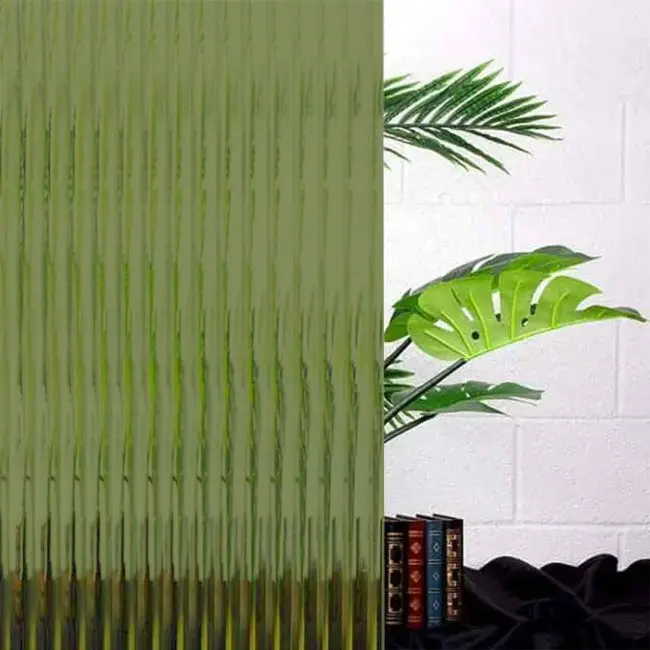
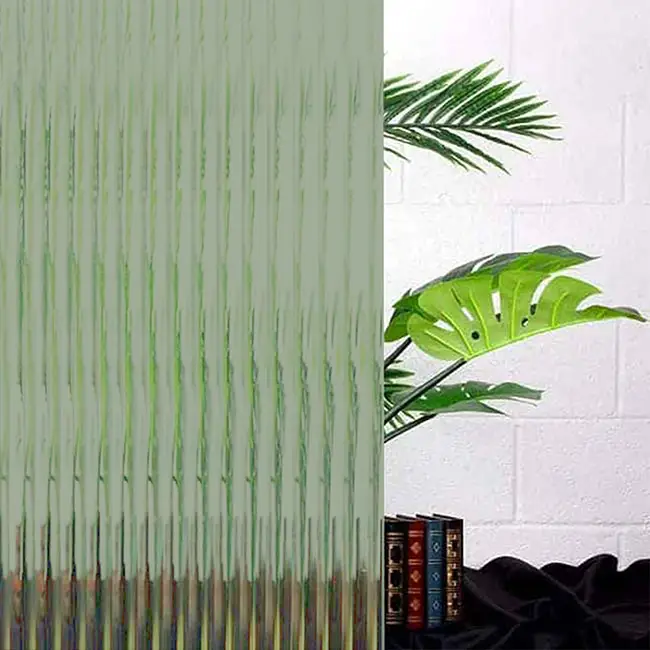
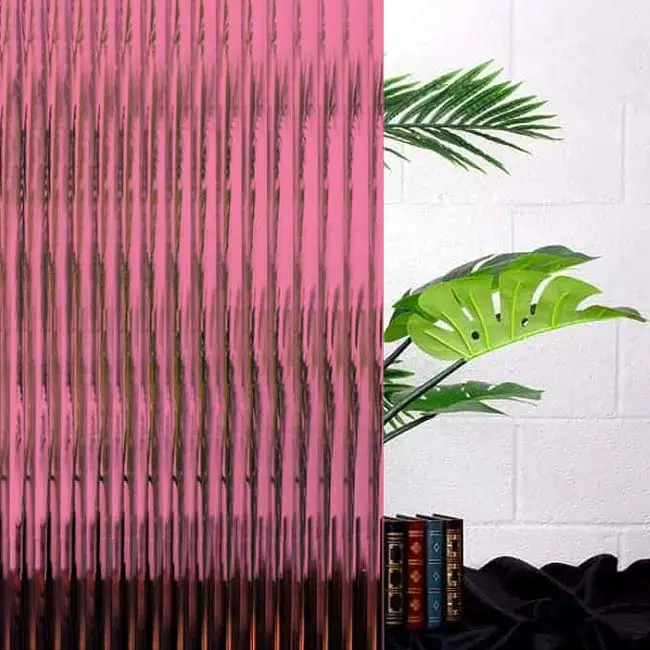
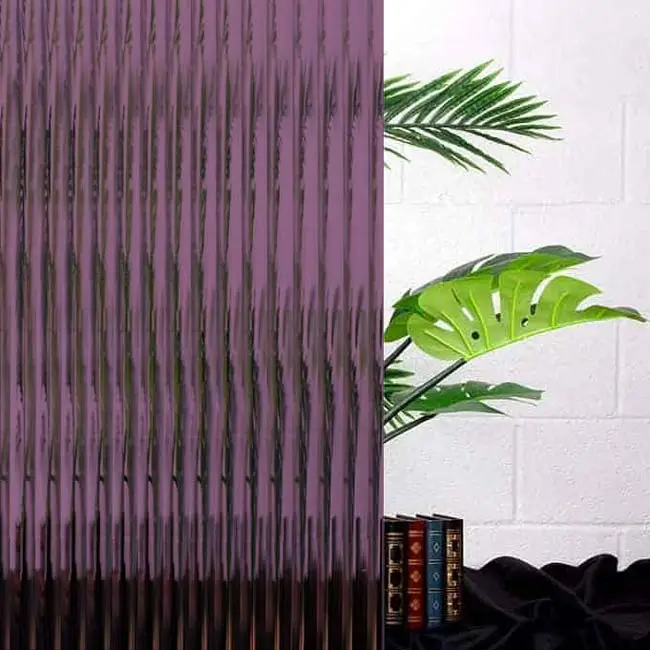
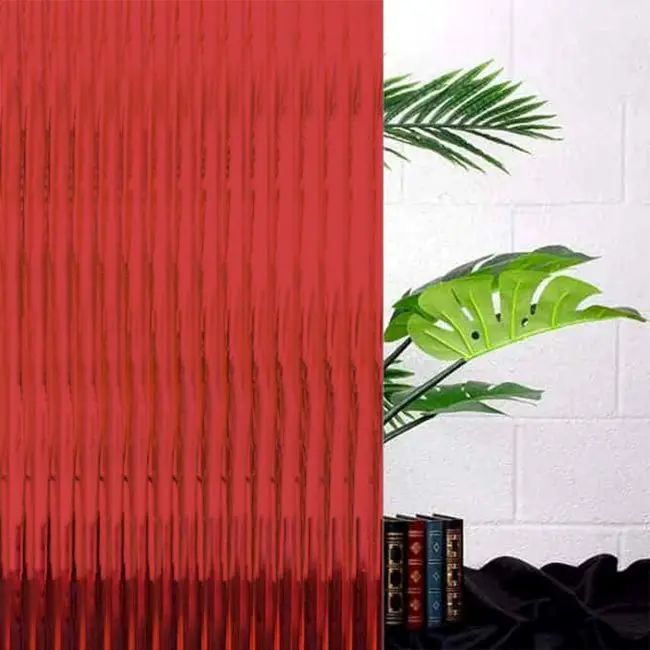
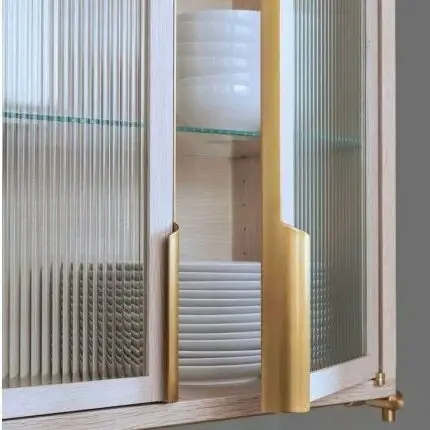
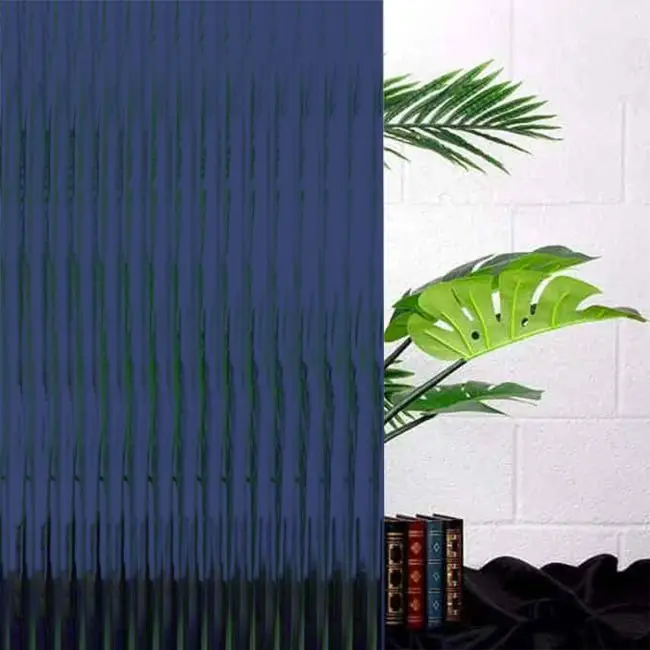
Reeded film replicates the look of real reeded or fluted glass using a vertical ribbed texture applied directly to existing glazing. The ribs scatter light in multiple directions as it passes through, preventing a clear view while still transmitting plenty of natural daylight.
What makes reeded film the standout choice for design-conscious buyers is the finish. Where standard frosted film gives a flat, even effect, reeded film has the architectural character of textured glass. It catches light differently throughout the day, creates movement and depth on the glass surface, and suits spaces where the aesthetic matters as much as the function.
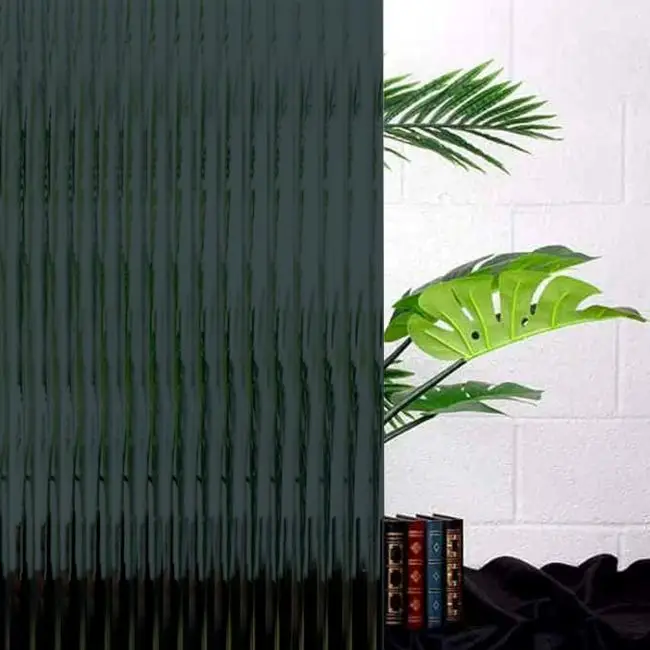
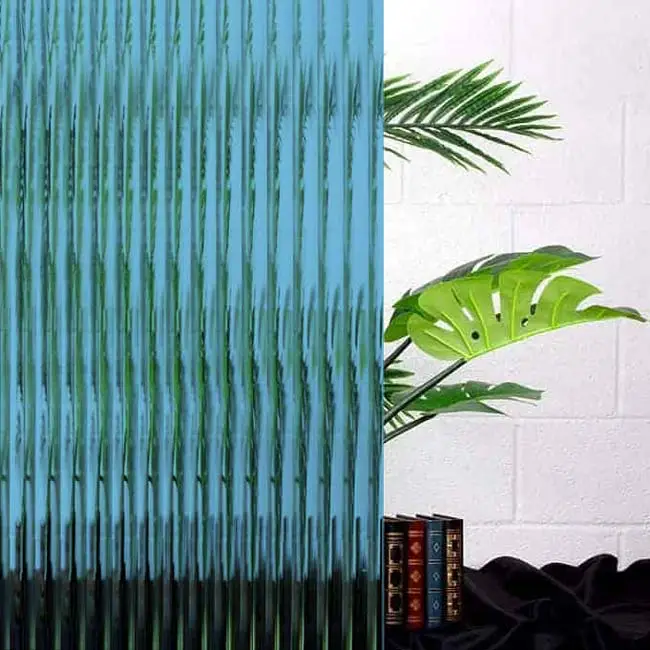
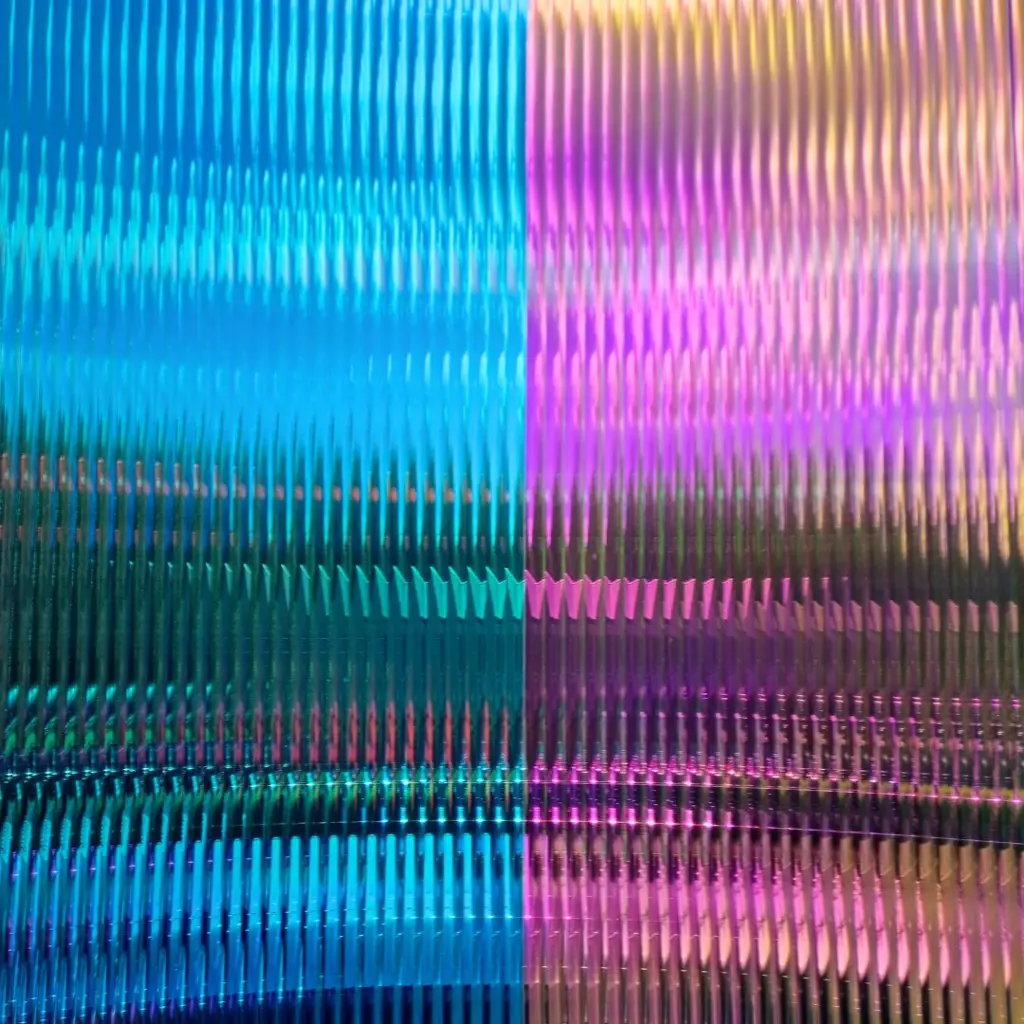
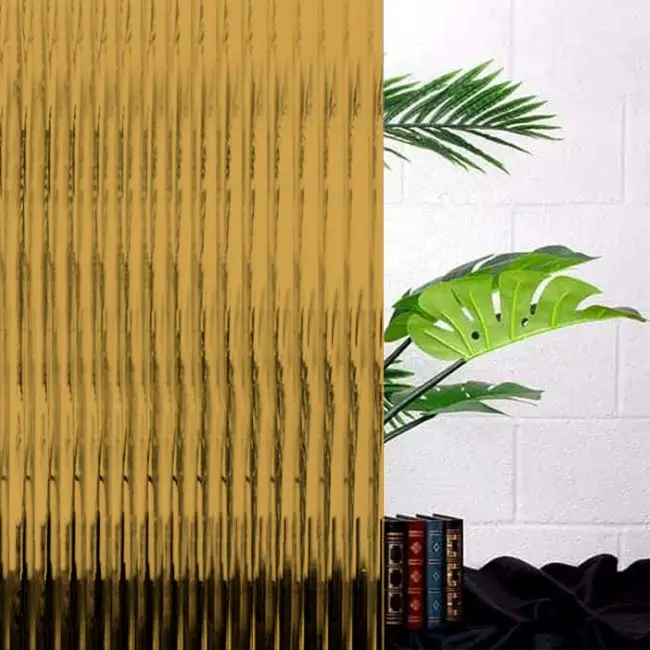
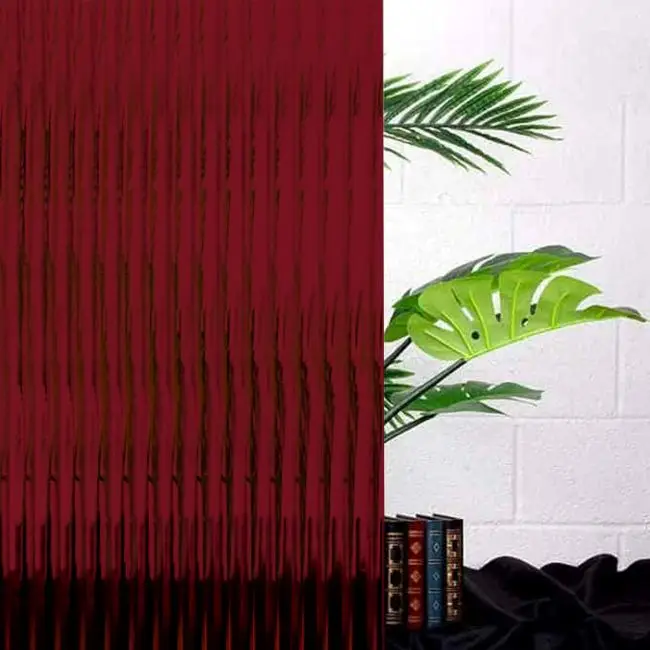
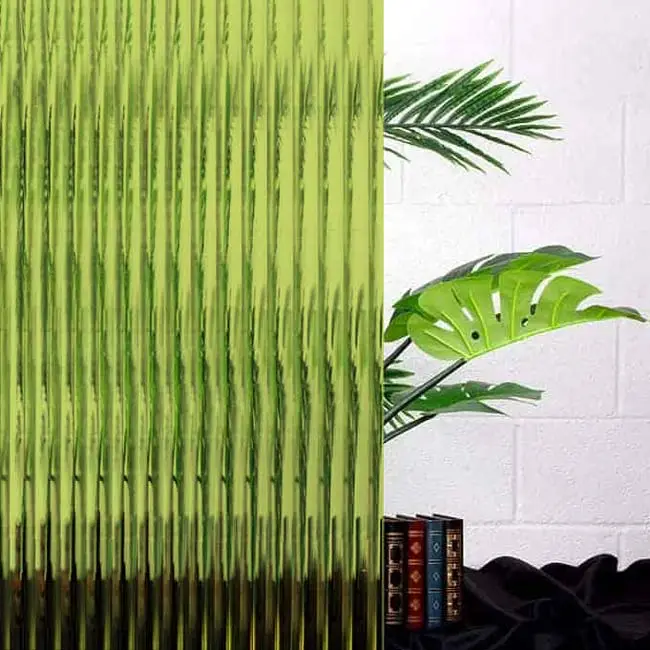
It's increasingly common in boutique office fit-outs, glazed meeting room doors, internal glass partitions, bathroom windows, and front door side panels. The reeded window film service includes a range of ribbed spacings from fine quarter-inch flutes to wider half-inch channels, with options for coloured and dichroic finishes in specialist applications.
Reeded film provides 24/7 privacy. It doesn't depend on light levels, which makes it a reliable choice for any space occupied after dark.
Patterned and decorative film
Patterned films use printed or etched designs to break up the view through the glass rather than making it uniformly translucent. Circle motifs, geometric etching, stripe patterns, and bespoke logo or brand cut-outs can all provide meaningful privacy while still allowing a good level of light transmission.
This category works well in spaces where full obscuration isn't needed but partial privacy is. A glass door panel with a frosted stripe across the central section, or a glass partition printed with a company logo, both block clear sight lines without covering the glass entirely. Light transmits freely through the uncovered sections.
Patterned and decorative films also serve glass manifestation requirements in commercial buildings, where full-height glass doors and partitions need markings that indicate the presence of glazing under Approved Document K. A branded pattern can meet that compliance requirement while also providing visual interest and partial privacy.
One-way reflective film
One-way reflective film does let light through. During daylight, when the exterior is brighter than the interior, the reflective coating creates a mirror effect on the outside face of the glass that prevents anyone from seeing in. Staff inside can see out clearly. People outside see their own reflection.
The important limitation is that this effect depends entirely on light levels. When interior lights are brighter than outside after dark, the effect reverses. The glass behaves like a lit window and the privacy disappears. For spaces only occupied during daylight, reflective film is a practical solution that lets in good levels of light while providing strong daytime privacy.
For any space used after dark, frosted or reeded film is the more reliable choice. Our guide on whether privacy window film works at night covers the light-level dependency in more detail.
Which film transmits the most light?
| Film type | Privacy | Light enters | Day and night | Best for |
|---|---|---|---|---|
| Frosted, light grade | Moderate | High (65-80%) | Yes | Front doors, street-facing windows, south-facing rooms |
| Frosted, medium grade | Strong | Good (50-65%) | Yes | Bathrooms, meeting rooms, glass partitions |
| Frosted, dense grade | Full | Moderate (40-55%) | Yes | Ground floor, clinical areas, street-level commercial |
| Reeded / fluted | Strong | Good | Yes | Office doors, partitions, bathrooms, boutique interiors |
| Patterned / decorative | Partial to strong | Good | Yes | Compliance manifestation, design-led spaces, retail |
| Reflective / one-way | Strong | Good | Daytime only | Open-plan daytime offices, reception glazing |
| Blackout | Full | None | Yes | Server rooms, media rooms, complete blackout required |
The right grade of frosted film comes down to how close people typically stand to the glass, the light levels on each side of the window, and how much visual detail needs to be obscured. A consultation or site survey helps confirm the right specification before installation.
Privacy without losing light, by space
Bathroom windows
A bathroom window is usually the first application people think of when they search for privacy window film that lets in light. The goal is consistent: prevent anyone outside from seeing in while keeping the bathroom feeling bright and open.
Consider the case of a terraced house in Leeds. The bathroom window faces directly onto the neighbouring property, three metres away. The homeowner had lived with an internal roller blind for years, pulling it down every time the bathroom was in use and raising it again to let in daylight between.
Fitting a medium-grade frosted film meant the blind came down permanently. The room now has full-time privacy, the window stays uncovered, and the light levels changed barely at all.
Light-grade frosted film suits upper-floor bathrooms and windows that face open space or garden. Medium-grade suits ground-floor or street-level windows where passers-by come closer. The white frosted bathroom window film range covers both grades.
Street-facing windows
Street-facing ground-floor windows present a different challenge. The distance between the glass and anyone looking in is small, and light levels through the day are variable. A frosted film at medium density gives reliable privacy throughout the day and evening without making the interior feel closed in.
For residential street-facing windows where the design of the home matters, reeded film is worth considering. It gives privacy equivalent to medium frosted but adds visual texture that looks intentional from the street rather than simply functional.
Office glass partitions and meeting rooms
Open-plan offices with glass-partitioned meeting rooms need privacy that works reliably throughout the working day and into the evening. A meeting room used for a sensitive HR conversation at 5pm, with the office lights on and the building dark outside, needs a film that doesn't depend on exterior light conditions.
When a facilities manager at a professional services firm in Manchester was specifying film for eight new glazed meeting rooms, reflective film was initially considered. After reviewing the evening-use requirements, the decision was made to go with a medium frosted instead. The glass partitions stayed visually open and light-transmitting during the day; the privacy was consistent at every hour.
For commercial glass partitions, which privacy window film is best covers the decision in more depth, including how to choose between frosted, reflective, reeded, and opaque films for different partition types and use cases.
Healthcare and consultation spaces
In healthcare environments, privacy isn't optional. Clinical consultation windows, patient rooms, and administrative glazing all need a film that gives complete and reliable privacy without conditions. Dense frosted film or opaque film is the standard specification. Light still enters the room; the view through the glass from either side is completely obscured.
For reception areas or waiting rooms where a more welcoming atmosphere matters, lighter frosted grades or reeded film can soften the clinical feel while still providing the necessary privacy.
DIY or professional installation?
Both routes are available, and the right one depends on the project.
Cut-to-size and self-adhesive film suits single windows, straightforward glass, and buyers who are comfortable with basic DIY. The Lustalux shop carries frosted, reeded, and privacy films that can be ordered cut to size or by the roll. Application requires a clean, dry glass surface, a squeegee, and a little patience. The instructions are straightforward for flat, standard glass.
Professional installation is worth considering when:
- The glazing is large, difficult to access, or part of a commercial fit-out
- Multiple windows or partitions need consistent results across a building
- The glass type needs assessing before film can be specified (some coated or aged glass needs careful product matching)
- The project involves compliance requirements such as glass manifestation or safety film alongside privacy
A site survey from Lustalux confirms the glass type, light conditions, the most appropriate film grade, and how the installation should be planned around the building's use. For offices, schools, healthcare settings, and multi-window projects, this step avoids the cost of a misspecified film.
Request a no-obligation consultation to discuss a commercial project or to get advice on which film suits a specific window before ordering.
FAQs
Does frosted window film let natural light in?
Yes. Frosted film diffuses light as it passes through rather than blocking it. How much light comes through depends on the grade of film. Light-grade frosted transmits around 65-80% of visible light. Dense frosted transmits around 40-55%. The room remains naturally lit in both cases.
What is the best window film for a bathroom that still lets in light?
Medium-grade frosted film is the standard recommendation for bathroom windows. It gives consistent privacy day and night while still allowing good natural light transmission. For bathrooms facing a garden or open space from an upper floor, a lighter grade works well. For ground-floor or street-level bathrooms, a denser grade gives more peace of mind.
Does reeded window film let light in?
Yes. The ribbed texture of reeded film scatters light as it passes through, allowing plenty of natural daylight into the room while preventing a clear view through the glass. It provides 24/7 privacy with a design-led finish suited to offices, doors, partitions, and bathroom windows.
What's the difference between frosted and one-way window film?
Frosted film gives privacy from both sides, day and night, by diffusing the view through the glass. One-way film gives privacy from outside only during daylight, by using a reflective coating that works when exterior light levels are higher than interior light levels. After dark, one-way film loses its effect. For round-the-clock privacy, frosted or reeded film is more reliable.
Can I put frosted film on double glazing?
Yes. Frosted, reeded, and reflective films can be applied to the interior surface of double-glazed units in most cases. Some sealed units have low-emissivity or other specialist coatings that affect which film is suitable. A site survey or glass specification check helps confirm the right product before installation.
The right privacy window film that lets light in
The assumption that privacy means losing light leads a lot of people to live with blinds permanently drawn, or to put off addressing a glazing problem entirely. The right window film removes that trade-off.
Frosted film, reeded film, and patterned decorative film all give genuine privacy while leaving the glass doing its job. The room stays bright. The view from outside is obscured. The installation takes a few hours and doesn't require replacing any glass.
For single windows and straightforward applications, the reeded window film range and frosted film products can be ordered cut to size from the Lustalux shop. For offices, partitions, healthcare glazing, and any project where multiple windows need consistent results, the Lustalux team can survey the site and recommend the right film before installation begins.
If cost is a primary concern, how to add privacy to windows cheaply sets out all the options with a total cost comparison. For large windows, floor-to-ceiling glazing, or bifold doors, how to make a large window more private covers the specific challenges those sizes create.
Book a no-obligation consultation and we'll help you find the right balance of privacy and natural light for your space.
Products mentioned in this article
Related internal links
- privacy window film that lets light in
- plain frosted window film
- reeded window film
- whether privacy window film works at night
- white frosted bathroom window film
- which privacy window film is best
- Request a no-obligation consultation
- reeded window film range
- how to add privacy to windows cheaply
- how to make a large window more private
- Book a no-obligation consultation
Related external links
Ready to start your project?
Discuss your requirements with a specialist and get a tailored quote for your space