resource / Guide
Reeded Glass Film: A Complete Guide to Fluted Window Film for Privacy
Window film
Guide
11 min read
2026-06-02

Reeded glass film is a self-adhesive film applied to existing glazing that recreates the vertical ribbed texture of traditional reeded glass, giving you the fluted look without replacing the glass or calling in a glazier. It diffuses the view through the glass while letting high levels of natural light through, which makes it a popular choice for bathrooms, office partitions, internal doors, and any space where privacy and daylight both matter.
The demand for reeded glass has grown quickly in recent years. Designers specifying for commercial fit-outs, boutique offices, and residential renovations who previously used the real thing have increasingly moved to film as lead times for custom reeded glass panels stretch and costs climb. If you're weighing up reeded film against frosted film, real reeded glass, or other privacy options, this guide explains how it works, which flute width to choose, how it performs at night, and what to consider before you order.
Key Takeaways
- Reeded glass film recreates the fluted glass look on existing glazing with no structural work or glass replacement.
- Unlike reflective one-way film, reeded film provides visual privacy both during the day and at night.
- Flute widths are typically 6mm or 12mm; finer suits modern interiors, bolder suits a traditional reeded look.
- Reeded film suits bathrooms, office partitions, internal doors, meeting rooms, and commercial fit-outs.
- Lustalux supplies reeded film for self-application and installs it professionally across the UK.
What is reeded glass film?
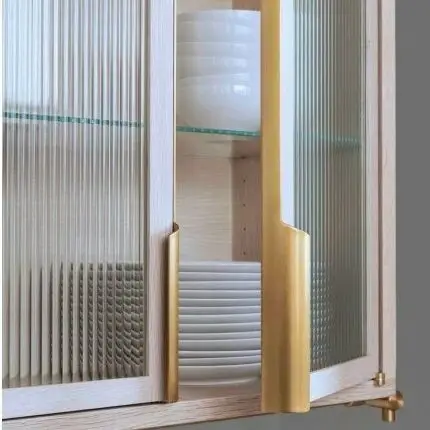
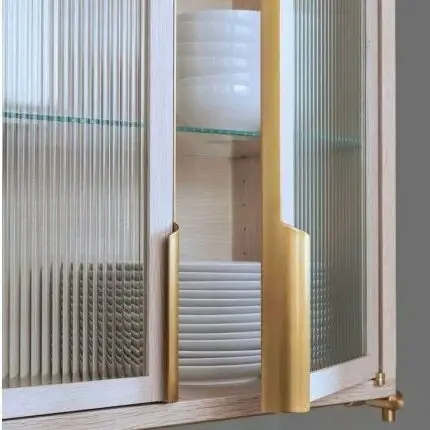
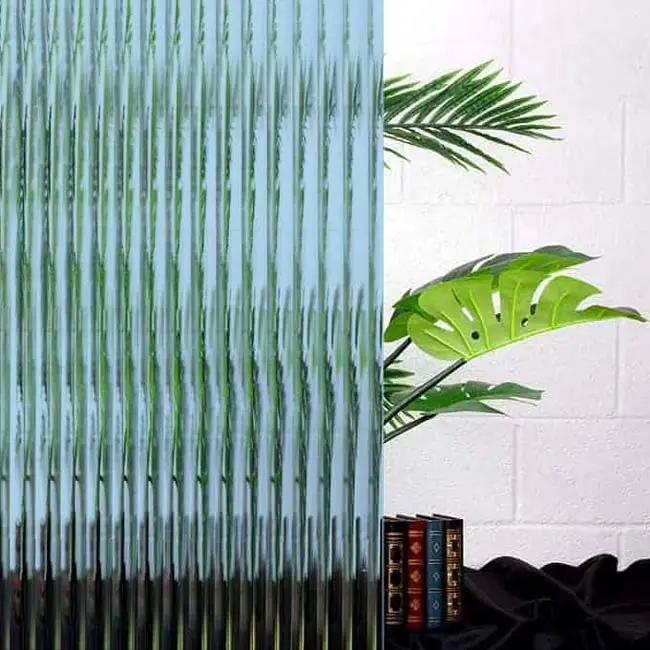
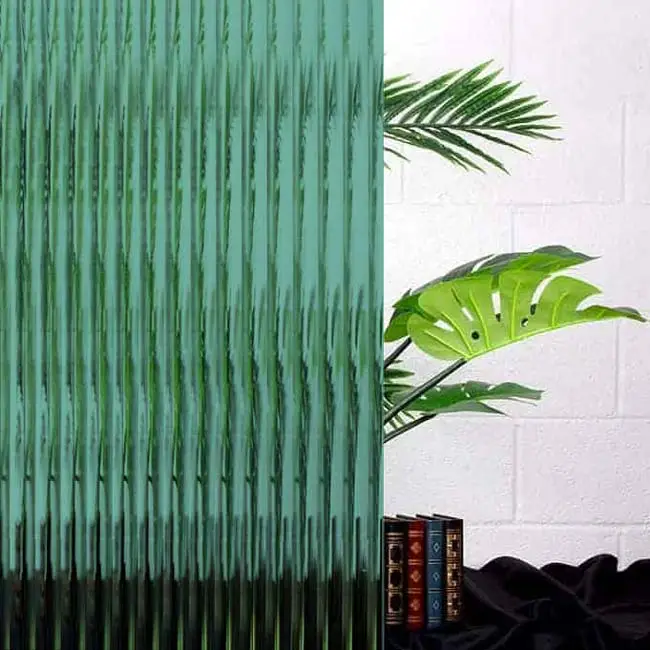
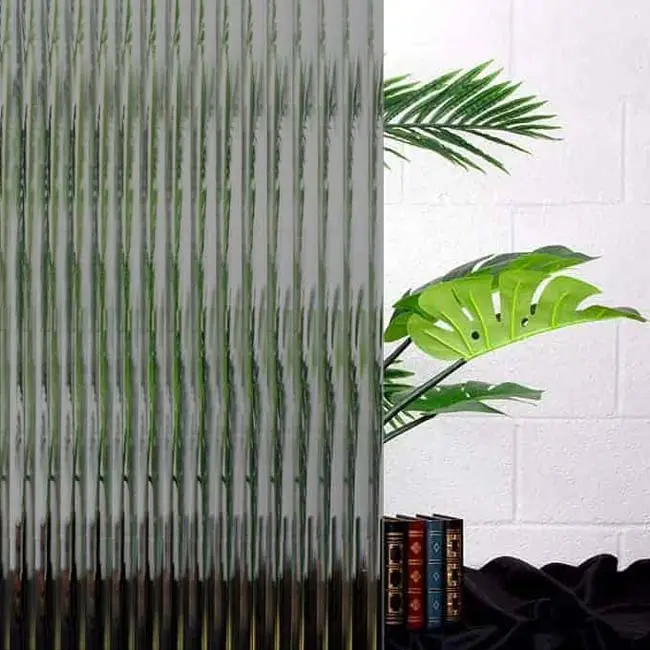
Reeded glass film is a decorative window film with a vertical ridged pattern. When applied to glass, the ribs scatter light as it passes through, diffusing the view while still transmitting a high proportion of natural daylight. From a distance, the film reads as textured glass rather than film.
The terminology is worth clarifying, because searches for this product use several terms interchangeably. In the glass trade, reeded glass and fluted glass are slightly different products: reeded glass typically has wider, deeper ridges; fluted glass has narrower, more tightly spaced grooves. As a film product, the two terms describe the same thing. You may also see it called ribbed glass film. All three refer to a decorative privacy film with a vertical striped pattern applied to existing glass.
Real reeded glass requires a glazier, new framing, and in most cases a full panel replacement. Film gives you the same visual result applied to the glass you already have, usually at a fraction of the cost and without any structural work.
Where reeded glass film works best
Bathroom windows and doors
Bathrooms are one of the most common applications. Reeded film provides reliable privacy without blocking daylight, which is important in bathrooms that depend on natural light from a single window. It also works on glazed bathroom doors and shower screens where complete obscuring film might make the space feel enclosed.
Office glass partitions and meeting rooms
In commercial offices, reeded film, sometimes specified as fluted window film, is used on glazed meeting room walls and doors where plain frosted film looks too functional for the space. The textured finish gives the meeting room a more considered, design-led quality while still giving occupants privacy from the open plan beyond.
Internal doors and glazed panels
Full-door application or a mid-panel band of reeded film gives an architectural finish to glazed internal doors in both residential and commercial settings. It works particularly well in period properties where the ribbed texture aligns with the character of existing joinery.
Retail and hospitality
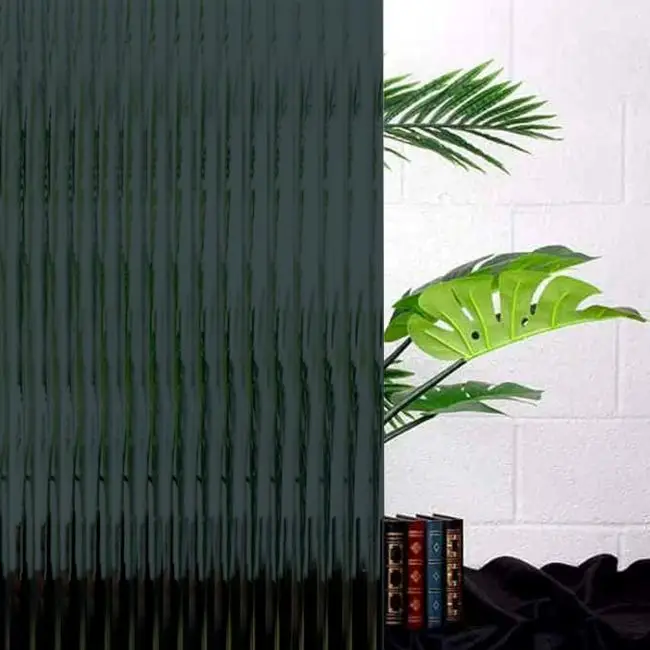
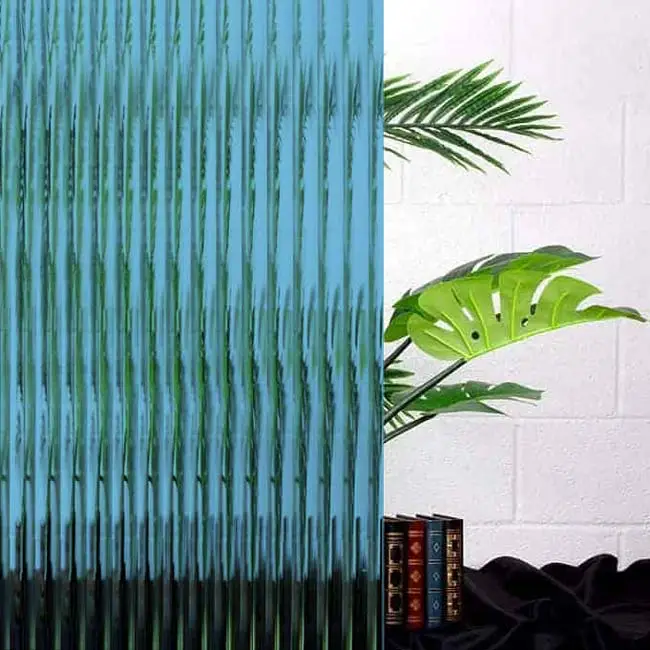
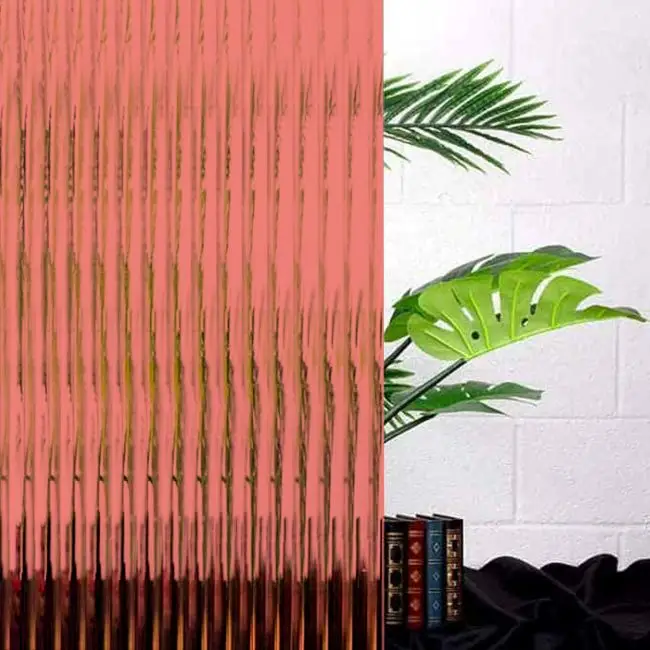
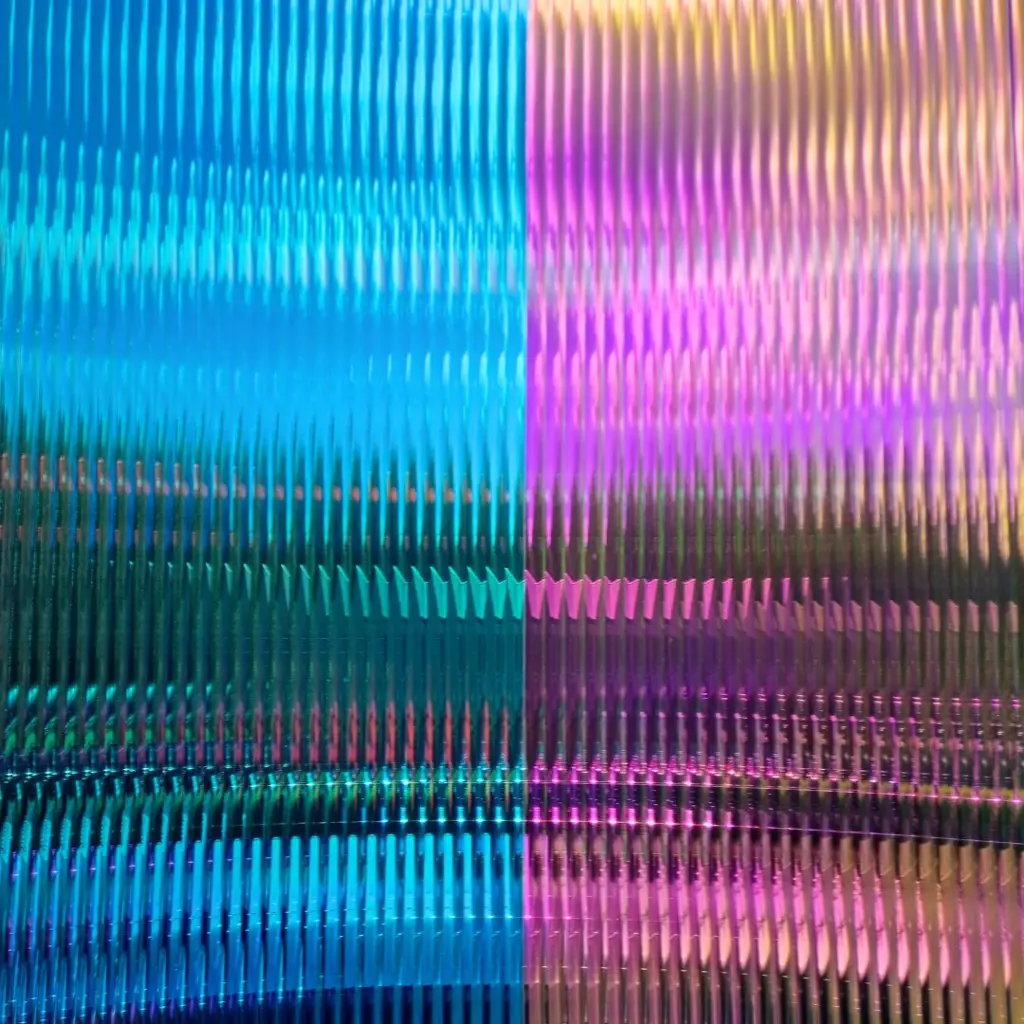
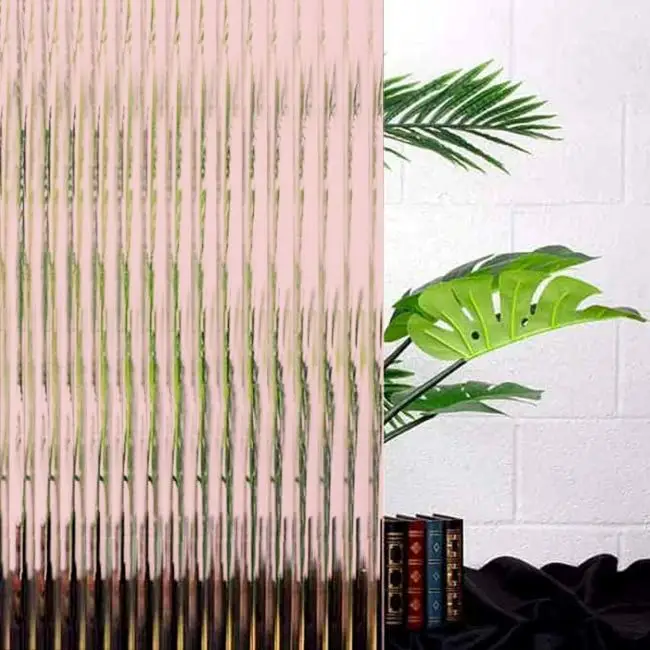
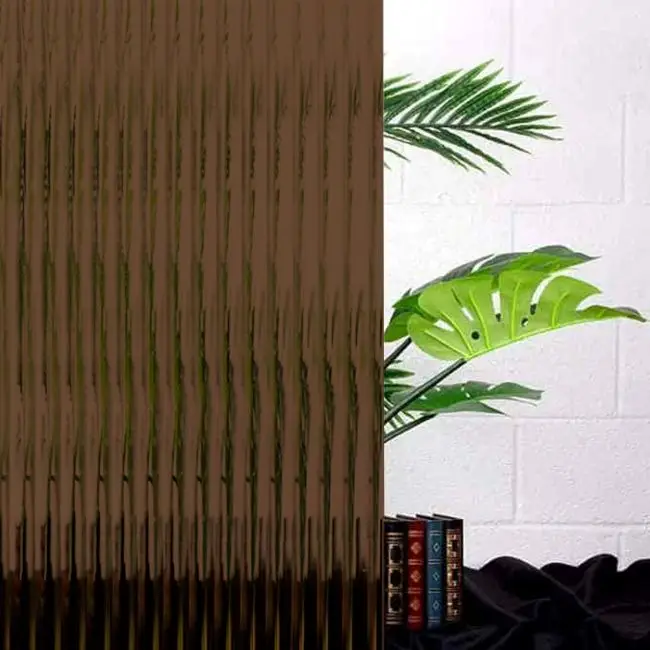
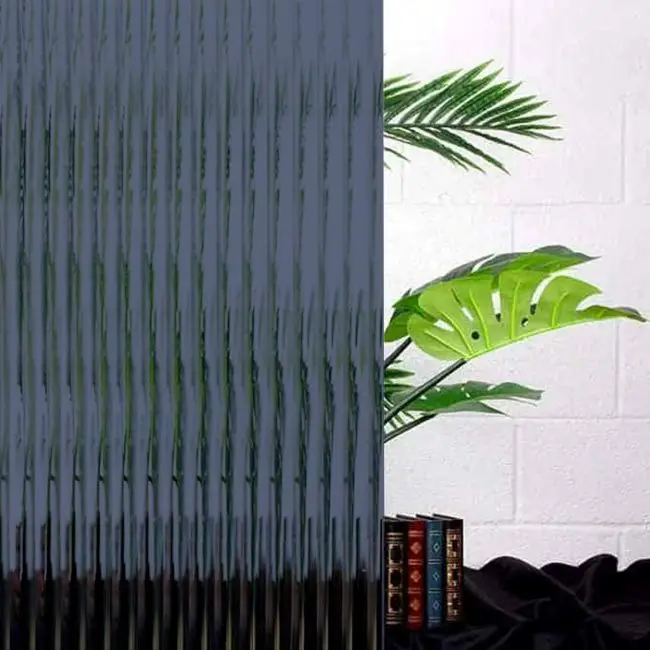
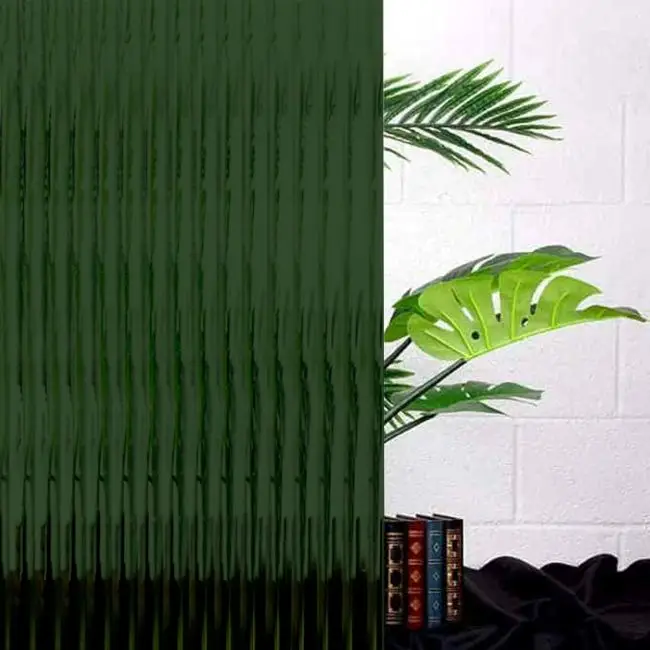
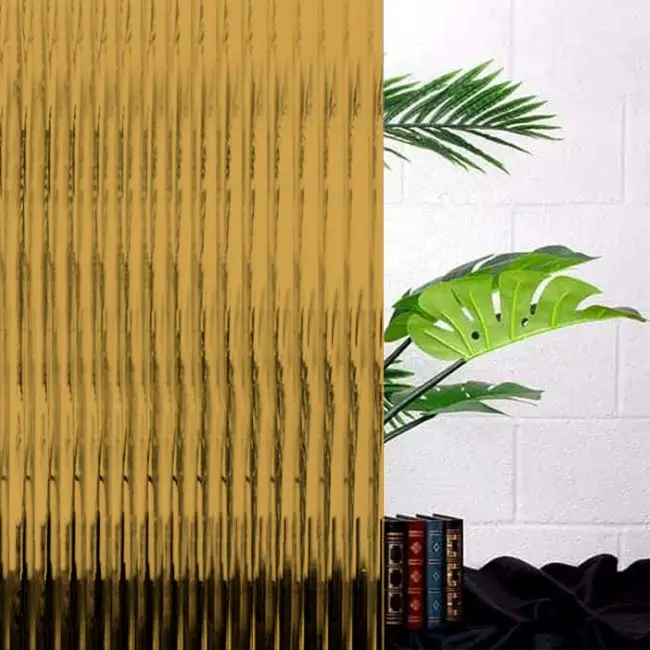
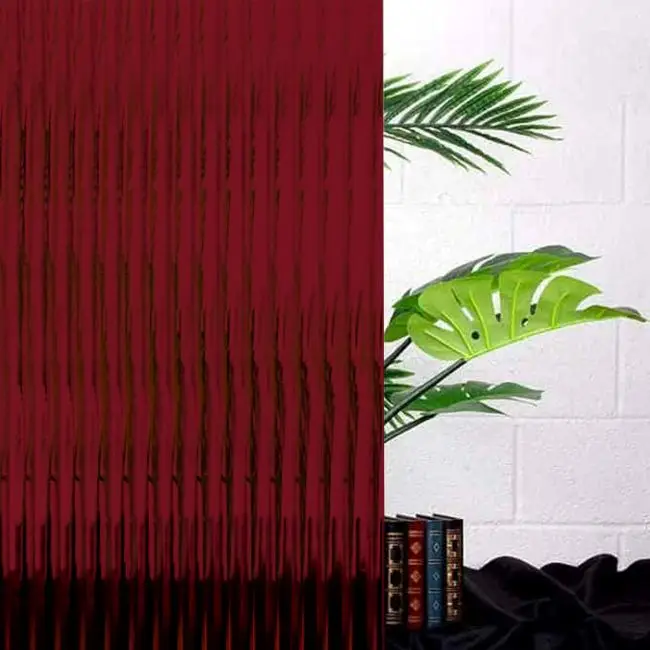
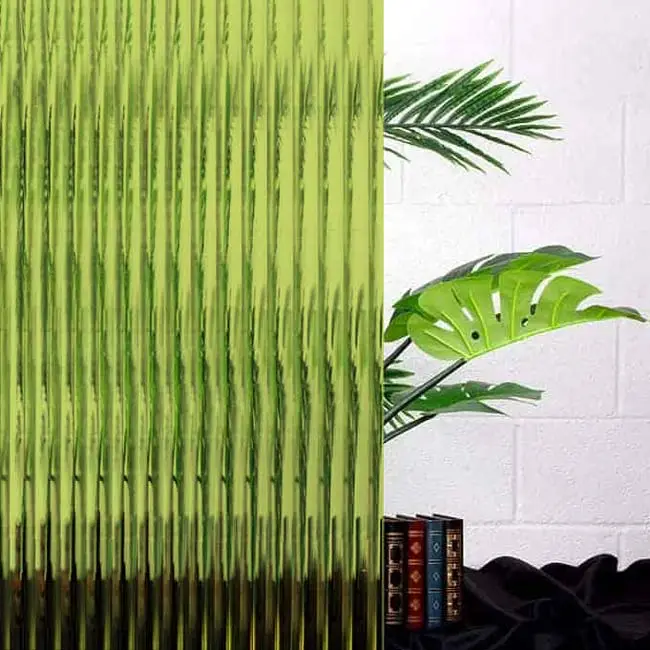
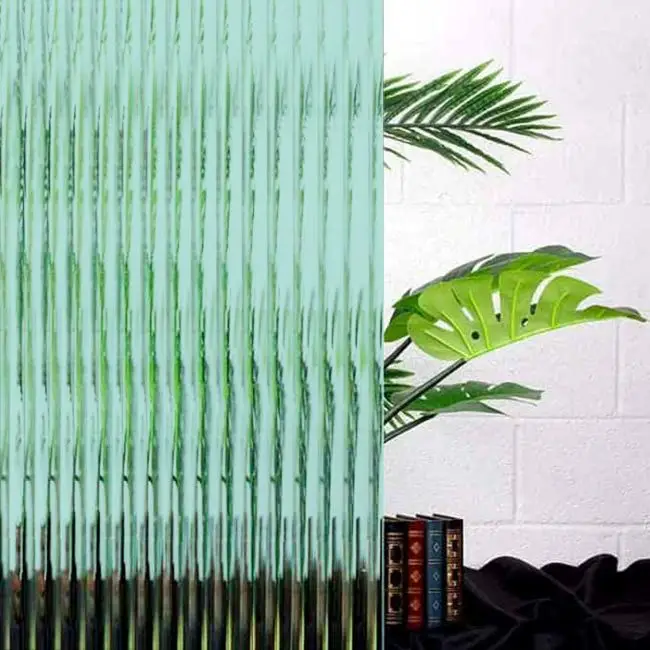
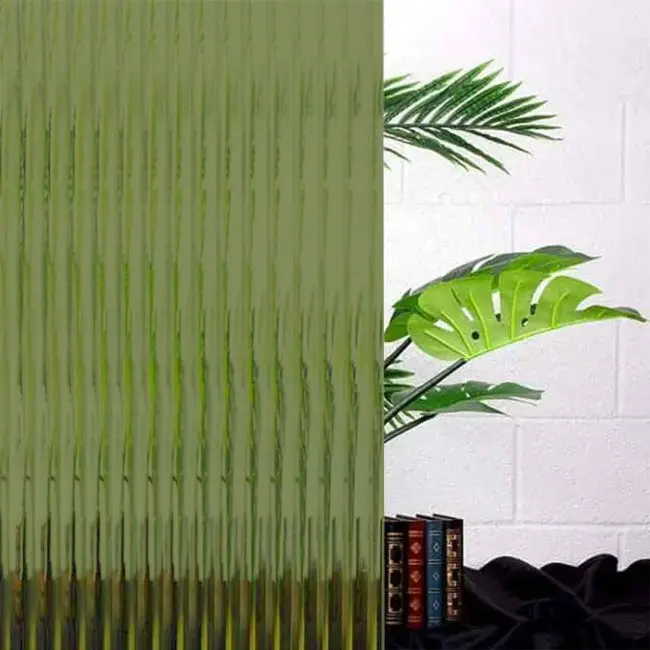
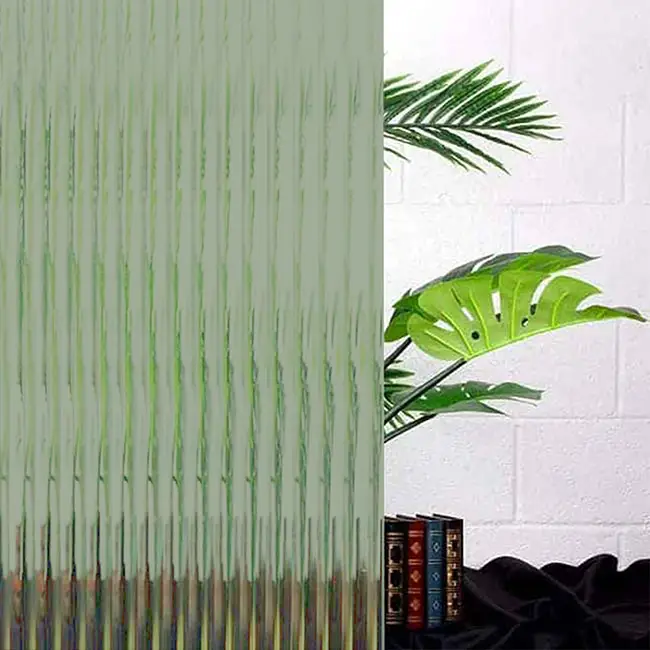
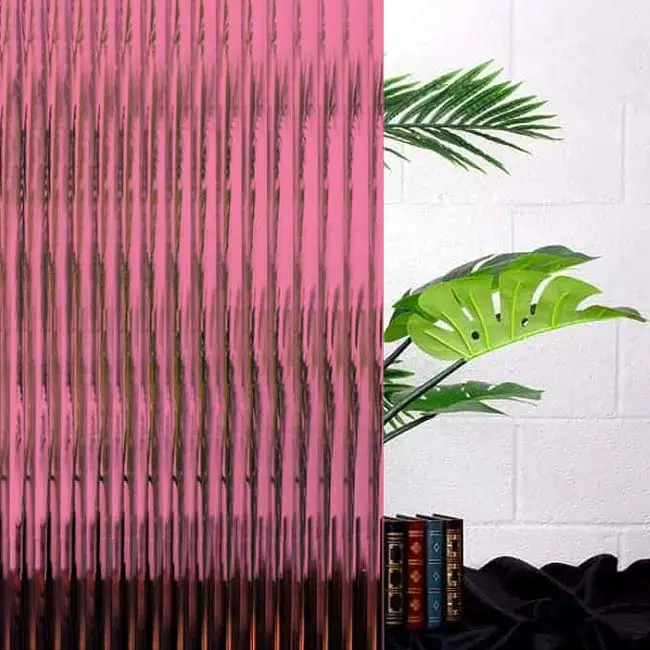
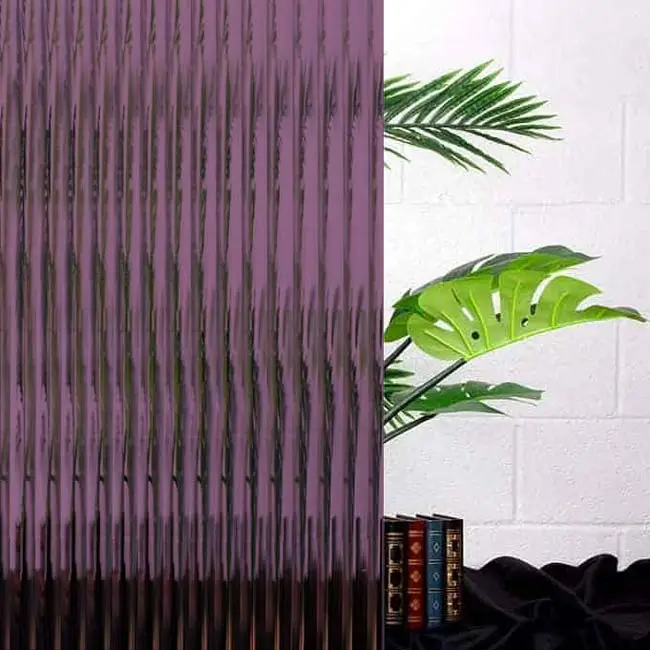
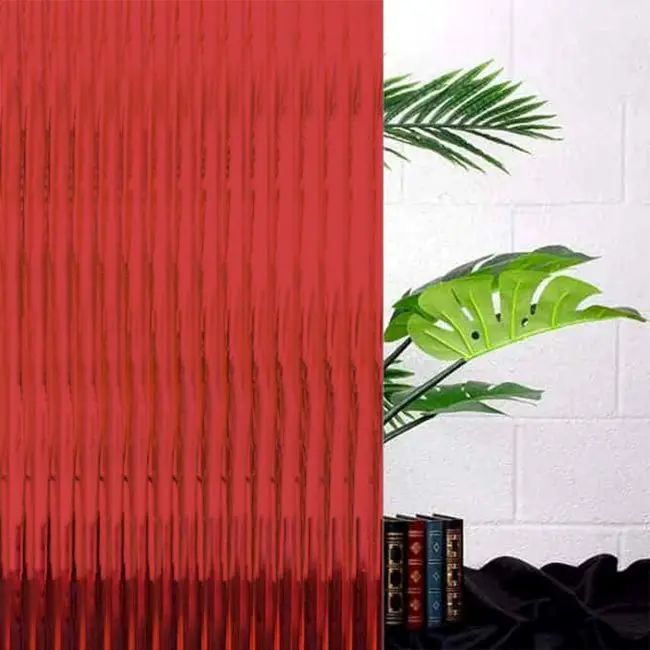
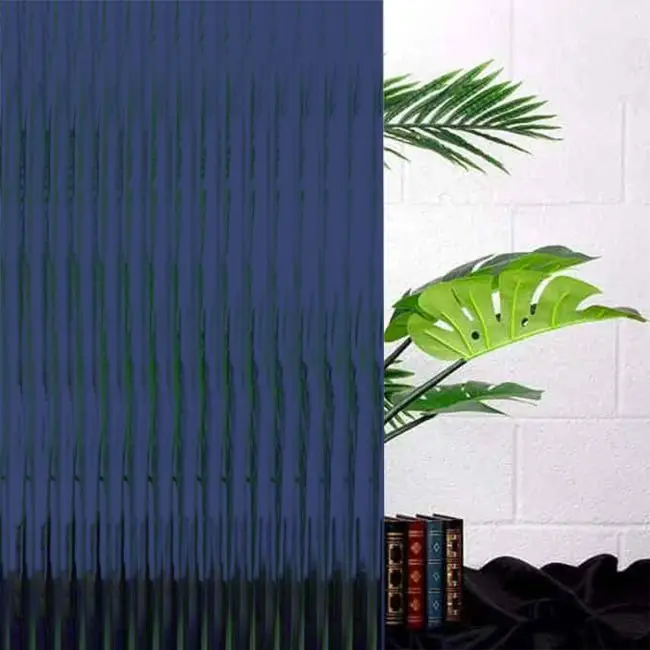
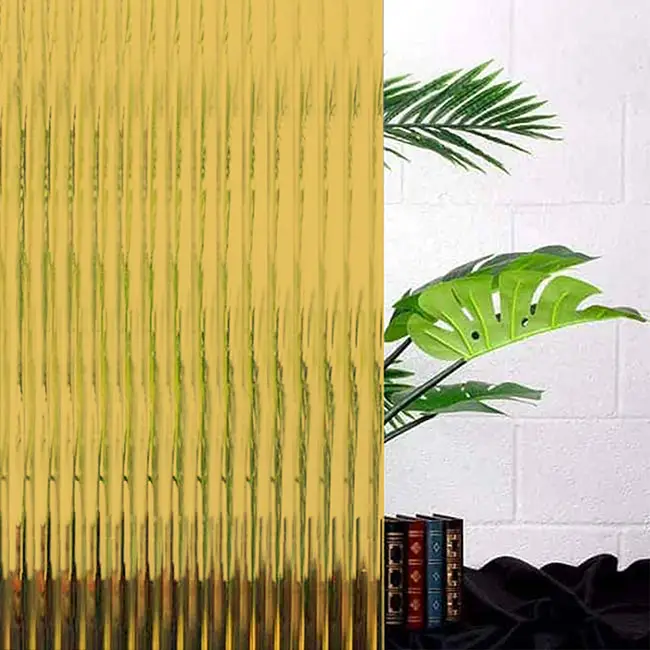
Boutique retail interiors, restaurant glazing, and hotel lobby partitions use reeded film to suggest separation between spaces without building solid walls. The texture photographs well and holds up in higher-footfall environments when correctly installed. Lustalux has supplied bespoke coloured reeded film for production work, including the Swarovski Holiday 2024 TV advert set design, a project that also shows how custom colour options are available for commercial clients with specific finish requirements.
When a fit-out contractor was specifying glazing treatments for a new boutique office in Manchester's Northern Quarter, the client wanted the look of reeded glass partitions but faced a six-week lead time and a budget that could not stretch to bespoke glazed doors at around £800 each. The solution was applying reeded film to the existing clear-glazed doors. The work took a single day, cost a fraction of the glass replacement price, and delivered the textured finish the client had specified from the start of the project.
For commercial projects where survey, specification, and installation are all needed in one place, our reeded window film installation service covers the full process, from site visit to finished installation, UK-wide.
Reeded glass vs fluted glass: what is the difference?
The question of reeded glass vs fluted glass comes up regularly, particularly when buyers are comparing film options or checking a design specification. As a window film product, reeded and fluted glass film are the same thing. Both describe a film with a vertical ribbed pattern that diffuses light and gives a textured glass effect on existing glazing.
The distinction matters more in specification language. If a design team refers to "fluted glass doors" in a commercial fit-out brief, reeded glass film is the correct film product to reference. If the specification asks for "reeded glass partitions", the same film applies. The important variable is flute width, which ranges from fine to bold and creates noticeably different effects on the finished panel.
Where the terms diverge slightly in meaning: finer, more closely spaced grooves tend to be described as "fluted", while wider, more pronounced ridges are associated with the traditional reeded look. Most film suppliers, including Lustalux, offer both widths to reflect this.
Does reeded film work at night?
This is one of the most common questions about any privacy window film, and it deserves a clear answer.
Reeded film performs better at night than reflective or one-way mirror film. Reflective film depends on a difference in light levels to work: it provides daytime privacy when the outside is brighter than the inside, but at night, when the interior is lit and the outside is dark, the effect reverses and the film loses most of its privacy benefit.
Reeded film works differently. Because the ridged pattern scatters and diffuses light in both directions rather than reflecting it, the film provides visual distortion regardless of which side is brighter. Silhouettes may be more visible through reeded film when there is a strong light source directly behind the glass, but the textured surface still prevents a clear view through the window at night.
For bathrooms, bedroom windows, and street-facing glazing where consistent privacy around the clock matters, reeded film is a more reliable choice than reflective film. If complete blackout or full obscuring is needed, privacy window film in a frosted or opaque finish provides a higher level of visual screening in both conditions.
A homeowner replacing a bathroom blind was torn between one-way mirror film and reeded film for the window that faced her neighbour's garden. After reading about how reflective film loses its effect after dark, she chose reeded film instead. During the day the window looked intentional and considered rather than simply covered. In the evening, with the bathroom light on, someone standing outside could see movement through the glass but not the detail. For a bathroom window, that level of privacy was exactly what she needed.
Choosing the right flute width
Most reeded glass film products are available in two standard widths. Choosing between them is partly a question of aesthetics and partly a question of scale.
6mm (¼ inch) flutes
The finer option. The narrower grooves create a subtler, more contemporary texture that suits modern and minimal interiors. It reads as refined rather than retro and is often the choice for commercial partitions, hotel glazing, and design-conscious residential projects where the texture is meant to add detail rather than make a statement.
Browse the ¼ inch reeded glass window film product page for sizes and specifications.
12mm (½ inch) flutes
The bolder option. Wider ridges create a more pronounced ribbed effect that is closer to the look of traditional reeded glass. It works well in period properties, boutique retail interiors, and commercial projects where the reeded texture is intended to be a visible design feature.
Browse the ½ inch reeded glass window film product page for sizes and specifications.
A useful rule of thumb: smaller panes and narrower panels tend to suit the finer flute, while larger expanses of glass carry the bolder width more naturally. If you're applying across multiple panels and want a consistent specification, it's worth ordering a sample before committing to a full roll.
Browse the full reeded window film range to compare both widths.
Reeded film vs frosted film: which should you choose?
Both reeded and frosted film provide privacy while allowing natural light through. The right choice depends on the look you want and how much visual texture suits the space.
| Reeded film | Frosted film | |
|---|---|---|
| Privacy level | Good (diffused through ribbed texture) | Good (evenly obscured) |
| Day and night privacy | Yes | Yes |
| Light transmission | High | Medium to high |
| Aesthetic | Textured, design-led, architectural | Clean, minimal, functional |
| Best for | Design-conscious spaces, period interiors, commercial fit-outs | Bathrooms, plain glass, offices, compliance marking |
| Available bespoke or custom | Yes, including colour options | Yes, including printed manifestation |
If the requirement is purely functional, frosted film is often simpler and more cost-effective. If the glass treatment needs to contribute to the overall design of the space, reeded film tends to produce a result that feels more intentional. If you're not sure which suits your project, our team can advise based on the space, the glass, and the brief.
For commercial clients who need manifestation markings on glass partitions as part of an Approved Document K compliance scheme, reeded film can form part of the specification. Glass manifestation and reeded film can work together on the same panel.
What does reeded glass film cost?
For self-apply orders, reeded glass film is available from around £9 to £25 per linear metre depending on width and product specification. Ordering cut to size for a standard internal door typically costs between £50 and £150 in materials.
Professional supply and installation costs vary by project: the number of panels, their dimensions, access requirements, and whether the work is part of a larger fit-out all affect the final price. Request a quote for a project-specific figure.
For comparison, replacing an internal glazed door panel with real reeded glass typically costs several hundred pounds per panel before installation, and often involves lead times of several weeks. Film gives you the same visual result on the same day, at considerably lower cost.
How long does reeded glass film last?
Interior reeded film, correctly installed on clean, flat glass in a stable indoor environment, typically lasts 10 years or more. Longevity depends on a few factors:
- Installation quality: professionally fitted film adheres more consistently and is less likely to develop edge lifting or air pockets over time
- Cleaning routine: use a mild soapy solution and a soft cloth; avoid abrasive pads, scourers, and strong solvents
- Sun exposure: south-facing glazing in direct sun may see a shorter lifespan than shaded installations
- Surface type: smooth, flat glass is the most reliable substrate; textured or coated glass needs assessment before specification
Professional installation vs self-apply
Self-apply is right when:
- You're covering a small number of panes or a single door
- The panes are a manageable size for one person to position the film
- Alignment across adjacent panels isn't critical to the look
- You're comfortable working with a wet application and a squeegee
Professional installation is the better route when:
- You're covering multiple rooms or full-height partitions
- The flute pattern needs to align consistently across several panels
- The project is in a live commercial building with limited access windows
- You're combining reeded film with other glazing treatments such as manifestation
When a large co-working space in London wanted reeded film across 24 meeting room doors and the full-height glazed partitions surrounding them, the scale made self-application impractical. The Lustalux installation team completed the work over two days, around the building's operating hours, leaving a consistent flute alignment across all 24 doors. The client avoided closing the building and had a finished result with no visible joins or misalignment across the panels.
Lustalux supplied the reeded film and managed the installation. We also supply cut-to-size and roll orders for self-apply projects. A project of that scale is also a good example of how reeded film can sit alongside other glazing treatments: some of those partitions also carried bespoke manifestation markings to meet the building's glass safety requirements.
FAQs
Is reeded glass film the same as fluted glass film?
Yes. Reeded film, fluted film, and ribbed glass film all describe the same type of decorative privacy film with a vertical striped texture applied to existing glass. The terms are used interchangeably by film suppliers and design specifiers. In actual glass, reeded and fluted describe slightly different ridge widths, but as a film product there is no meaningful distinction.
Does reeded film let light through?
Yes. Reeded film allows a high level of natural light transmission. The ribbed texture scatters the light passing through the glass rather than blocking it, so rooms will not feel noticeably darker after application. The light that comes through will be diffused rather than direct.
Can I apply reeded film myself?
For small panels, single doors, and bathroom windows, yes. The film is applied wet, positioned on the glass, and smoothed with a squeegee. For large panes, full-height partitions, or multiple panels where flute alignment across panels matters, professional installation produces a cleaner and more consistent result.
Does reeded film give privacy at night?
Yes, and more reliably than reflective or one-way mirror film. Reeded film diffuses light through the ribbed pattern in both directions, so it continues to distort the view through the glass whether it is light or dark outside. Silhouettes may be more visible when a strong light source sits directly behind the glass, but the texture still prevents a clear view through the window.
What is the difference between ¼ inch and ½ inch reeded film?
The ¼ inch (6mm) option has finer, more closely spaced flutes that create a subtler, more contemporary look. The ½ inch (12mm) option has wider, more pronounced ridges that give a bolder reeded glass effect closer to the traditional style. Finer flutes suit modern and minimal interiors; the wider option works better in period settings or where the texture is intended to be a prominent design feature.
How long does reeded film last?
Interior reeded film typically lasts 10 years or more with correct installation and care. Use a mild soapy solution and a soft cloth for cleaning. Avoid abrasive materials and strong solvents. South-facing glazing in direct sun may see a shorter lifespan than shaded installations.
Getting the reeded glass look without replacing the glass
Reeded glass film is a practical, cost-effective way to bring the fluted glass aesthetic to existing windows, doors, and partitions. It works as a privacy solution in both day and night conditions, performs across residential and commercial settings, and is available in flute widths to suit contemporary and traditional interiors alike.
For self-apply projects, browse the Lustalux reeded window film range and order cut to size or by the metre. For commercial projects, specification support, or a nationwide installation, contact the Lustalux team for a no-obligation quote.
Products mentioned in this article
Related internal links
Related external links
Ready to start your project?
Discuss your requirements with a specialist and get a tailored quote for your space