resource / Guide
Tinted Reeded Glass Film: Colours, Uses and How to Choose
Window film
Guide
8 min read
2026-06-02

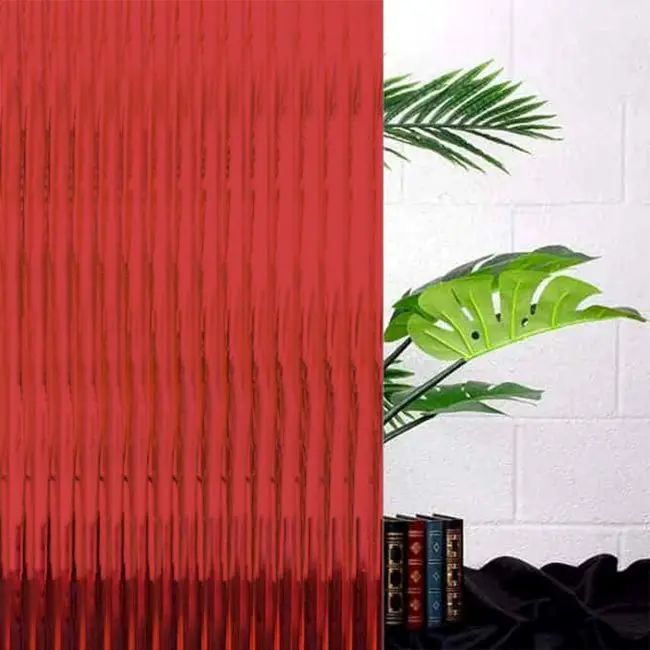
Tinted reeded glass film is available in a range of colours — blue, green, pink, yellow, tangerine, grey, black, and a colour-shifting dichroic variant — making it one of the more distinctive privacy films currently available in the UK. If you have seen clear reeded film in a bathroom or on an interior door and wondered whether a coloured version exists, the answer is yes. And the range is wider than most buyers expect.
The term "tinted reeded glass film" is used interchangeably with "coloured reeded window film" and "tinted fluted glass film." Whether you search for one or the other, you are looking at the same product category: reeded window film with a colour or tint built into the base film. The ribbed texture is identical to the clear version. The difference is that the light passing through the glass takes on the hue of the film as it enters the room.
This guide covers the full colour range, explains how each tint affects the light in a room, and helps you choose between the self-apply and professionally installed routes — whether you are a homeowner, an interior designer, or a commercial specifier.
When an interior designer approached us with a brief for a boutique hotel reception area in Manchester, her requirement was straightforward in theory but harder to find in practice: she needed reeded glass film, but in a specific shade of dusty blue to complement the stone and timber scheme she was specifying. Clear reeded film was everywhere. Coloured reeded was not. It took one conversation to realise the product existed, came in the right flute width, and could be matched more precisely than she expected. The partition was installed, the colour read exactly as intended, and the film has been specified into two further projects since.
Key takeaways
- Tinted reeded glass film combines the ribbed privacy texture of standard reeded film with a fixed colour tint, available in blue, green, pink, yellow, tangerine, grey, black, and dichroic.
- Dichroic reeded film is the most design-led option: it shifts colour depending on the angle of light and viewing direction.
- Tinted film colours the daylight passing through the glass, which affects the ambient feel of the room — most noticeable on bright, south-facing windows.
- Tinted and clear reeded film both provide reliable day-and-night privacy through diffusion, not reflection.
- Self-apply and commercially installed options are available; bespoke hex-code colour matching is available for commercial orders.
What is tinted reeded glass film?
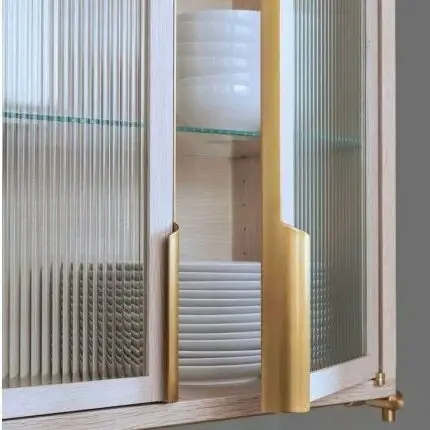
Reeded window film mimics the ribbed, textured surface of traditional reeded or fluted glass — the style found in period properties, shower screens, internal glazed doors, and boutique commercial interiors. The film provides a good level of privacy while allowing most of the natural light through, which makes it considerably more useful than frosted or opaque film in spaces where daylight matters.
Tinted reeded glass film adds a colour layer to this texture. The result is a film that delivers the same ribbed visual pattern as standard reeded film, plus a tint that colours the light as it passes through the glass. It is not a solid, opaque coloured film — light still comes in. It is the quality and hue of that light that changes.
This product sits at the intersection of privacy film and decorative film. It is typically chosen when the buyer wants something more expressive than plain frosted, more private than clear glass, and more characterful than standard clear reeded. The colour makes the glazing itself part of the design rather than simply a functional barrier.
What colours and tints are available?
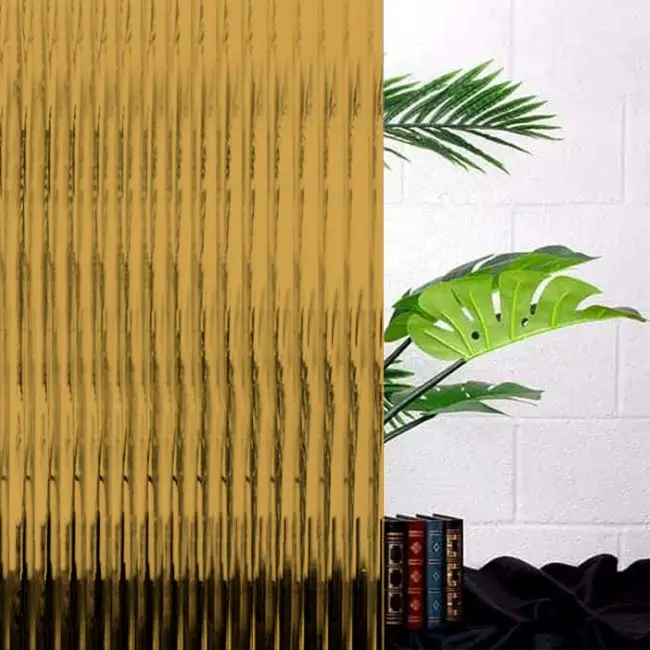
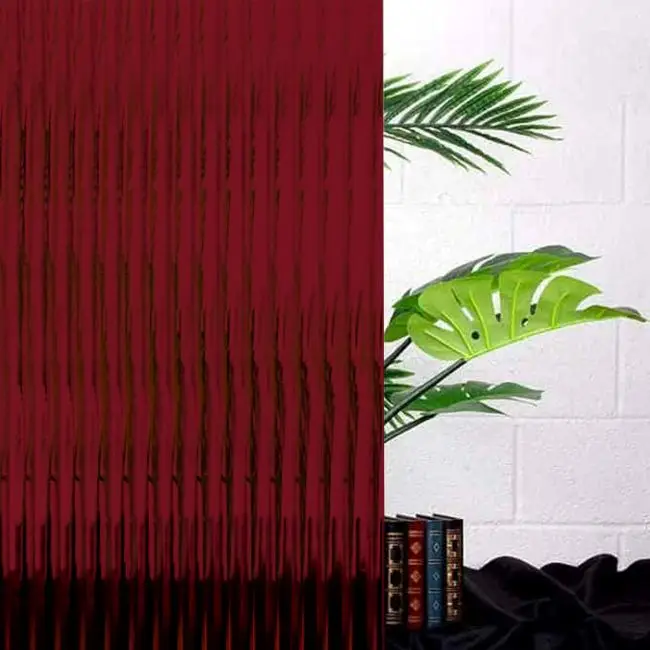
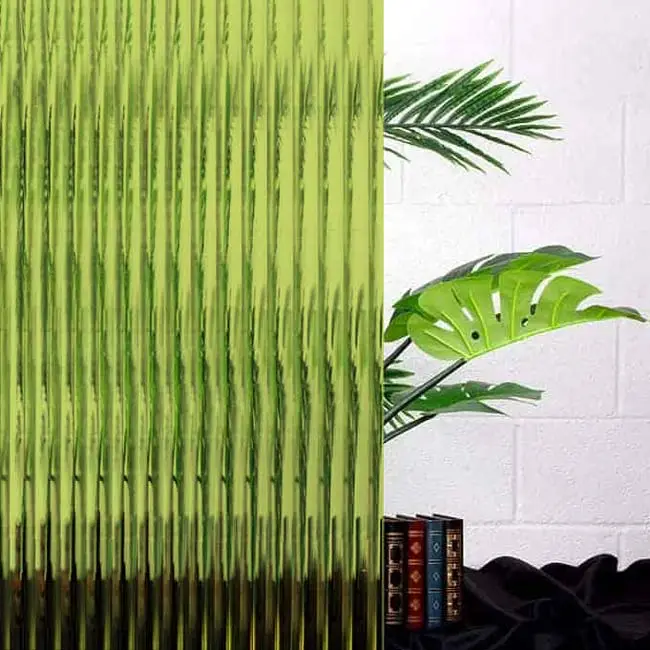
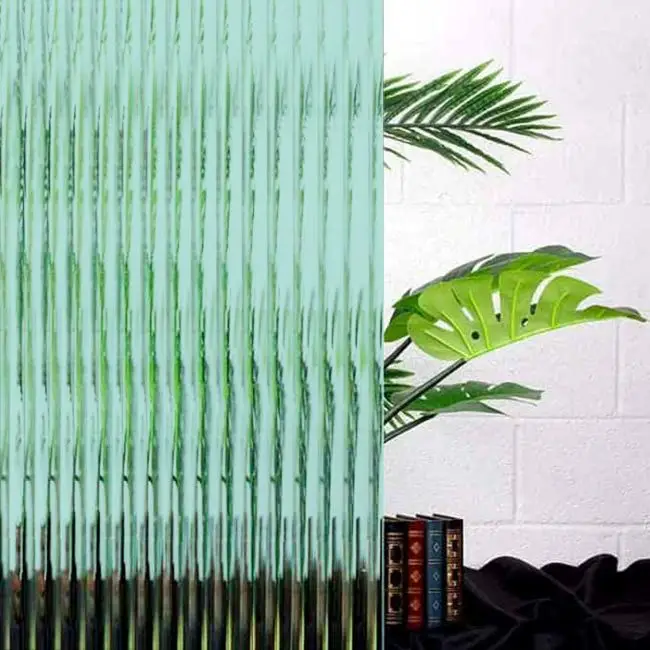
The Lustalux reeded window film range includes several colour options across both the ¼ inch and ½ inch flute widths:
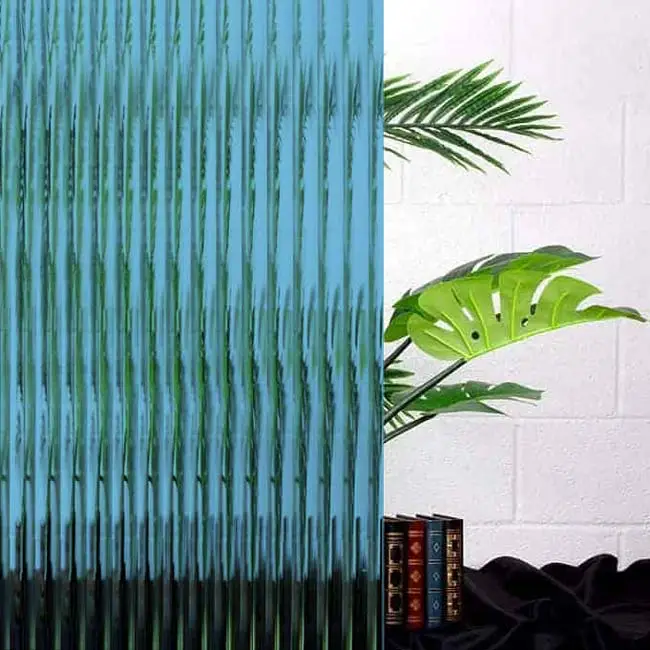
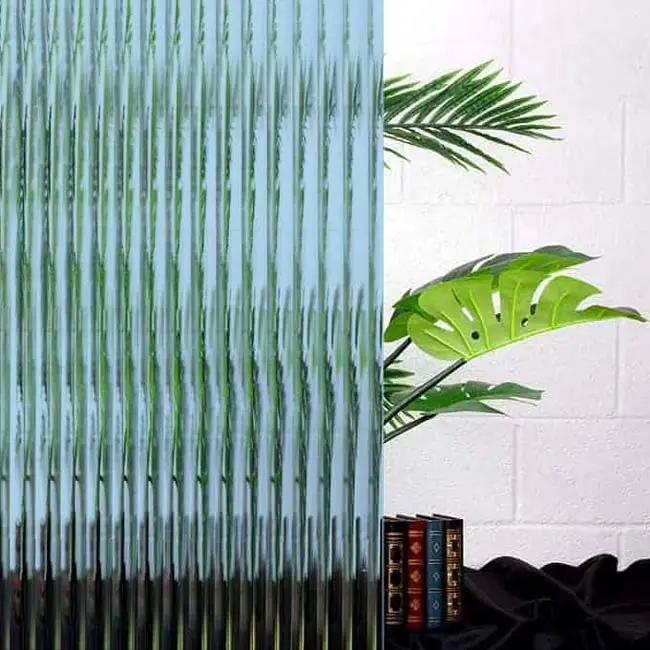
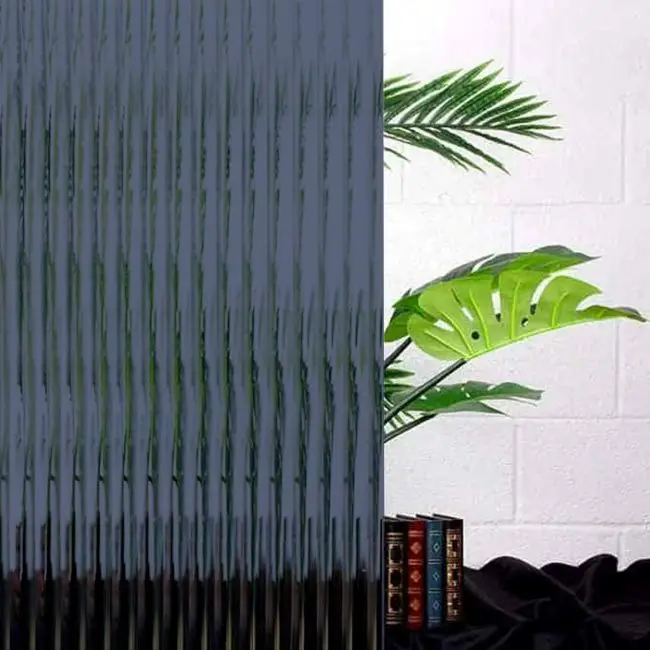
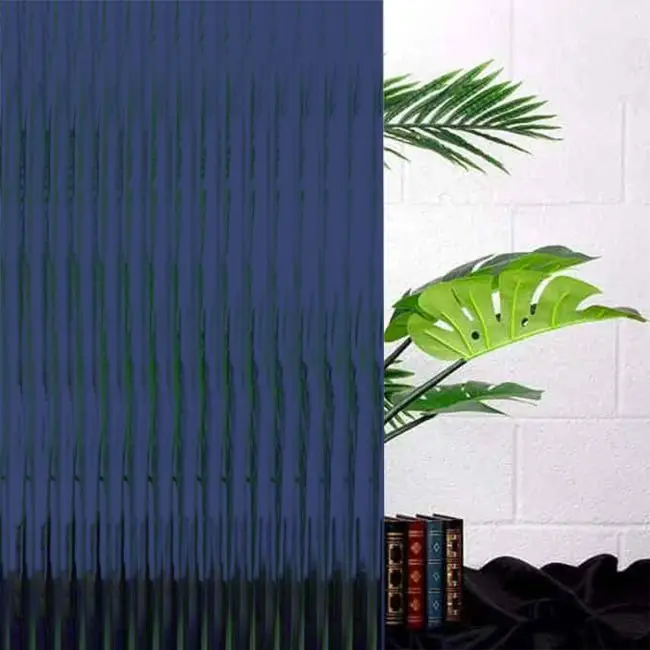
- Blue — a cooler, calming tone suited to bathrooms, north-facing rooms, and interiors where a spa-feel quality is the aim
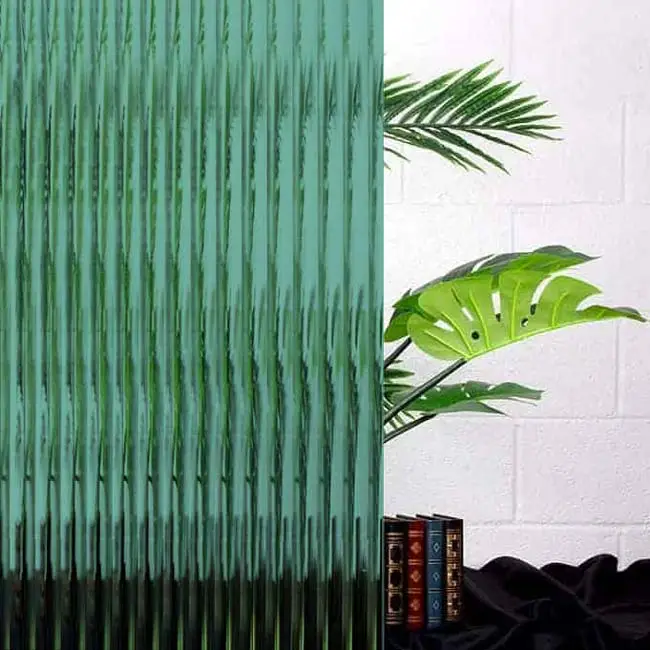
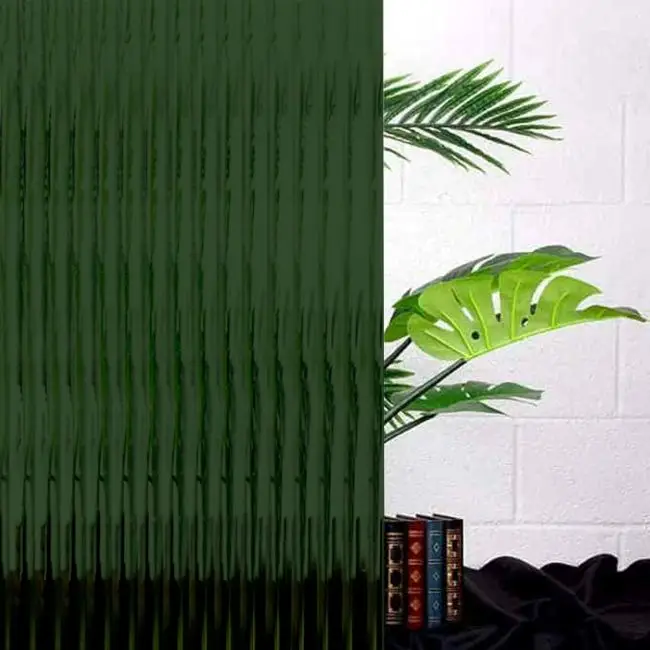
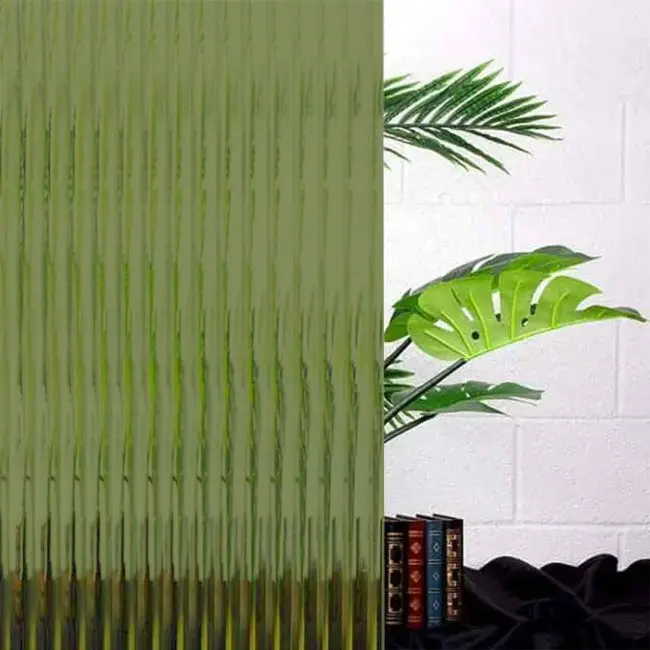
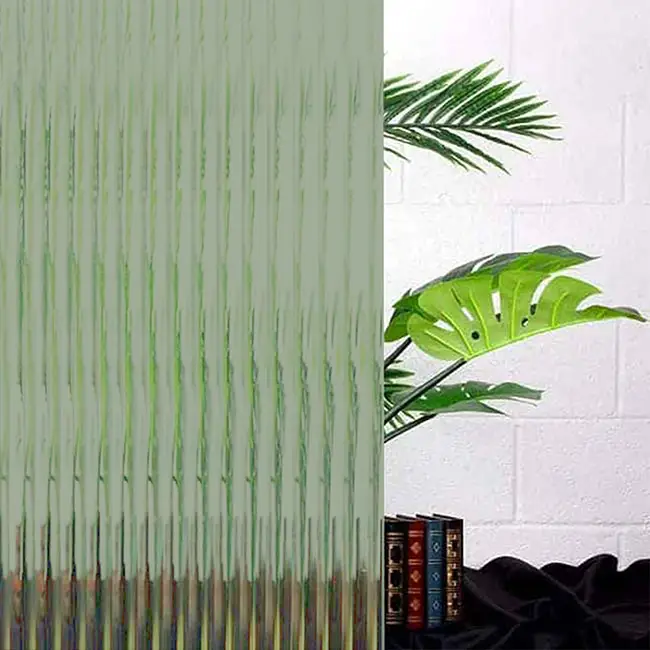
- Green — works well in kitchens and spaces where a natural, botanical mood is part of the design intent
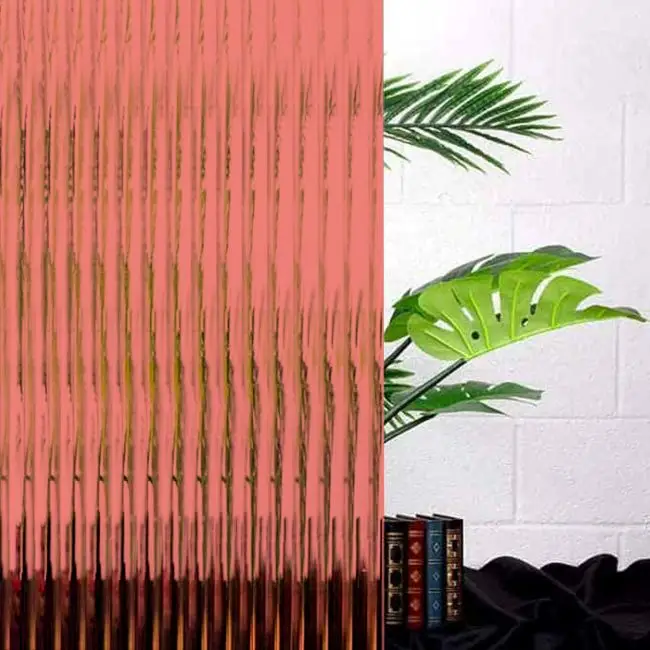
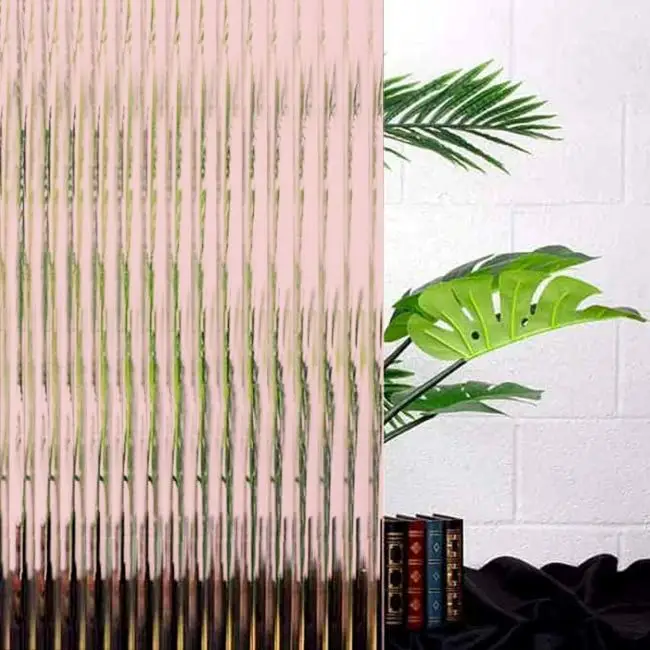
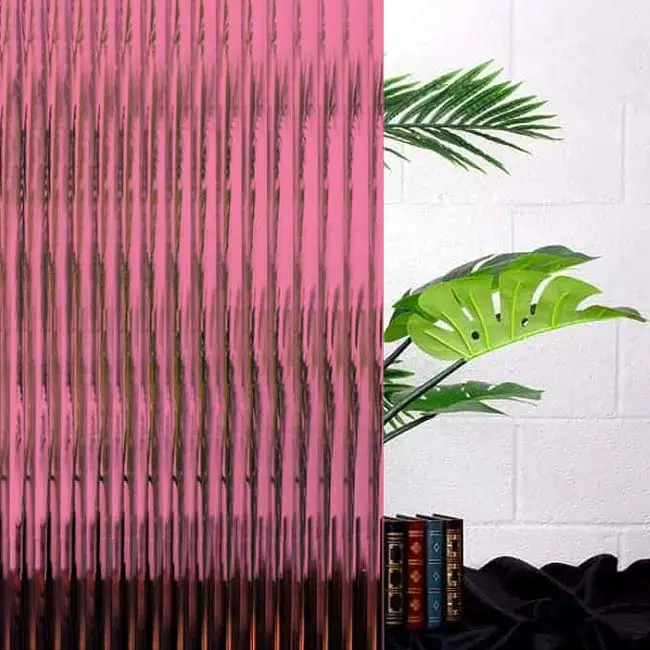
- Pink — subtle in lighter shades, more expressive in deeper variations; suits home offices, boutique retail, and feature door panels
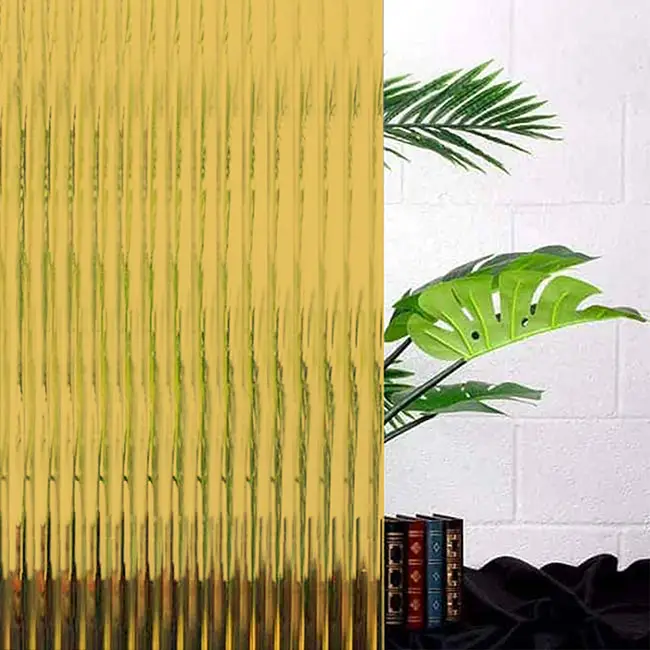
- Yellow — warms up cool-aspect rooms and is the most effective tint for improving the quality of daylight in north-facing spaces
- Tangerine — warmer and bolder than yellow; suited to design-led feature glazing and statement interiors
- Grey — a flexible, commercial-leaning tint that works across offices, meeting rooms, and contemporary residential schemes
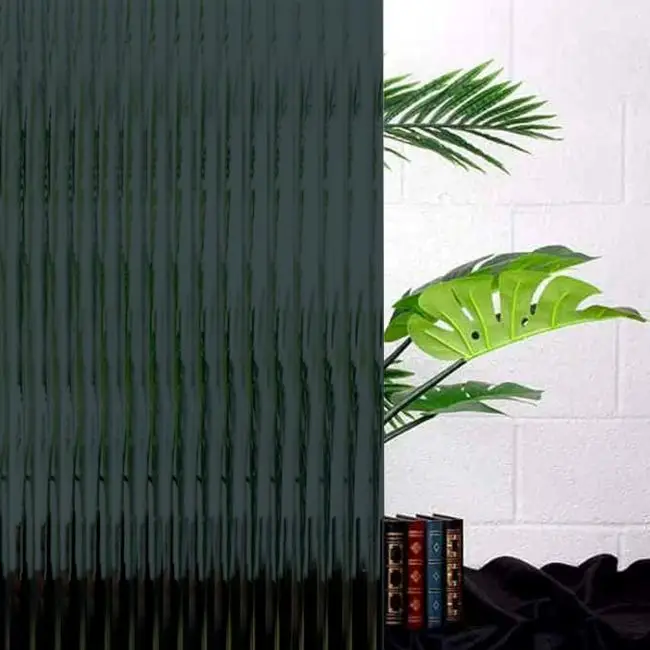
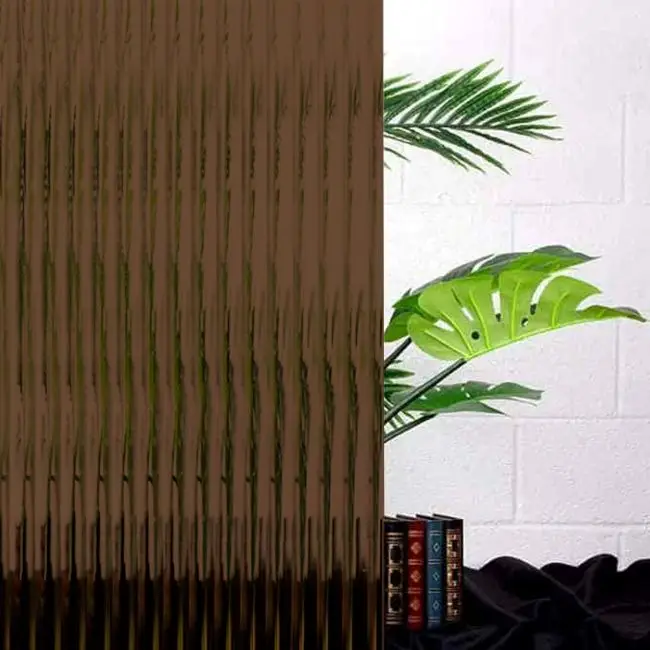
- Black Forest reeded glass window film — the darkest option in the range; reduces light more noticeably than the others; best used as a design feature on a specific panel rather than across an entire window
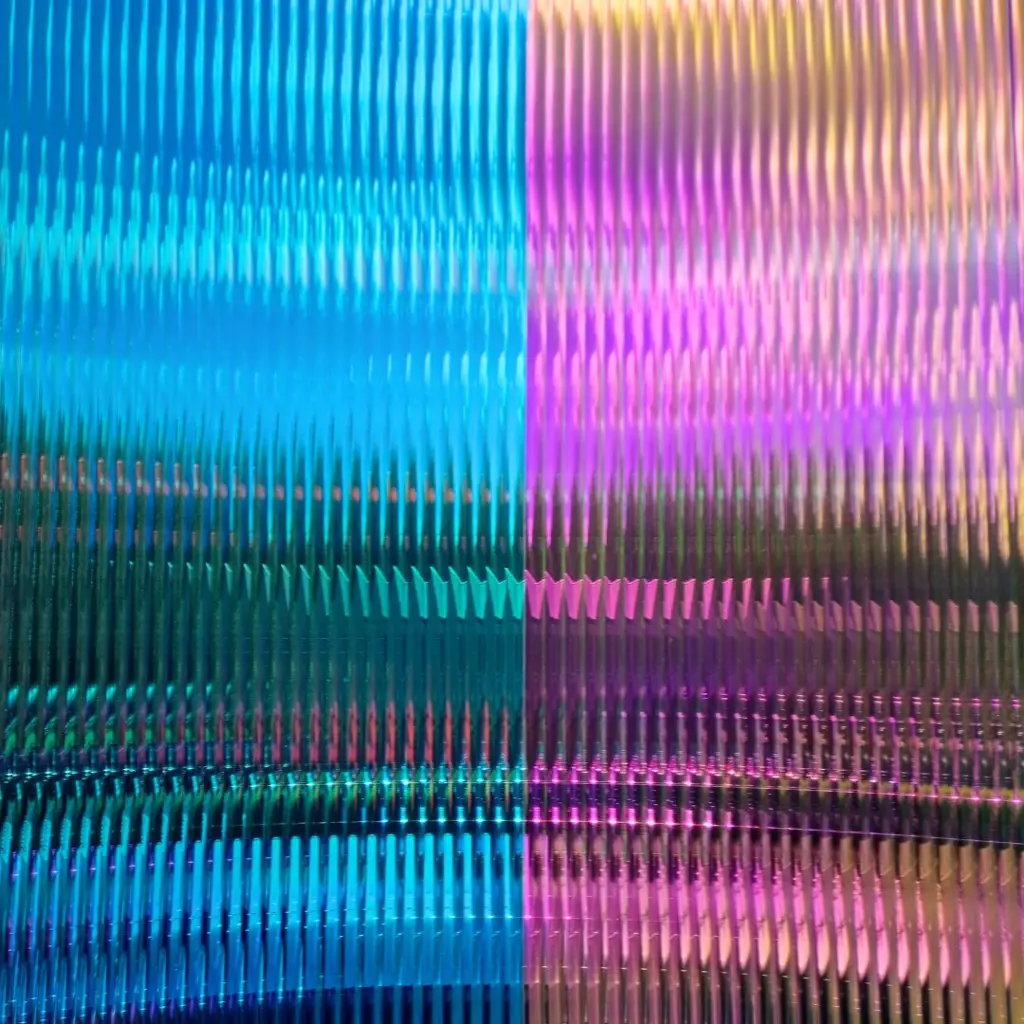
- Dichroic — a colour-shifting film that changes appearance depending on the light angle and viewing direction (covered in more detail below)
Both ¼ inch and ½ inch flute widths are available across these colours. The ¼ inch flute gives a finer, more subtle texture that suits smaller panes, modern interiors, and situations where you want the ribbed pattern to be a background quality rather than a statement. The ½ inch gives a bolder, more traditional reeded glass look and works well on larger door panels, partition glazing, and feature panes.
This tinted reeded range sits within a broader coloured window film catalogue that includes other decorative film types beyond the reeded pattern — useful if you want to compare colour options across different film styles before committing.
Bespoke hex-code colour matching is also available for commercial projects where a specific brand colour or interior scheme palette needs to be matched precisely. This is useful for branded office environments, hospitality interiors, and fit-out projects where visual consistency across the scheme is part of the brief.
If you are unsure which colour suits your space, the Lustalux team can advise based on the room's aspect, size, existing scheme, and how much colour you want the film to contribute.
What is dichroic reeded window film?
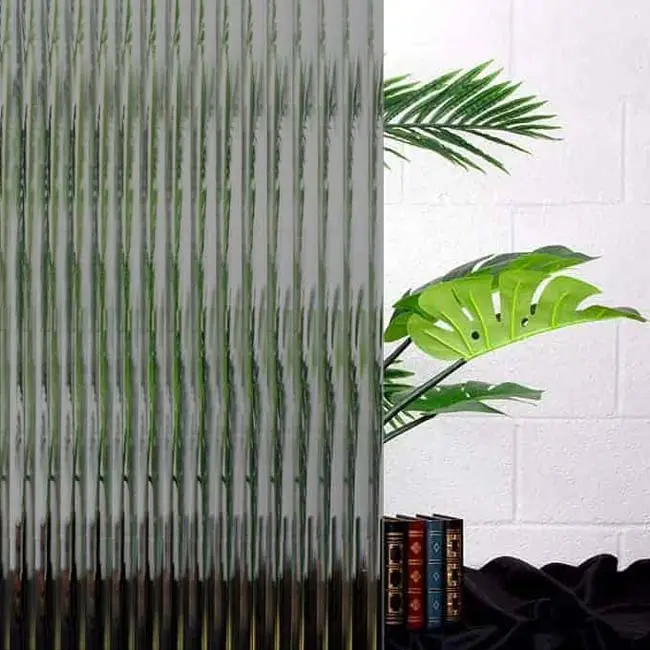
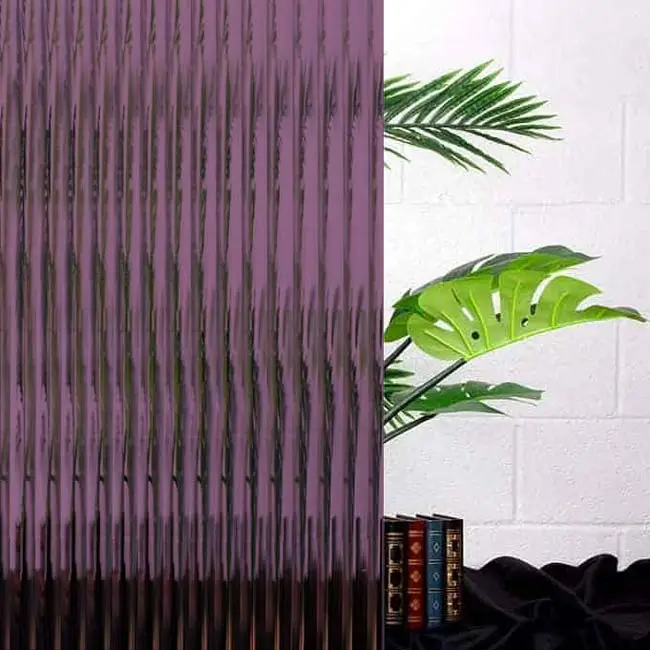
Dichroic reeded film is a colour-shifting window film that changes appearance depending on the angle of light hitting it and the direction from which it is viewed. Unlike a fixed-colour tinted film — where blue stays blue regardless of conditions — dichroic film shifts between different colours as the light changes. "Dichroic" describes a material that appears to shift colour depending on the angle of the light source and the viewing direction. From one position it may appear blue or violet; from another, it moves toward gold or green. The shift happens continuously as the light changes through the day.
In practical terms, dichroic reeded film does everything standard reeded film does — it provides privacy through the ribbed texture and allows light through — but it adds a colour-shift effect that makes the glazing itself visually dynamic. It is the most design-led option in the range.
Dichroic reeded film is well suited to:
- Boutique commercial interiors where visual interest is part of the brief
- Reception areas, hotel lobbies, and hospitality partitions where feature glazing reads differently at different times of day
- Residential spaces where the glazing is a focal point rather than a functional background element
- Feature doors and cabinet glass where the colour-shift effect can be appreciated up close
It is not the right choice when you need a reliable, consistent colour match. For a glass partition in a branded office environment where the film colour needs to consistently reflect a specific company colour, a fixed-colour tinted film is more appropriate.
The Lustalux dichroic reeded window film is not widely stocked by other UK window film suppliers. If you have searched for it elsewhere and come up short, that is why.
How tinted reeded film affects the light in a room
This is the most important practical consideration for buyers choosing between clear and tinted reeded film, and it is one that is frequently underestimated.
Tinted reeded film changes not only how the glass looks from the outside, but also the quality of the daylight entering the room. In a bright, south-facing room with good natural light, a lighter tint such as pale blue or soft grey may barely register on the ambient light. In a north-facing room or a bathroom with limited direct light, a deeper tint such as dark green or navy can create a noticeably coloured cast to the room light — which may be precisely the mood you are after, or something you would prefer to avoid.
Some practical guidelines by colour:
Warm tints (yellow, tangerine, pink) work well in rooms with a cool or grey northern aspect. They compensate for the cooler quality of indirect light and make the room feel warmer and more inviting without direct sunlight doing that work.
Cool tints (blue, green, grey) suit brighter south-facing rooms where natural light is warm and strong. They add calmness and reduce the slight harshness that can come with direct solar light through glass.
Deep tints (black, dark blue, deep green) reduce the amount of light passing through more significantly than lighter options. These are better suited to feature panes, single door inserts, or cabinet glass where controlling light transmission is less critical.
Dichroic changes with the light conditions. The colour-shift is most pronounced in good natural light. It is harder to predict than a fixed tint, which is both its appeal and a reason to consider samples before ordering at scale.
If you are planning to apply tinted reeded film across several windows in a single room, the cumulative effect on the ambient light can be more pronounced than on a single small panel. Ordering a sample first is always a sensible step.
Where to use tinted reeded glass film
Bathroom windows and shower screens
Tinted reeded film is a natural fit for bathrooms. The ribbed texture gives consistent day-and-night privacy — it works through diffusion rather than reflection, so it does not have the night-time limitation of one-way reflective film. If you are comparing it with other privacy window film options such as frosted or mirrored film, the key distinction is that tinted reeded glass film adds colour and texture where plain frosted adds only obscurity.
Blue and grey are the most popular bathroom choices. They read as calm and considered, suit the neutral palettes common in contemporary bathroom design, and complement the light quality in most bathroom spaces. The blue reeded glass window film is a practical and characterful option for street-facing or overlooked bathroom windows.
Kitchen cabinet glass
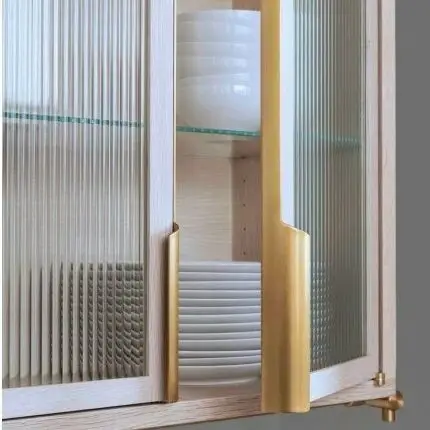
One of the fastest-growing self-apply applications for reeded film is kitchen cabinet glass doors. Homeowners and designers are using tinted reeded film on cabinet panels to add texture, soften what is visible inside the cabinet, and introduce a colour accent into the kitchen scheme. Green and yellow are popular choices because they complement the botanical and warm-tone palettes common in contemporary kitchen design.
Interior glazed doors and door panels
A plain door with a clear glass panel becomes a very different feature with a tinted reeded insert. The colour tints the light passing between rooms and gives the door an architectural quality without requiring new glazing. Pink and tangerine work well for residential settings where the door is a considered design element; grey and blue suit more commercial or contemporary schemes where restraint is part of the brief.
Office glass partitions and meeting rooms
In office environments, tinted reeded film can serve a dual purpose: privacy and brand identity. A grey or blue reeded film on a glass partition between a meeting room and an open-plan office provides visual privacy without making the meeting room feel closed off. For commercial projects where the film colour is part of a branded interior, the bespoke hex-code option allows precise specification.
For managed commercial installation on glass partitions and office glazing, the reeded window film installation service covers projects nationwide.
Boutique retail and hospitality interiors
Tinted reeded film creates a textured, premium look in retail display cases, shopfront glazing, restaurant partitions, and hotel reception screens. The dichroic variant is particularly well suited to hospitality environments because the colour-shifting effect makes the glazing itself a feature — one that reads differently at different times of day and from different positions in the room.
For an example of what bespoke-coloured reeded film looks like at a commercial scale, the Swarovski Holiday 2024 set design project involved custom-coloured reeded film specified, manufactured, and installed for a television advert production. The brief required a precise colour that matched the campaign aesthetic. The film was manufactured to that specification and delivered on a production schedule.
Tinted reeded vs. clear reeded: which should you choose?
| Factor | Clear reeded | Tinted reeded | Dichroic |
|---|---|---|---|
| Privacy | Good | Good | Good |
| Light transmission | High | Medium to high | Varies |
| Effect on room light | None | Tints ambient light | Shifts with angle |
| Consistency | Neutral; always the same | Fixed tint; predictable | Changes with light conditions |
| Best for | Any setting; the default versatile choice | Rooms where colour is part of the design intent | Boutique spaces with good natural light |
| Bespoke colour? | No | Yes (hex-code for commercial orders) | Standard range |
Clear reeded film is the more versatile choice when you want the texture without any colour contribution. Tinted reeded is the right choice when a colour is part of the brief — whether that is a mood, a scheme, or a brand colour. Dichroic is for spaces where the glazing is itself a feature and the colour-shift effect is intentional.
For a broader guide to reeded film covering flute widths, night-time privacy performance, and the difference between self-apply and professionally installed options, the reeded glass film guide covers the full picture.
How to order tinted reeded glass film
Self-apply: Tinted reeded film is available cut to size from the Lustalux online shop. Standard widths are available, and cut-to-size ordering means you can specify the exact dimensions for a door panel, window pane, or cabinet glass insert. Self-application follows the same process as any window film: clean the glass thoroughly, wet the surface with a soapy water solution, apply the film, use a squeegee to remove any trapped air and water, and trim the edges. Smaller panes are straightforward for a careful DIY application. Larger panes benefit from an extra pair of hands. Interior-applied tinted reeded film typically lasts 10 or more years with correct installation and routine cleaning — making it a cost-effective long-term alternative to replacing glass, which for real reeded glass can run to several hundred pounds per pane.
Commercial installation: For glass partitions, meeting room glazing, shopfront panels, hospitality interiors, and any project involving multiple panes or difficult access, Lustalux provides supply and managed installation nationwide. A site survey confirms the right film, flute width, and colour before any material is ordered, and installation is scheduled to minimise disruption to the building.
Bespoke colour matching: For commercial projects where the film colour needs to match a specific brand palette, send a hex code or Pantone reference to the team. Bespoke manufacturing is available for larger orders, and the Swarovski project is an example of what is achievable at the specification end of the range.
To request samples, discuss a commercial project, or get advice on which colour is right for your space, contact the Lustalux team.
FAQs
Can you get reeded window film in a colour or tint?
Yes. Tinted and coloured reeded window film is available in blue, green, pink, yellow, tangerine, grey, black, and a colour-shifting dichroic variant. The film keeps the ribbed texture of standard reeded film while adding a colour layer that tints the daylight passing through the glass into the room.
What is the difference between tinted reeded film and dichroic reeded film?
Tinted reeded film has a fixed colour — blue stays blue, grey stays grey, regardless of the light conditions or viewing angle. Dichroic reeded film changes colour depending on the angle of the light source and the direction from which it is viewed, shifting between blue, violet, gold, and green as the light conditions change. Dichroic is the more dramatic and design-led option; tinted film is more consistent and easier to specify for colour-matched schemes.
Does tinted reeded film reduce the amount of light in a room?
Lighter tints such as pale blue, soft grey, or yellow transmit a high level of light while adding a subtle colour quality to it. Deeper tints such as black or dark blue reduce light transmission more noticeably. The effect is also more pronounced across multiple windows in one room than on a single small panel, and on bright south-facing windows compared with north-facing or shadowed ones. Ordering a sample before committing to a full installation is recommended where the light effect is a concern.
Can tinted reeded film be applied to double glazing?
Yes. Tinted reeded film is applied to the internal face of the glass pane — the side facing into the room. This is compatible with standard double-glazed units. The film is not applied between the panes. If the inner pane of your glazing unit has a low-emissivity coating on the internal face, check suitability with the Lustalux team before ordering, as some coatings affect adhesion.
Does tinted reeded film provide privacy at night?
Yes. Reeded film — tinted or clear — provides privacy through diffusion rather than reflection. Unlike one-way reflective or mirrored privacy film, it does not depend on a difference in light levels between inside and outside. The ribbed texture distorts views through the glass in both directions, so the film provides a consistent level of privacy during the day and at night. It does not provide complete blackout; if full obscurity is needed, an opaque film is a better option.
Can I get a bespoke colour for a commercial project?
Yes. Lustalux offers bespoke hex-code colour matching for commercial orders where the film colour needs to match a specific brand palette or interior scheme. This is available for larger orders and is most commonly used for branded office partitions, hospitality interiors, and fit-out projects where visual consistency across the scheme matters. Get in touch to discuss the specification and lead times.
Is tinted fluted glass film the same as tinted reeded glass film?
Yes. "Tinted fluted glass film" and "tinted reeded glass film" describe the same product — a ribbed, privacy-giving window film with a colour or tint applied to the base. "Reeded" and "fluted" are used interchangeably in UK searches, and both terms refer to the vertical ribbed texture that distinguishes this film from plain frosted or reflective privacy film. The colour options, flute widths, and installation process are identical regardless of which term you use to find it.
Getting the right film for your project
Tinted reeded glass film gives you the privacy and textured look of standard reeded film with the addition of a colour that is part of the design rather than incidental to it. The range covers subtle neutral tints and warm tones through to the colour-shifting effect of the dichroic variant — a product with no current equivalent in the mainstream UK market.
The key practical decision is how much you want the tint to affect the quality of light in your room. For a subtle design addition, lighter tints and the ¼ inch flute width work well. For a bolder statement or a design-led commercial interior, the deeper colours and dichroic option offer something distinctly different from the clear or frosted privacy films most buyers start with.
Browse the tinted and coloured reeded window film range, or contact Lustalux to discuss commercial installation, bespoke colour matching, or a site survey for a larger project.
Products mentioned in this article
Related internal links
- reeded window film range
- Black Forest reeded glass window film
- coloured window film
- Lustalux team
- dichroic reeded window film
- privacy window film
- blue reeded glass window film
- reeded window film installation service
- Swarovski Holiday 2024 set design project
- reeded glass film guide
- contact the Lustalux team
- tinted and coloured reeded window film range
- contact Lustalux
Ready to start your project?
Discuss your requirements with a specialist and get a tailored quote for your space