resource / Guide
How Window Film Can Help Schools Implement Martyn’s Law
Window film
Guide
10 min read
2026-11-06
Meta Title: Window Film & Martyn's Law: A Guide for UK Schools Meta Description: How window film can help schools implement Martyn's Law by reducing sightlines, supporting lockdown plans and managing glare. Book a strategy call. Primary Keyword: how window film can help schools implement Martyn's Law Secondary Keywords: None URL Slug: /window-film-martyns-law-schools Internal Links: https://www.lustalux.co.uk/categories/window-film
https://www.lustalux.co.uk/sectors/education
https://www.lustalux.co.uk/uk/contact
How Window Film Can Help Schools Implement Martyn's Law
Window film helps schools implement Martyn's Law by reducing what can be seen through ground-floor glazing, supporting lockdown and evacuation procedures, and managing glare so CCTV and staff sightlines actually work when they're needed most. It is not a replacement for a full security plan, but it is one of the more practical, lower-disruption physical measures a school can put in place while working through its Martyn's Law duties.
Here's a scenario worth sitting with: a school reception with full-height glass, a sightline straight through to a busy corridor, and no way to obscure it quickly during a lockdown drill. That is the exact kind of gap Martyn's Law is asking schools to find and close.
Most school leaders already agree that premises security needs a fresh look under this new legislation, and the promise of this guide is simple: it explains what Martyn's Law actually asks of schools, then walks through where window film genuinely helps and where it doesn't. We will also look at the specification process, so you know what to ask for and why, before you get in touch with our team about a site visit.
Key takeaways
Martyn's Law (the Terrorism (Protection of Premises) Act) requires qualifying premises, including many schools, to have proportionate plans to reduce the risk and impact of a terrorist attack.
Window film supports this by reducing visibility into reception areas, classrooms and corridors from outside, without the cost or disruption of replacing glazing.
Reflective and privacy films are most relevant to sightline management; solar control films help glare issues that can undermine CCTV footage and staff visibility.
Film should be specified as one part of a wider plan, alongside procedures, training and staff awareness, not as a standalone compliance measure.
A proper site survey, matched to the school's actual layout and risk assessment, should come before any film is ordered.
What Martyn's Law actually asks of schools
Martyn's Law asks qualifying premises, including many schools, colleges and academy sites, to put in place proportionate procedures and physical measures that reduce the risk of harm from a terrorist attack. The duty is scaled to the size and nature of the premises, so a small primary school and a large secondary academy are not expected to do identical things.
In practice, that generally means two linked pieces of work. The first is procedural: lockdown plans, evacuation and evacuation routes, staff training, and a clear chain of communication. The second is physical: looking at the building itself and asking where a person outside could see in, get close to vulnerable areas, or exploit a sightline that staff hadn't considered.
Glazing sits right in the middle of that second piece. Reception areas, ground-floor classrooms, staff rooms facing a car park, and corridors visible from the street are all places where ordinary daylight glass can work against a school's security plan rather than for it. This is where window film becomes a genuinely relevant, practical measure rather than a nice-to-have.
It's worth being honest about scope here too: window film does not replace a risk assessment, staff training or a lockdown procedure. It supports those things by closing a specific, physical gap once that gap has been identified.
Where window film genuinely helps with Martyn's Law
The direct answer is that window film helps in three distinct ways: reducing what can be seen from outside, supporting lockdown and evacuation procedures, and managing glare so CCTV and staff sightlines remain usable. Each of these maps to a different part of a typical Martyn's Law action plan.
Reducing sightlines into vulnerable areas
Reception desks, SENCO offices and ground-floor classrooms are often the most visible rooms on a school site, simply because they tend to face the main entrance or car park. Reflective and privacy film reduce how easily someone outside can see into these spaces during the day, while still letting staff see out.
This matters for Martyn's Law because a documented action plan needs to show that obvious lines of sight into vulnerable or high-footfall areas have actually been considered and addressed, not just noted and left. Film is a practical, immediate way to close that gap on existing glazing, without waiting for a glazing replacement programme.
Supporting lockdown and evacuation procedures
During a lockdown drill, the instruction is almost always some version of "move away from windows, out of sight." That instruction is far easier to follow when the glazing itself already limits visibility, rather than relying entirely on staff remembering to close blinds that may be missing, broken, or simply forgotten in the moment.
Applied correctly, privacy and reflective window film give a baseline level of obscuration that doesn't depend on someone remembering to act. It's a passive layer that sits behind the active procedure, which is exactly the kind of proportionate, physical measure Martyn's Law is pointing schools towards.
Managing glare for CCTV and staff visibility
Glare is an underrated problem on school sites with a lot of east- or west-facing glazing. Strong low sun can wash out CCTV footage at exactly the times of day when footfall is highest, and it can make it harder for reception staff to see who's actually approaching the building.
Solar control film addresses this by reducing the heat and glare coming through the glass, which keeps both human eyes and camera lenses working properly. It's a secondary benefit to the privacy angle, but for schools reviewing their Martyn's Law physical measures alongside existing CCTV coverage, it's worth checking at the same time.
If your school is reviewing glazing as part of a wider Martyn's Law action plan, it's worth getting a proper site assessment before ordering anything. Book a strategy call and we'll talk through your layout, your risk assessment priorities and realistic timescales.
Choosing the right film for a school site
Not every room needs the same treatment, and a good specification starts with the room's actual risk profile, not a blanket order for the whole building. Broadly, schools working through Martyn's Law end up looking at three categories of film.
| Film type | Best suited to | What it addresses |
|---|---|---|
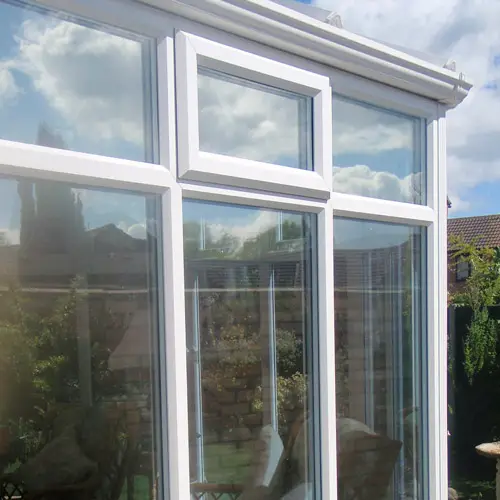
| Reflective privacy film | Reception, ground-floor offices, SENCO rooms | Reduces visibility into vulnerable areas during daylight |
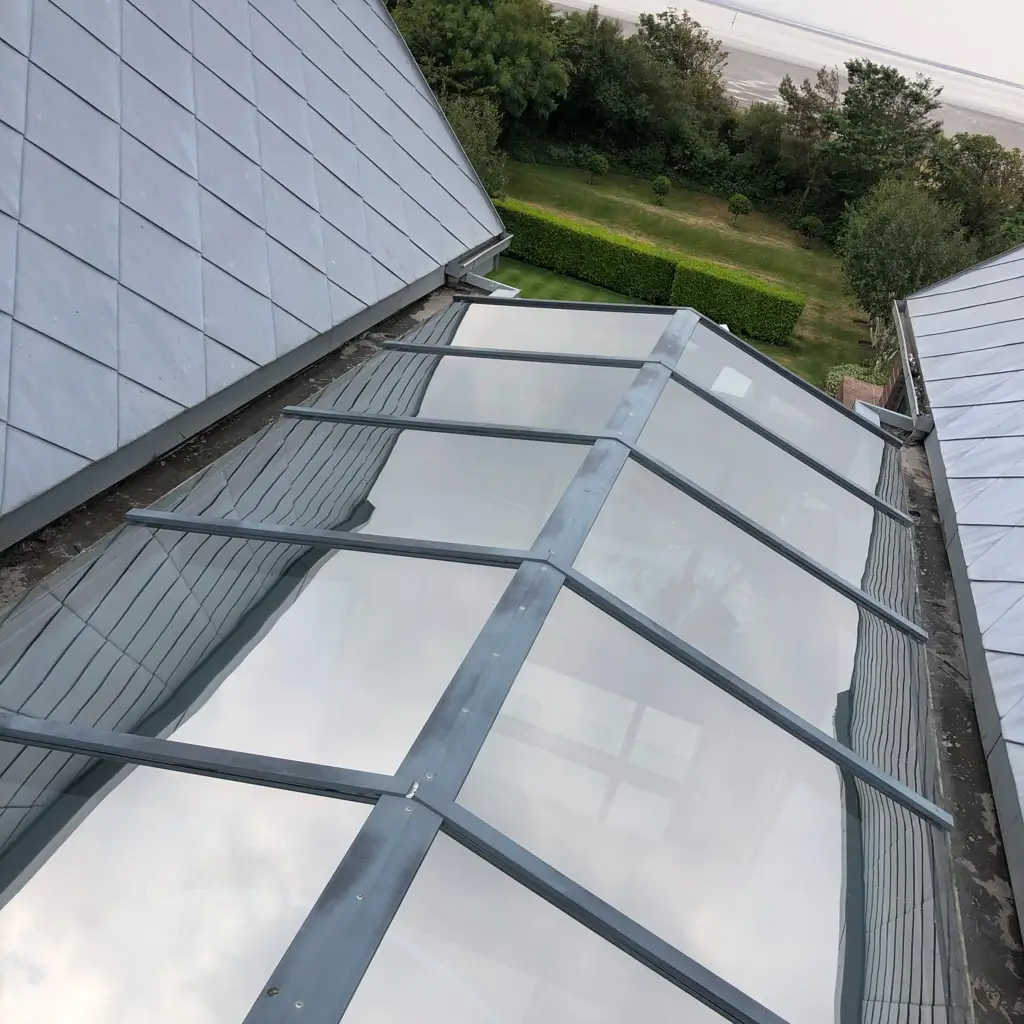
| l solar control film | Classrooms and corridors with strong sun exposure | Cuts glare and heat without darkening the room excessively |
| Coloured film | Internal zoning, wayfinding, feature glazing | Supports navigation and branding alongside privacy needs |
Reflective solar control film for glare and visibility balance
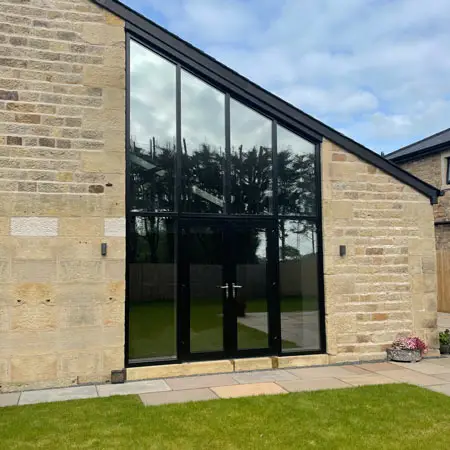
Where glare is the bigger issue, for example in a west-facing corridor near a main entrance, a option such as the reflects heat and cuts glare without making the room feel noticeably darker. This keeps CCTV footage usable and staff sightlines clear, which matters as much for day-to-day safeguarding as it does for a terrorism-specific risk.
A practical walkthrough: auditing your school's glazing
Consider Helen Marsh, a facilities manager at a large secondary academy who was asked to lead the school's physical review ahead of its Martyn's Law action plan. Her first step wasn't ordering film at all; it was walking the site with the school's safeguarding lead, noting every ground-floor window, door panel and reception sightline that felt exposed.
What she found was fairly typical: a reception desk fully visible from the car park, a staff room with clear sightlines from a public footpath, and a SENCO office where sensitive conversations could, in theory, be observed from outside. None of this was dramatic, but together it formed a clear list of priority rooms.
From there, Helen matched each room to a likely solution: reflective film for reception and the SENCO office, neutral solar control film for the glare-prone staff room, and a short-term plan to revisit corridor glazing the following term. The outcome wasn't a finished Martyn's Law plan on its own, but it gave the school's governors a concrete, costed physical measure to sit alongside their procedural work.
This is the order most schools end up following, whether they realise it at the start or not: survey first, prioritise by risk, then specify film room by room rather than buying a single product for the whole site.
Working with a specialist: specification, sampling, installation
Daniel Osei, a business manager at a smaller academy, took a slightly different route. His school had a tighter budget and a shorter timeline, driven by an upcoming governors' review of the Martyn's Law action plan.
Rather than trying to assess every window himself, Daniel brought in a specialist to survey the site, flag the two or three rooms that mattered most, and recommend a specific film for each. The process ran in the same order every time: survey the glazing, agree the priority rooms, sample the film against the actual window to check how it looked under real light, then schedule installation around the school day so classes weren't disrupted.
That sampling step is worth taking seriously. Film that looks right in a product photo can read differently once it's up against a school's specific glass, orientation and lighting, so a short on-site sample before full installation avoids a mismatch later.
If your school is at the stage Daniel was at, with a governors' deadline and a shortlist of rooms to deal with, it's worth exploring the education sector page for a sense of how this kind of project is typically scoped, before a full conversation about your specific site.
Common questions schools ask about Martyn's Law and window film
Does window film alone make a school compliant with Martyn's Law? No. Window film is one physical measure among several a school may need, alongside procedures, training and a documented risk assessment. It should be specified as part of a wider plan, not treated as a standalone fix.
Which rooms should be prioritised first? Reception areas, ground-floor offices and any room with a clear sightline from a public road or car park are usually the priority, since these are the spaces most exposed to outside visibility during normal school hours.
Will privacy film make classrooms too dark? It depends on the specific product and the room's existing light levels. A lighter reflective or neutral film, sampled on site first, usually keeps the room comfortably lit while still reducing outward visibility.
Can film be installed without disrupting the school day? In most cases, installation can be scheduled around timetabled hours, holidays or inset days, though the exact timing depends on the scale of the job and the school's own constraints.
Does this replace the need for a lockdown procedure? No. Film supports a lockdown procedure by reducing visibility passively; it doesn't replace staff training, drills or the documented plan itself.
Bringing it together
Martyn's Law is asking schools to look honestly at their buildings and close the gaps that a determined person could exploit, and glazing is one of the most common gaps worth checking first. Window film won't finish that job alone, but it is a practical, proportionate measure that addresses sightlines, supports lockdown procedures, and keeps CCTV and staff visibility working as intended.
The right approach is the one Helen and Daniel both followed: survey the site, prioritise rooms by actual risk, then specify film room by room rather than guessing at a single product for the whole building. From there, sampling against the real glass and real light avoids surprises once installation is complete.
If your school is building out its Martyn's Law action plan and needs a clear-eyed view of where glazing fits into it, book a strategy call and tell us your site's layout, your priority rooms and your governors' timeline. We'll come back with a specification that matches what your plan actually needs, not a generic product list.
Products mentioned in this article








Ready to start your project?
Discuss your requirements with a specialist and get a tailored quote for your space